

Sam Altman on AI's Future and Human Agency

Sam Altman discusses AI's potential, the importance of democratizing access, and OpenAI's strategic focus.

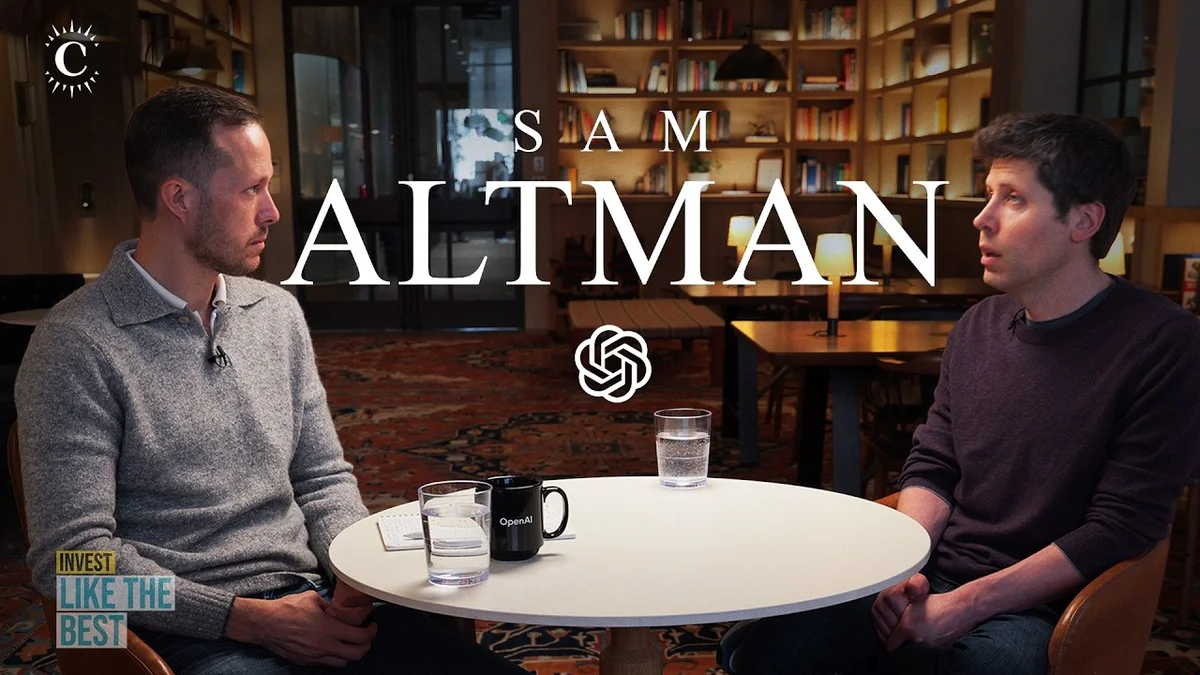
Sam Altman and Patrick O'Shaughnessy seated at a table discussing AI.
YouTube
Visual TL;DR
AI: Greatest AchievementContext
From the articleAltman described AI as potentially "the greatest thus far technological achievement of human history," but stressed that its true value lies in its ability to "make people's lives like much better than they otherwise would have been." He drew a parallel to a "genie that can grant any wish," highlighting the immense creative potential users will unlock with AI.
OpenAI Spread ThinDriver
working on too many initiatives, unable to focus on core mission
From the articleReflecting on the past year, Altman admitted that OpenAI had been spread too thin, working on too many initiatives.
Refocus EffortsEffect
From the articleThis realization led to difficult decisions to refocus the company's efforts on developing the "best, most abundant, most cost-effective intelligence." Altman expressed optimism about the progress made and the pipeline of advancements expected in the coming year, particularly concerning the quality of models and the products built around them.
Democratize AccessEffect
ensuring broad availability of powerful AI tools for everyone
From the article 2 mentionsDiscussing the broader societal impact, Altman expressed concern about the "concentration of power with AI." He fears that legitimate safety concerns could be manipulated to concentrate access to AI within a small group.
Secure ComputeCore
critical for scaling AI development, a 'YOLO' moment for investment
From the article 3 mentionsThe conversation delved into OpenAI's early, and at the time controversial, decision to secure vast amounts of compute power.
AI as 'Genie'Context
immense creative potential users will unlock with advanced AI capabilities
From the article 2 mentionsWhen asked about the gap between the current state of AI and the envisioned "genie that can grant any wish," Altman pointed to areas like complex physical task execution and continuous learning.
Human AgencyOutcome
ensuring people maintain control and benefit from AI's advancements
From the article 2 mentionsHe likened the current AI intelligence to a computer, capable of complex calculations but still lacking certain human nuances like judgment and taste, which he believes will remain uniquely human for some time.
Contents(4)

In a recent discussion, OpenAI CEO Sam Altman shared his perspective on the trajectory of artificial intelligence, its societal implications, and the company's strategic direction. Altman described AI as potentially "the greatest thus far technological achievement of human history," but stressed that its true value lies in its ability to "make people's lives like much better than they otherwise would have been." He drew a parallel to a "genie that can grant any wish," highlighting the immense creative potential users will unlock with AI.

Refocusing OpenAI's Efforts

Reflecting on the past year, Altman admitted that OpenAI had been spread too thin, working on too many initiatives. "We are in this like unbelievable moment in history where you can only do the very few great things," he stated. This realization led to difficult decisions to refocus the company's efforts on developing the "best, most abundant, most cost-effective intelligence." Altman expressed optimism about the progress made and the pipeline of advancements expected in the coming year, particularly concerning the quality of models and the products built around them.

Securing Compute: A "YOLO" Moment

The conversation delved into OpenAI's early, and at the time controversial, decision to secure vast amounts of compute power. Altman recalled the period when the primary concern was whether revenue and demand would materialize for such significant compute allocation. "We were trying to think about like a lot of things such that if the revenue growth took longer to materialize than we thought it might, we could have, you know, consumer apps and media and all these other things that could help us monetize the GPUs," he explained.

However, as the rapid trajectory of model improvement and the clear economic return became apparent, the company decisively focused its strategy. This conviction, Altman noted, was solidified with GPT-4. He described the early outreach to cloud providers, chip manufacturers, and energy suppliers, acknowledging that many were initially skeptical. "Most people told us no, but all you need is one or two yeses," he said, crediting Microsoft as the first key partner, followed by Oracle and Nvidia.

The Future of AI and Human Agency

Altman elaborated on OpenAI's core mission: to sell AI that empowers people to build incredible products and services. This involves training great models across various domains, securing compute resources, and finding suitable infrastructure. He explicitly stated a lack of interest in building every vertical application or competing directly with startups, emphasizing the goal of providing a foundational platform.

Discussing the broader societal impact, Altman expressed concern about the "concentration of power with AI." He fears that legitimate safety concerns could be manipulated to concentrate access to AI within a small group. "I don't think anyone should want to live in a world of, you know, AI overlords or a company that is the rough equivalent of that," he asserted. Altman drew a parallel to the early internet, emphasizing the importance of preserving a spirit of collective self-determination and democratized access to technology.

The "Genie" and Future Potential

When asked about the gap between the current state of AI and the envisioned "genie that can grant any wish," Altman pointed to areas like complex physical task execution and continuous learning. He acknowledged that while models are becoming incredibly capable, there are still limitations. However, he also highlighted the rapid progress in the underlying "machinery that makes the models," suggesting that the path forward is clear.

Altman also touched upon the potential for AI to automate research and the evolving role of researchers. He drew a parallel to software engineers, whose roles have transformed but remained relevant with the advent of higher-level programming tools. He suspects researchers will similarly adapt, finding new ways to contribute within an AI-augmented workflow.

The conversation also touched upon the environmental impact of data centers, with Altman noting significant progress in water usage reduction and a shift towards renewable energy sources. He also expressed surprise at how intuitive the text-based interface remains, even for coding tasks, suggesting it aligns with his own communication preferences.

Looking ahead, Altman expressed a strong belief in the power of tackling difficult problems, stating, "Just do something harder. Do something that matters." He also reflected on the invaluable support received from investors like Josh Kushner, highlighting the rarity of consistently helpful investors.

Finally, Altman discussed the burgeoning field of robotics, predicting a "ChatGPT moment for robotics in the next two or three years" where widespread "wow" experiences become commonplace. He likened the current AI intelligence to a computer, capable of complex calculations but still lacking certain human nuances like judgment and taste, which he believes will remain uniquely human for some time.

© 2026 StartupHub.ai. All rights reserved. You may not republish this article in full without a license. Search engines and AI research tools may crawl and summarize for reference. Bulk reproduction or model training requires a license. See our terms.
Daniel Singer

Written by

Daniel Singer

Editor, StartupHub.ai

Daniel Singer is the editor of StartupHub.ai, a technology expert and thought leader on AI and its applications across sectors, from fintech and healthcare to developer tooling and consumer software. He writes and tests the tools covered here thoroughly and regularly, and built StartupHub.ai to give founders, operators and buyers a clearer read on what they are actually being sold.