


OpenAI's Codex Accelerates Finance Reporting

OpenAI's Wei Loke explains how the Codex AI model is revolutionizing finance by accelerating report generation and dashboard creation.

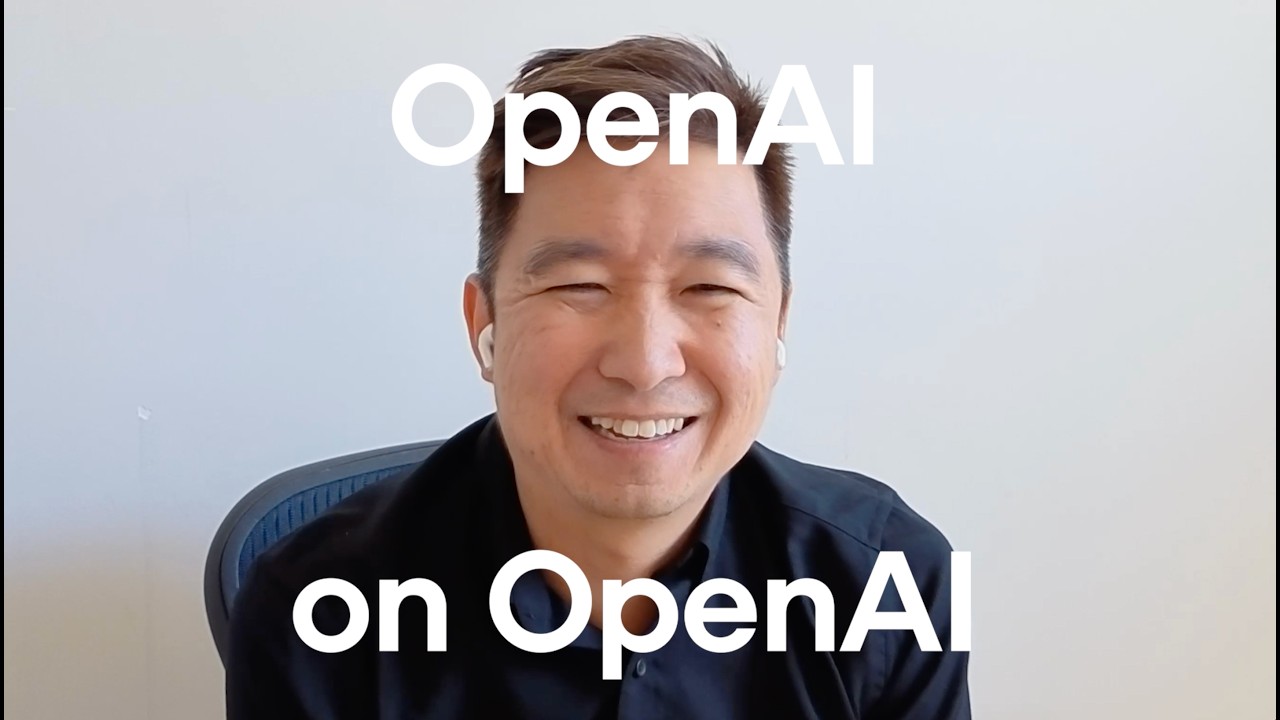
Wei Loke from OpenAI speaking about Codex for Finance
OpenAI Youtube
Visual TL;DR
Finance Reporting ChallengesDriver
slow report generation and dashboard creation processes
OpenAI Codex AICore
AI model revolutionizing finance operations and workflows
From the article 9+ mentionsWei Loke, leading Enterprise Platforms & Technology at OpenAI, discusses how Codex is transforming financial operations.
Accelerated Report GenerationEffect
faster creation of financial reports and executive summaries
From the article 2 mentionsThe AI model is proving essential for accelerating report generation, building interactive dashboards, and enabling quicker, more informed decision-making within finance departments.
Dashboard CreationEffect
building interactive dashboards for better data visualization
From the article 9 mentionsBy reducing the manual effort involved in data manipulation, report generation, and dashboard creation, Codex unlocks numerous possibilities for finance teams.
Internal Finance AppsEffect
rapid development of tools like searchable vendor databases
From the articleOne of the key applications of Codex in finance is the rapid development of internal tools.
Streamlined WorkflowsEffect
simplifying everyday financial tasks and processes
From the article 3 mentionsLoke highlights that Codex's utility extends beyond complex coding tasks, offering significant value in streamlining everyday financial workflows.
Informed DecisionsOutcome
From the articleThe AI model is proving essential for accelerating report generation, building interactive dashboards, and enabling quicker, more informed decision-making within finance departments.
Contents(4)

Wei Loke, leading Enterprise Platforms & Technology at OpenAI, discusses how Codex is transforming financial operations. The AI model is proving essential for accelerating report generation, building interactive dashboards, and enabling quicker, more informed decision-making within finance departments. Loke highlights that Codex's utility extends beyond complex coding tasks, offering significant value in streamlining everyday financial workflows.

Building Internal Finance Applications with Codex

One of the key applications of Codex in finance is the rapid development of internal tools. Loke explains how Codex can be used to create simple yet polished applications. These applications allow employees to search for enterprise software used across the company. They can view key metadata about each application, including its capabilities, purpose, ownership, and related systems. This capability is demonstrated with an example of creating a searchable vendor database, significantly improving internal transparency and efficiency in managing software assets.

The full discussion can be found on OpenAI Youtube's YouTube channel.

Codex for Finance: Faster Reports, Dashboards, and Decisions - OpenAI Youtube
Codex for Finance: Faster Reports, Dashboards, and Decisions, from OpenAI Youtube

Automating Executive-Level Financial Reporting

Codex is also instrumental in automating the creation of executive-level reports and slides. Loke showcases how the AI can automate month-end reviews, generating necessary slides for executive consumption. The video presents an example where Codex, prompted to generate a new slide for 'Paid Compute Margin' from a dashboard, can produce ready-to-use visuals and analysis. This automation moves the manual finance assembly layer into Codex, producing versioned dashboards, Q&As against controls, drafted slides, and turning trends into source-backed commentary. This drastically reduces the time and effort required for monthly financial reporting cycles.

Refreshing Dashboards and Streamlining Workflows

Another significant use case for Codex is in refreshing financial dashboards. Loke illustrates how Codex can update dashboards directly from source systems, a process that is often time-consuming and prone to errors. The example shown involves refreshing compute metrics dashboards for both price and quantity, utilizing specific data points like 'Kepler'. The AI's ability to use custom skills, refresh allocations, and publish review-ready finance dashboards, along with versioned runs and control-Q&A built into the workflow, significantly speeds up the process. Furthermore, Codex can even assist with general entry preparations, simplifying complex and repetitive tasks for finance professionals.

Unlocking New Possibilities in Finance

Loke emphasizes that the core benefit of Codex lies in its ability to transform messy, manual workflows into repeatable, efficient processes. By reducing the manual effort involved in data manipulation, report generation, and dashboard creation, Codex unlocks numerous possibilities for finance teams. This allows professionals to focus on higher-value strategic tasks rather than getting bogged down in tedious operational duties. The widespread adoption of such AI tools promises to enhance productivity and decision-making accuracy across the financial sector.

© 2026 StartupHub.ai. All rights reserved. You may not republish this article in full without a license. Search engines and AI research tools may crawl and summarize for reference. Bulk reproduction or model training requires a license. See our terms.
Daniel Singer

Written by

Daniel Singer

Editor, StartupHub.ai

Daniel Singer is the editor of StartupHub.ai, a technology expert and thought leader on AI and its applications across sectors, from fintech and healthcare to developer tooling and consumer software. He writes and tests the tools covered here thoroughly and regularly, and built StartupHub.ai to give founders, operators and buyers a clearer read on what they are actually being sold.