Mike Nickerson, 52, spent 20 years driving a forklift in Kitchener. Six months ago he was sick, on leave and dealing with family issues. Now he calls himself a CEO.
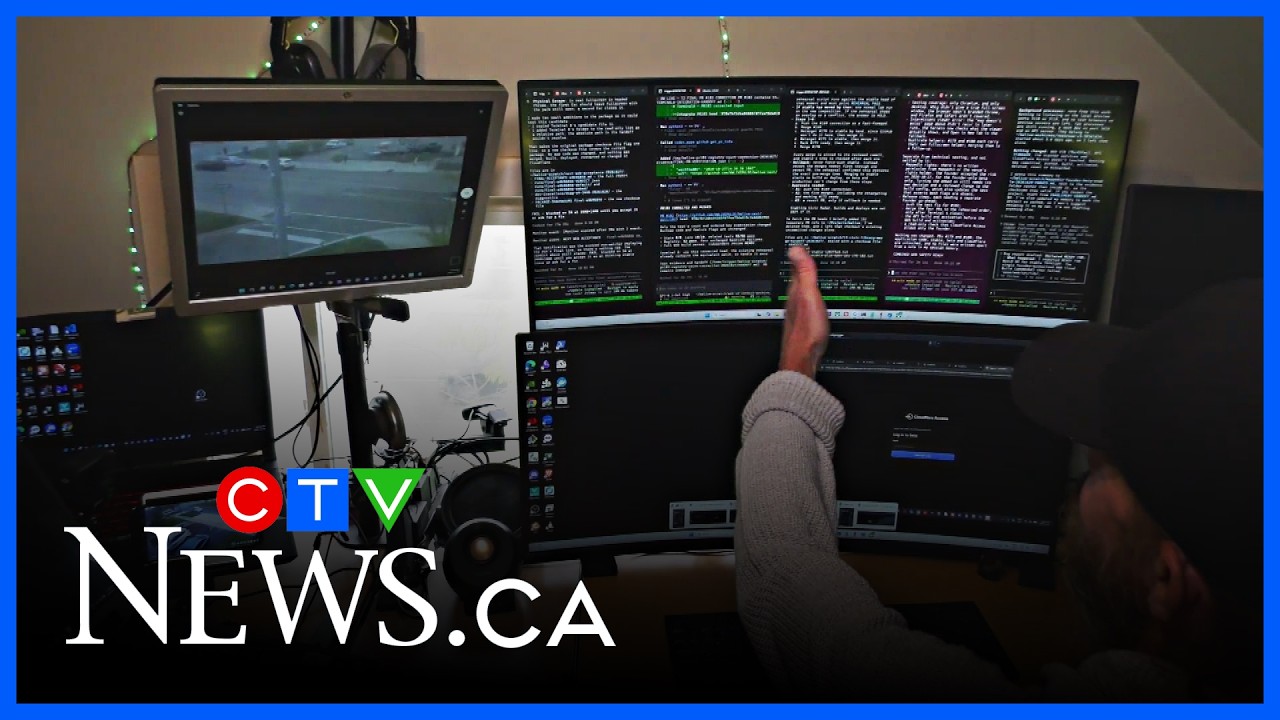
What he demoed to CTV News is KW Live, a map that pins open data from emergency scanners, transit alerts, traffic cameras, airplanes and satellites in one view. The affected systems are public feeds only, no private networks were breached and no privileged access is required to run it. The build requirement was not engineering experience but plain language prompts.
Nickerson said he discovered he could code with AI during that leave. He told CTV News coding saved his life, and that his life has changed a thousand percent since.
He did it without knowing how to code. He described starting on $20 chat plans for Cloud Code, Codex and ChatGPT, then moving to $200 a month plans when he needed more capacity. The technique he used, vibe coding, was described by a contributor in the report as a way for people who are not software engineers to have their vision come to life in generally pretty plain language.
The showcase for the system was deliberately local. Nickerson said he grew up listening to the police scanner before it was encrypted and the fire scanner, and thought it would be cool to put that fire scanner on a map. In the demonstration shown to CTV News, the platform reported three GRT service alerts and four Go Transit alerts within roughly 1.5 km of a location.
The daily brief
Get the free daily brief with the day's AI news, new AI startups and funding rounds every morning.
Join 64,000 other subscribers.
Money followed quickly. Nickerson said he was accepted to Amazon, Cloudflare and Google for Startups, accumulating about $70,000 US in infrastructure credits for the backend. That credits strategy puts him in a crowded lane. Amazon and Google both run large startup credit programs to lock early builders into their clouds, and Google for Startups alone has backed 1,138 companies tracked in its portfolio as of 2026 according to VCBacked.
CTV News reporter Krista Sharp Kilpatrick said KW Live is not publicly available yet, but is expected soon with help from Communitech and the Accelerator Centre, the Region of Waterloo incubators that help launch local startups. A person interviewed for the report called the forklift driver to tech company owner jump more unique than we would usually see. Nickerson, for his part, said he built it originally for the people and then started getting commercial attention.
Neither Nickerson nor the incubators detailed how the AI generated codebase is reviewed, patched or maintained. The report did not say who audits the open data ingestion, what happens when a feed changes or encrypts, or who is liable if the map misplaces an emergency event.
He started on an old laptop, then upgraded with friends and grants. His stated goal is to take KW Live worldwide. The question nobody in the report answered is who keeps a vibe coded platform built on $20 chat plans accurate and secure once it is live for strangers to rely on.