


OpenAI Policy Recommendations for the AI Era

OpenAI's Chris Lehane details policy recommendations for the AI era, including a public wealth fund, social safety nets, and faster grid development.

3 min read
OpenAI Policy Recommendations for the AI Era
Bloomberg Technology

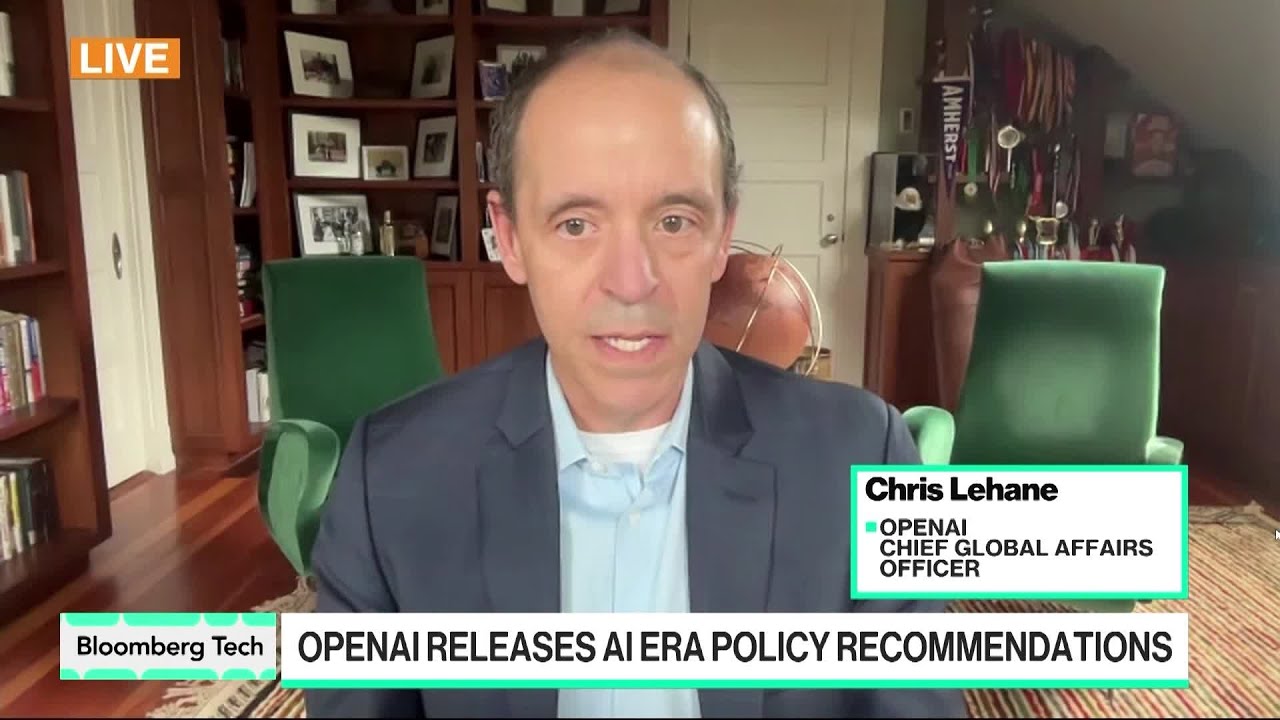
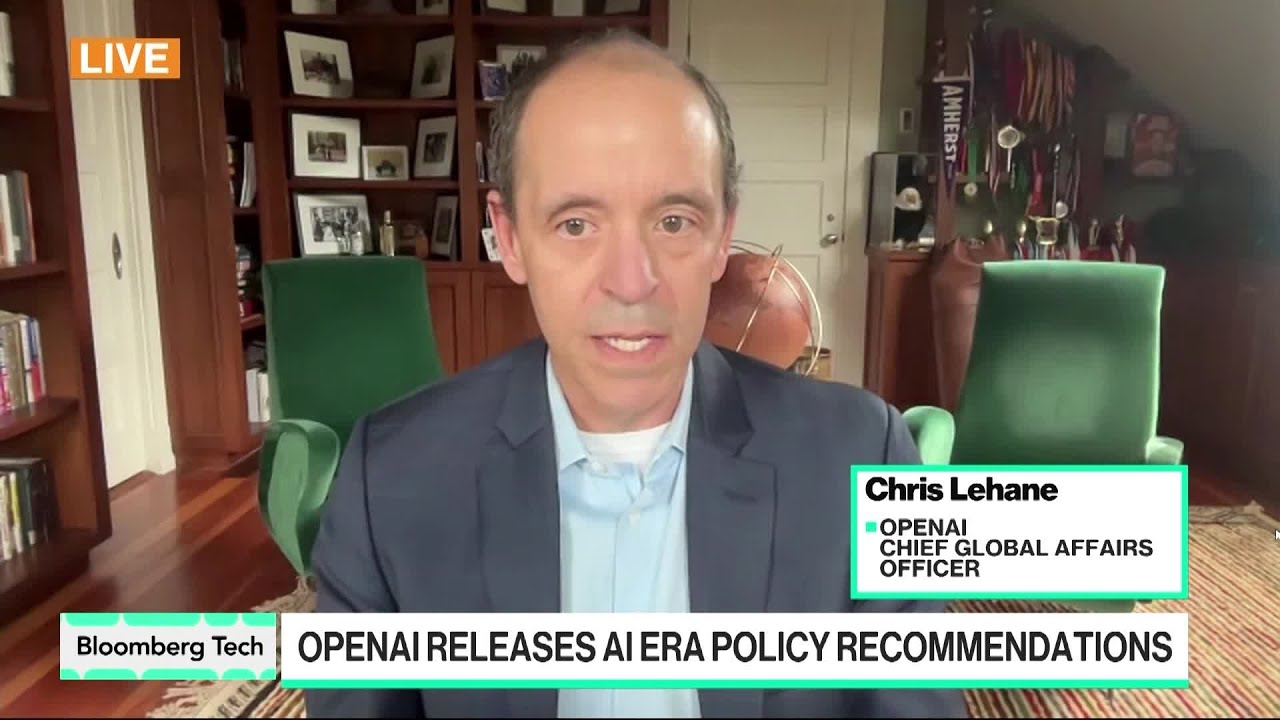
In a recent Bloomberg Tech interview, Chris Lehane, OpenAI's Chief Global Affairs Officer, outlined the company's comprehensive policy recommendations for navigating the AI era. Lehane, a seasoned public policy expert with experience in government and advocacy, stressed the transformative potential of AI and the critical need for proactive governance.

The full discussion can be found on Bloomberg Technology's YouTube channel.
OpenAI Releases Policy Recommendations for AI Age - Bloomberg Technology
OpenAI Releases Policy Recommendations for AI Age — from Bloomberg Technology

Introducing Chris Lehane

Chris Lehane brings a wealth of experience in public policy and communications to his role at OpenAI. Previously, he served in senior positions within the U.S. government and as a key strategist for political campaigns. His background positions him as a crucial voice in shaping the public discourse and regulatory framework around advanced AI technologies.

Related startups

OpenAI's Policy Recommendations

Lehane detailed OpenAI's proposed policy framework, which is divided into two main sections: one focusing on an open economy and the other on societal impact. The core of these recommendations centers on ensuring that AI benefits society broadly and equitably. He drew parallels to historical technological shifts, such as the printing press, internal combustion engine, and electricity, highlighting how each necessitated new societal structures and policies to manage their impact.

Key Policy Proposals

OpenAI's policy proposals include several key areas:

  • Advocacy for a Public Wealth Fund: Lehane explained that this fund would aim to distribute the economic benefits of AI across the entire population, drawing a parallel to Alaska's Permanent Fund. The goal is to ensure that the immense wealth generated by AI is shared, preventing a concentration of benefits among a few.
  • Fast-Response Social Safety Net: Recognizing the potential for AI to disrupt labor markets, OpenAI recommends establishing a robust and responsive social safety net. This would support individuals affected by job displacement, ensuring a smoother transition in the evolving economy.
  • Faster Electrical Grid Development: The significant computational power required for AI development and deployment necessitates a more robust and scalable electrical grid. OpenAI supports accelerating the development and modernization of energy infrastructure to meet this growing demand.

Addressing Public Perception and Misinformation

Lehane acknowledged the growing public awareness and, at times, apprehension surrounding AI. He noted that discussions with policymakers, including those in the U.S. administration and international governments, reveal a desire to understand and shape AI's trajectory. He also referenced commentary from figures like Jamie Dimon, CEO of JPMorgan Chase, who predicted AI's impact on jobs, emphasizing the need for proactive planning to support affected workforces.

Lehane drew a parallel between the current AI advancements and the introduction of personal computers and the internet, suggesting that while these technologies initially caused disruption, they ultimately led to broad societal progress. He stressed that the key is to manage the transition effectively, ensuring that AI's benefits are widely shared and that potential risks are mitigated.

The Importance of Global Collaboration and AI Literacy

OpenAI's strategy, as articulated by Lehane, involves not only developing advanced AI but also actively engaging in policy discussions globally. He pointed to countries like Japan, South Korea, and Estonia as examples of nations actively integrating AI into their public services and education systems, aiming to foster AI literacy. This approach, he argued, is essential for preparing populations for the future and ensuring equitable access to AI's capabilities.

The company's efforts focus on promoting a balanced perspective on AI, moving beyond purely optimistic or pessimistic narratives. Lehane highlighted the importance of understanding both the potential and the challenges, advocating for a collaborative approach between industry, government, and civil society to guide AI's development responsibly.

© 2026 StartupHub.ai. All rights reserved. Do not enter, scrape, copy, reproduce, or republish this article in whole or in part. Use as input to AI training, fine-tuning, retrieval-augmented generation, or any machine-learning system is prohibited without written license. Substantially-similar derivative works will be pursued to the fullest extent of applicable copyright, database, and computer-misuse laws. See our terms.