

OpenAI Codex Learns YouTube Uploads with Record & Replay

OpenAI's Codex introduces 'Record & Replay,' enabling it to learn and automate complex tasks like YouTube video uploads by observing user actions.

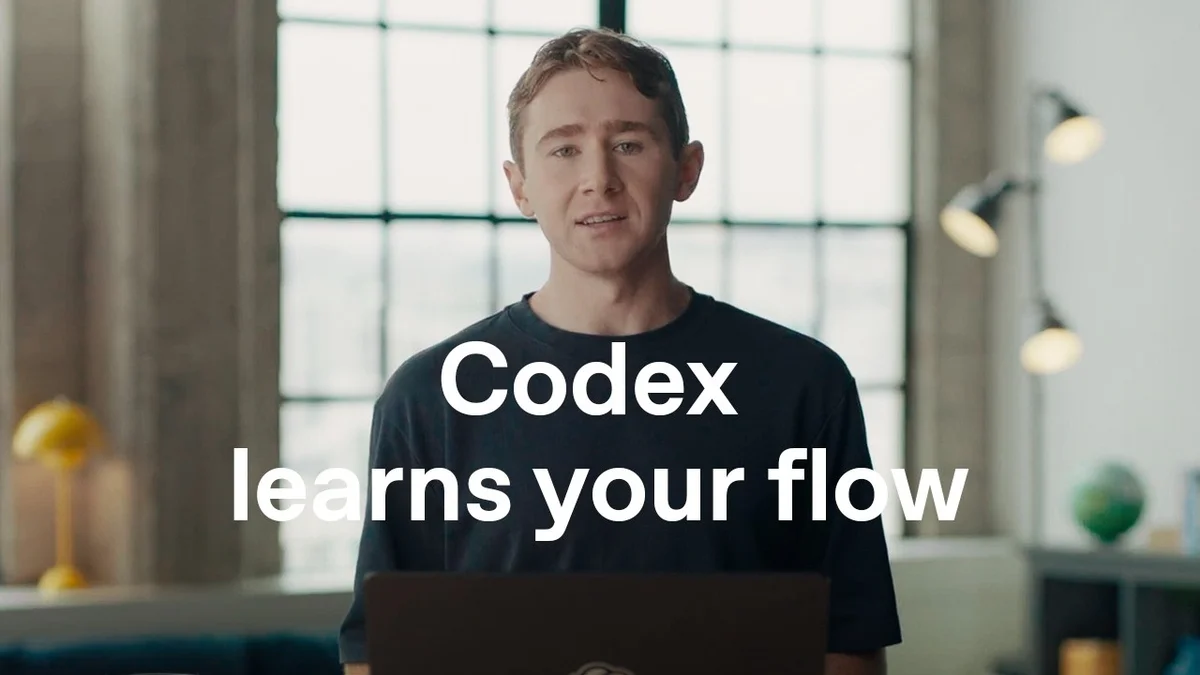
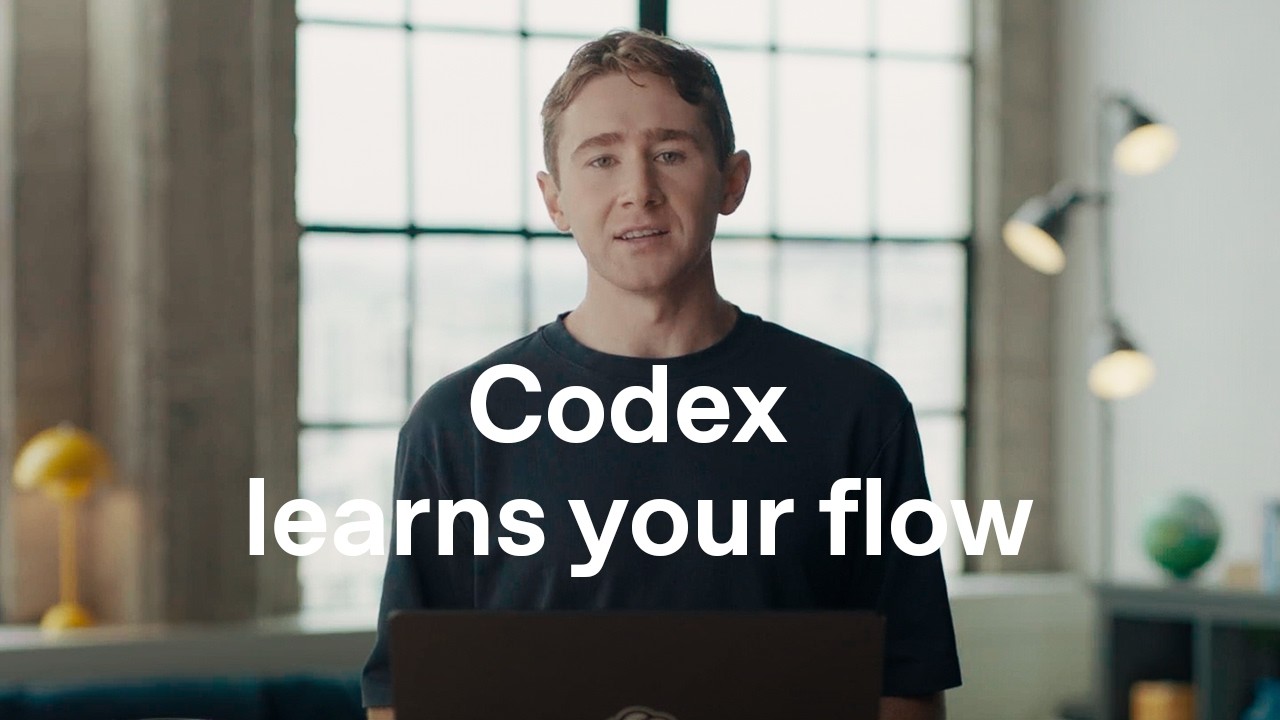
Man smiling at a laptop with the OpenAI logo
OpenAI Youtube
Visual TL;DR
Repetitive TasksDriver
users manually perform complex, multi-step processes
From the article 8 mentionsOpenAI's Codex is demonstrating a new level of sophisticated task replication with its 'Record & Replay' functionality.
OpenAI CodexCore
AI system that learns and automates tasks
From the article 9+ mentionsOpenAI's Codex is demonstrating a new level of sophisticated task replication with its 'Record & Replay' functionality.
Record & ReplayCore
observes user actions to capture sequences of clicks
From the article 6 mentionsThe 'Record & Replay' system works by observing a user's actions within an application, such as YouTube Studio.
Learns YouTube UploadContext
captures metadata, thumbnail, and subtitle processing steps
From the articleIn a recent demonstration, Codex was shown learning how to upload a YouTube video, complete with metadata, thumbnail selection, and subtitle processing.
Automates UploadsEffect
AI can replay recorded actions to complete tasks
From the article 3 mentionsIt moves beyond pre-programmed scripts to a more dynamic form of learning, where the AI observes and internalizes how humans perform tasks, enabling it to assist or even automate them effectively.
Autonomous AgentsOutcome
From the articleThis capability signifies a significant step towards more autonomous AI agents that can learn and adapt to user workflows.
Content CreationContext
future of AI-assisted creation and task automation
From the article 2 mentionsThis is particularly valuable for tasks that are frequent but tedious, such as managing multiple video uploads or other content creation workflows.
Contents(3)

OpenAI's Codex is demonstrating a new level of sophisticated task replication with its 'Record & Replay' functionality. This feature allows the AI to learn and then execute complex, multi-step processes that users perform manually. In a recent demonstration, Codex was shown learning how to upload a YouTube video, complete with metadata, thumbnail selection, and subtitle processing.

The 'Record & Replay' system works by observing a user's actions within an application, such as YouTube Studio. Codex captures the sequence of clicks, file selections, and text inputs. Once recorded, the AI can then replay these actions to complete the task independently. This capability signifies a significant step towards more autonomous AI agents that can learn and adapt to user workflows.

The full discussion can be found on OpenAI Youtube's YouTube channel.

Record & Replay in Codex - OpenAI Youtube
Record & Replay in Codex, from OpenAI Youtube

Streamlining Repetitive Tasks with AI

The demonstration highlighted how Codex can be instructed to record a specific process. The user then performs the task, in this case, uploading a video to YouTube. Codex observes the entire workflow, from selecting files and adding titles and descriptions to choosing a thumbnail and setting privacy options. After the recording is complete, Codex can then replicate the process on its own. This is particularly valuable for tasks that are frequent but tedious, such as managing multiple video uploads or other content creation workflows.

The recorded session is then translated into a reusable skill, which can be invoked later. This means that once Codex learns how to perform a task, it can execute it repeatedly without further human intervention. The system also aims to learn not just the steps, but also the underlying logic and decision-making involved, such as how to match subtitles or how to handle privacy settings.

Codex's YouTube Upload Workflow

During the demonstration, Codex was guided through the process of uploading a video to YouTube. This involved several distinct steps: selecting the video file, inputting title and description, uploading a thumbnail, and adding subtitles. The AI successfully captured these actions and then demonstrated its ability to perform them autonomously. The system also showed its capability to handle errors, such as missing Python environments, and to adapt by using a direct readback from the installed skill location.

The 'Record & Replay' feature extends beyond simple automation. Codex can learn to interpret the context of actions, such as understanding when to select 'Private' or 'Unlisted' for video visibility. It also learns how to manage associated files, like .mp4 video files and .srt subtitle files, and how to correctly populate metadata fields. This deepens the AI's understanding of the entire workflow, making it more robust and capable of handling nuanced tasks.

The Future of AI-Assisted Content Creation

The ability of Codex to learn and replicate such detailed workflows points towards a future where AI plays an increasingly integral role in content creation and management. This technology could significantly reduce the manual effort required for tasks like social media posting, data entry, and software development workflows. By learning user preferences and established processes, Codex can act as a powerful assistant, freeing up human users to focus on more creative and strategic aspects of their work.

The 'Record & Replay' feature is a key component in making AI more adaptable and useful in practical, everyday scenarios. It moves beyond pre-programmed scripts to a more dynamic form of learning, where the AI observes and internalizes how humans perform tasks, enabling it to assist or even automate them effectively.

© 2026 StartupHub.ai. All rights reserved. You may not republish this article in full without a license. Search engines and AI research tools may crawl and summarize for reference. Bulk reproduction or model training requires a license. See our terms.
Daniel Singer

Written by

Daniel Singer

Editor, StartupHub.ai

Daniel Singer is the editor of StartupHub.ai, a technology expert and thought leader on AI and its applications across sectors, from fintech and healthcare to developer tooling and consumer software. He writes and tests the tools covered here thoroughly and regularly, and built StartupHub.ai to give founders, operators and buyers a clearer read on what they are actually being sold.