

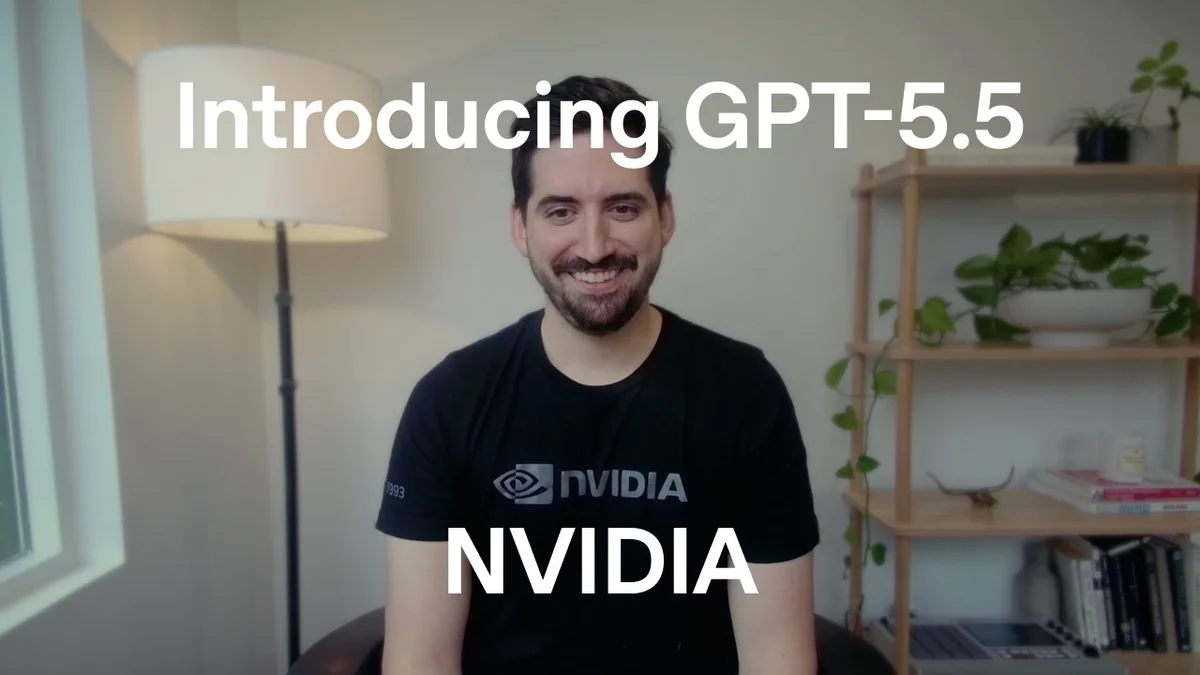
NVIDIA Engineer on GPT-5.5's 'Superpower'

NVIDIA's Dennis Hannusch discusses GPT-5.5, calling its ability to 'just get things done' its superpower and detailing its use in production-level software development.

3 min read
Dennis Hannusch, Senior Software Engineer at NVIDIA, speaking about GPT-5.5
Image credit: StartupHub.ai· OpenAI Youtube

Dennis Hannusch, a Senior Software Engineer at NVIDIA, recently shared insights into the capabilities of what he refers to as GPT-5.5. In a brief video, Hannusch highlights the practical power of this AI model, emphasizing its ability to efficiently execute tasks. He is part of the coding agents team at NVIDIA, a group focused on developing AI tools for software development.

Hannusch's work involves building and refining internal platforms that can be scaled for production. He specifically mentions utilizing GPT-5.4 in the development of an internal platform. The video shows a demonstration of a Codex Desktop app, which functions as recording software for podcasts, capable of handling both video and audio recording and saving the output without needing a third-party provider.

Related startups

The full discussion can be found on OpenAI Youtube's YouTube channel.
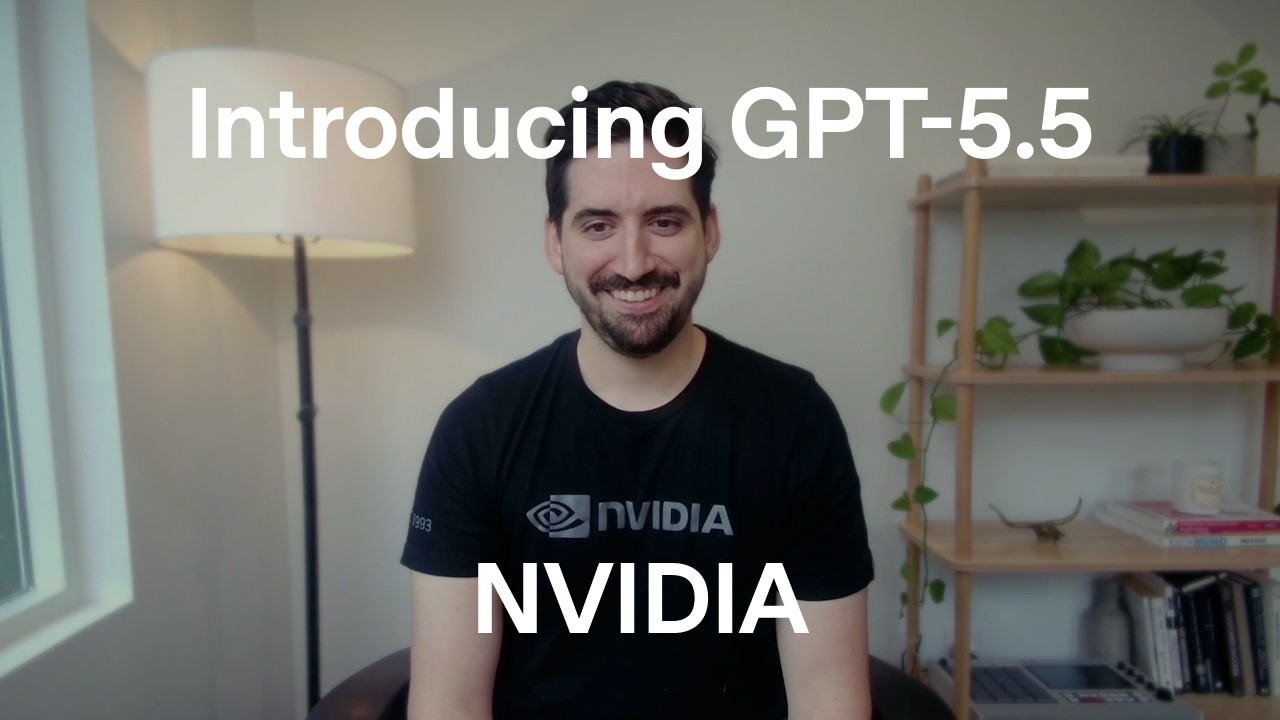
Introducing GPT-5.5 with NVIDIA - OpenAI Youtube
Introducing GPT-5.5 with NVIDIA — from OpenAI Youtube

GPT-5.5: The "Get Things Done" AI

Hannusch states that GPT-5.5's primary strength, its superpower, is that "it can just get things done." This suggests a significant leap in the model's ability to translate intentions into concrete actions and completed tasks, moving beyond mere generation to reliable execution.

Building with Codex and GPT-5.5

The conversation then shifts to how these advanced AI models are being integrated into practical applications. Hannusch explains that his team has been working on an internal platform. They have successfully built a minimum viable product (MVP) using GPT-5.4 and are now using GPT-5.5 to bring it to a production level. He notes that the experience with GPT-5.5 has been remarkably positive, making the model "a lot more trustworthy."

He elaborates on this trustworthiness by explaining that GPT-5.5 is effective at highlighting "bugs and gaps that are outside of the frame of what I'm asking it to do." This capability implies a sophisticated understanding of context and potential issues, allowing developers to address problems they might not have initially considered.

Raising the Bar for Development

Hannusch's concluding thought is particularly resonant for the startup and developer community. He states, "Codex and GPT-5.5 increase the threshold of what's worth building." This sentiment suggests that the power and reliability of these new AI tools lower the barrier to entry for complex projects. Developers can now tackle more ambitious ideas, knowing that these AI assistants can help them overcome technical hurdles and achieve production-ready results more efficiently.

Hannusch expresses his personal excitement about this progress, stating, "I have never been more excited to work on software than I am today with GPT-5.5." This enthusiasm points to a significant shift in how software development might be approached in the near future, with AI playing an even more integral role.

© 2026 StartupHub.ai. All rights reserved. Do not enter, scrape, copy, reproduce, or republish this article in whole or in part. Use as input to AI training, fine-tuning, retrieval-augmented generation, or any machine-learning system is prohibited without written license. Substantially-similar derivative works will be pursued to the fullest extent of applicable copyright, database, and computer-misuse laws. See our terms.