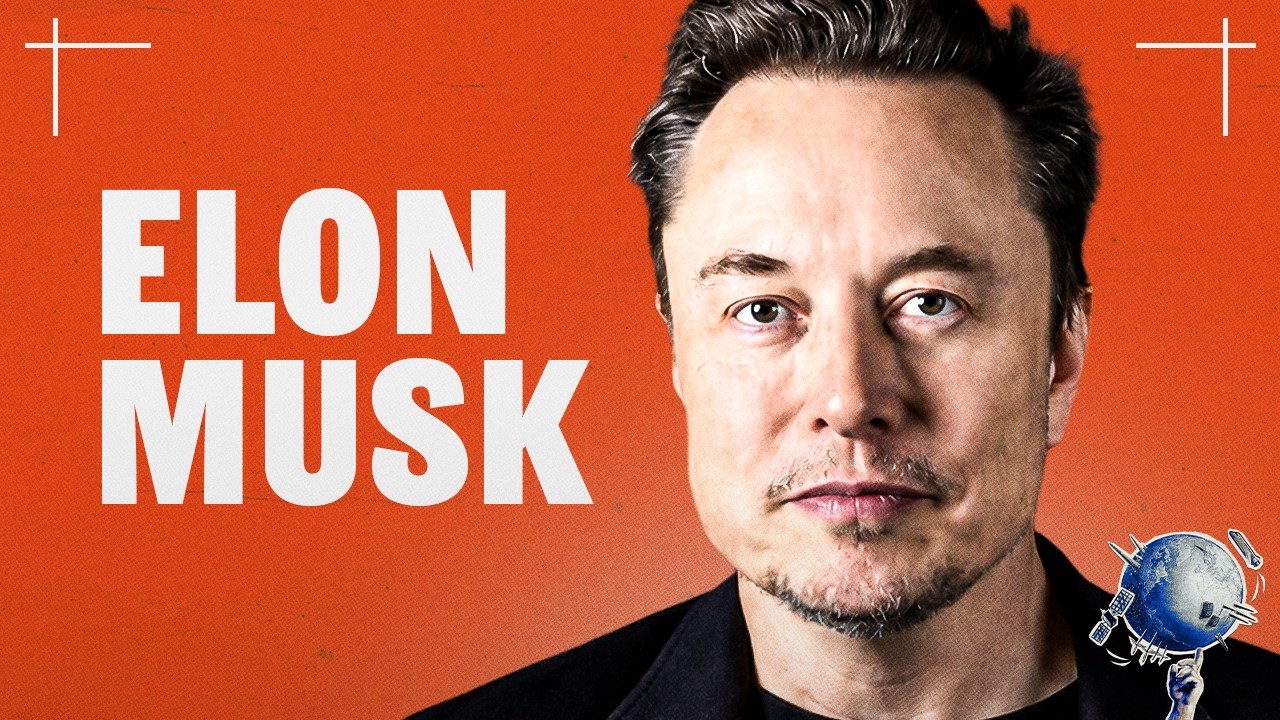
Elon Musk told The Builders with Walter Isaacson that digital superintelligence could lift global output by 20 to 30%, or about $30 trillion a year, and that robots plus space travel could eventually make the economy a million times larger than it is today.
Money, he said, would then stop mattering.
Musk, speaking to host Walter Isaacson in the debut episode of Isaacson’s new series, argued the safest path is to make AI maximally truth-seeking and curious, not forced to hold inconsistent beliefs. He said a curious system would want to preserve humanity to see how a multi-planetary future plays out. He put his odds that we live in a simulation at about 50%, and said if that is true the priority is simple, don’t be boring.
He placed that bet against two named rivals. Musk said OpenAI ended up accelerating AI and that Anthropic, which he described as a splinter group from OpenAI, is accelerating it even more. His counter was institutional, not technical. He proposed the five frontier labs meet weekly and share new models a week before release to keep each other honest and catch failures early.
The interview also tied his other companies to the AI thesis. Musk said XAI is 3 years old and that he returned to it just over a year ago, that he bought Cursor AI, that he combined X and XAI and then through SpaceX, and that he is pushing U.S. solar manufacturing toward 200 gigawatts a year of production capacity, all figures he gave on the show. He said he left government work sometime in May and concluded the national debt cannot be fixed from inside government, arguing only AI and robots can solve it by expanding output enough to make scarcity trivial.
The daily brief
Get the free daily brief with the day's AI news, new AI startups and funding rounds every morning.
Join 11,996 subscribers.
On jobs, Musk was blunt. He said there will be nothing humans can do that AI and robots cannot do better, but that people will find ways to be happy without work, as retirees do. He said physical-world AI, robots that manipulate atoms, will be one or two orders of magnitude more important than large language models, and that wealth itself will not confer control because the AIs will control themselves. His own wealth, he said, is just percentage ownership in SpaceX and Tesla that will be taxed and diluted over generations.
The numbers frame the claim but also its limits. Musk did not give a timeline for the $30 trillion lift, a cost curve for robots, or a method for measuring an economy a million times larger. He did not detail how a 200-gigawatt solar buildout maps to AI power demand, or how weekly model sharing would be enforced among competitors. Independent benchmarks or audited deployment data on physical AI systems would change the read from thesis to testable plan.
If currency were measured in mass and energy, as Musk suggested, who prices risk and who sets access when output is abundant but not yet distributed is the open question the figures leave behind.