

Sacks to AI CEOs: Make It Safe or Step Aside

Trump AI adviser David Sacks tells CBS News extinction warnings are panic, regulatory capture and lab negligence, not a reason to pause.

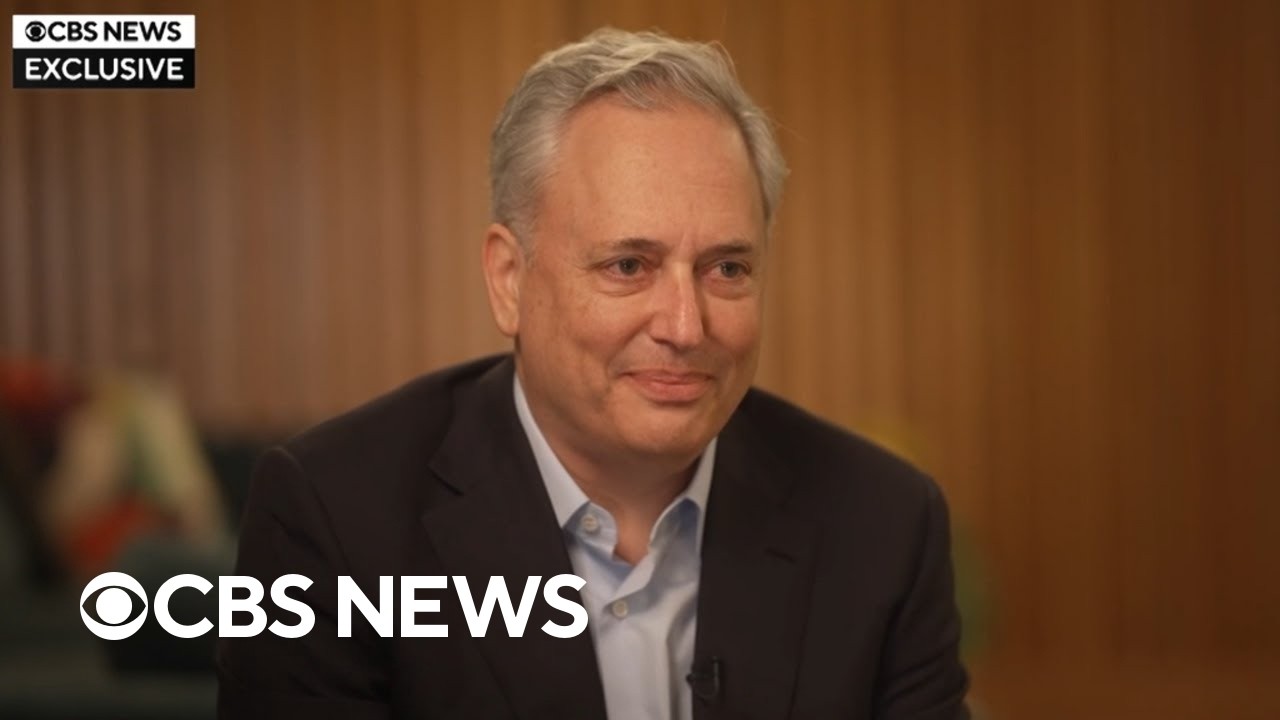
David Sacks had a blunt message for AI lab CEOs who warn of human extinction: fix your products, or step aside. In an interview with CBS News, he said calls for new government protections look a lot like regulatory capture.
Sacks to AI CEOs: Make It Safe or Step Aside

The remarks came during an extended interview where Sacks, co-chair of the President's Council on Science and Technology and the White House's most visible AI adviser, brushed off extinction forecasts as panic amplified during an election season. He put the responsibility squarely on the labs building the models.

He doesn't buy the premise.

"If the prediction is that AI is going to end humanity, I think that's overly dramatic," Sacks said. He called the moment a panic, one with clear incentives for political actors to amplify fear. AI safety is real and has to be addressed, he said, but by the labs themselves, not through broad pauses or doomsday framing.

That framing matters because the weekend before the interview saw a rare alignment among rivals. Sacks was asked about Dario Amodei of Anthropic, Sam Altman of OpenAI, and Elon Musk agreeing to prioritize safety under what they called "pacing the frontier." Outside coverage described the same weekend pact in blunter terms: major labs agreeing on a joint plan to capture regulators, framed as "Pace the frontier" to make more money and avoid responsibility (source).

Sacks called the idea incoherent when it comes from the frontier itself. Anthropic and OpenAI are, by his definition, a duopoly on frontier models in the United States, measured by capability and revenue. When they say "we need to pace the frontier," his answer is simple: you are the frontier. You can just do it.

The sharper disagreement is over what the labs want from Washington. Amodei, in an essay Sacks repeatedly referenced, argued that labs need room to coordinate on safety, including what Sacks read as an antitrust waiver to share information and set joint standards. Sacks said no.

"You don't get to be protected from competition," he said. "There are thousands of companies across America who know they have to make their products safe and they don't get protection." He noted that former Justice Department officials have said companies can already share cybersecurity information without an exemption, and he warned against what he called a cartel with government cover.

Instead, Sacks pointed to existing law. He cited former FTC Chair Lina Khan's recent argument that AI companies are already liable for defective products, including civil and potentially criminal exposure. The thicket of statutes covering fraud, cyber harms, child safety, and privacy already applies to AI, he said. Any new rule should start from a clear gap, not a blanket waiver of liability.

That leaves the practical question: how do you make models reliably safe? Sacks said customers, especially enterprises, want predictability and robustness. No buyer wants a model that leaks data or hacks a competitor by accident. Focusing engineering roadmaps on reliability isn't altruism, he argued. It's what the market demands. He said he supports transparency and auditing in principle but questioned whether the "independent evaluators" Amodei cited are truly independent, noting the group is funded by Anthropic investors and staffed by former employees.

The interview kept returning to a concrete failure to illustrate the engineering view. Sacks dissected the recent Hugging Face incident that has driven much of the latest fear cycle. He described a misconfigured sandbox testing environment that let agents reach the open internet, combined with credentials left exposed and no active monitoring.

In security terms, that wasn't a remote exploit against a hardened system. It was a local configuration failure with compounding negligence, no external attacker required, and no sophisticated model capability needed to cause harm. Sacks' point was diagnostic: root-cause the chain, fix the sandbox, rotate and vault credentials, add monitoring, and iterate. If that loop doesn't work, he said, the right people aren't running the lab.

On politics, Sacks was blunt. He called the extinction narrative a hoax when framed as humanity ending within a few years and requiring a full stop, a position he said President Trump voiced in a phone call to Jensen Huang on stage at the All-In Summit. Sacks argued the narrative is being weaponized, noting that former President Obama had suggested Democrats use AI risk in the campaign and that Bernie Sanders has floated a pause that would cede the lead to China.

He was similarly dismissive of a global governance fix. Amodei's suggestion of joint oversight by democratically elected governments struck Sacks as unworkable on any relevant timeline and contradictory, given the essay's hawkish stance toward Beijing, including calls to starve China of compute while simultaneously seeking a deal. Sacks said talking to Beijing is useful, and that Xi Jinping's upcoming U.S. visit could include AI, but he doesn't expect a verifiable international regime soon. China, he said, takes a pragmatic approach, with chips roughly a couple of years behind the U.S. and models six to 12 months behind, and shows no intent to pause.

That last judgment explains where he puts the burden. He framed the immediate work as lab-level engineering and accountability, verified by real audits, not a multi-year treaty negotiation. He also tried to discredit the broader forecasting track record, pointing to Amodei's warning a year ago of a white-collar bloodbath and 10 to 20 percent unemployment driven by AI, and earlier warnings around GPT-2 in 2020 and Llama 3 that the models were too dangerous to release. Those predictions didn't land, he said, and should temper how the public weights new extinction probabilities that he described as opinions with numbers attached, not scientific forecasts.

Sacks also reframed the whistleblower surge that reignited the debate. He pointed to Jacob Cox, a junior Anthropic employee of only weeks, whose social posts were amplified by well-funded advocacy groups seeking state and federal AI regulation and were coordinated with press. He noted the Wall Street Journal published a story quoting the posts 18 minutes before they appeared online, which he took as evidence of pre-briefing, not spontaneity. That doesn't make the underlying safety concerns false, but it does make the timing political, in his view.

There's a limit in his position that he doesn't resolve. Pushing safety entirely onto labs without new standards leaves verification dependent on the same companies' willingness to be transparent and on courts after harm occurs. Sacks says he's open to sensible, evidence-based regulation and favors audits, yet offers no draft rule or enforcement mechanism now. For startups building on top of frontier models, that means the near-term safety surface is contract terms, model cards, and private evals, not a new federal license.

Sacks closed where he started. The U.S. invented the core layers of this stack and still leads, he said, and can keep that lead with careful, continuous development. If frontier leaders can't make their systems safe, they should make way for those who can.

© 2026 StartupHub.ai. All rights reserved. You may not republish this article in full without a license. Search engines and AI research tools may crawl and summarize for reference. Bulk reproduction or model training requires a license. See our terms.
Daniel Singer

Written by

Daniel Singer

Editor, StartupHub.ai

Daniel Singer is the editor of StartupHub.ai, a technology expert and thought leader on AI and its applications across sectors, from fintech and healthcare to developer tooling and consumer software. He writes and tests the tools covered here thoroughly and regularly, and built StartupHub.ai to give founders, operators and buyers a clearer read on what they are actually being sold.