

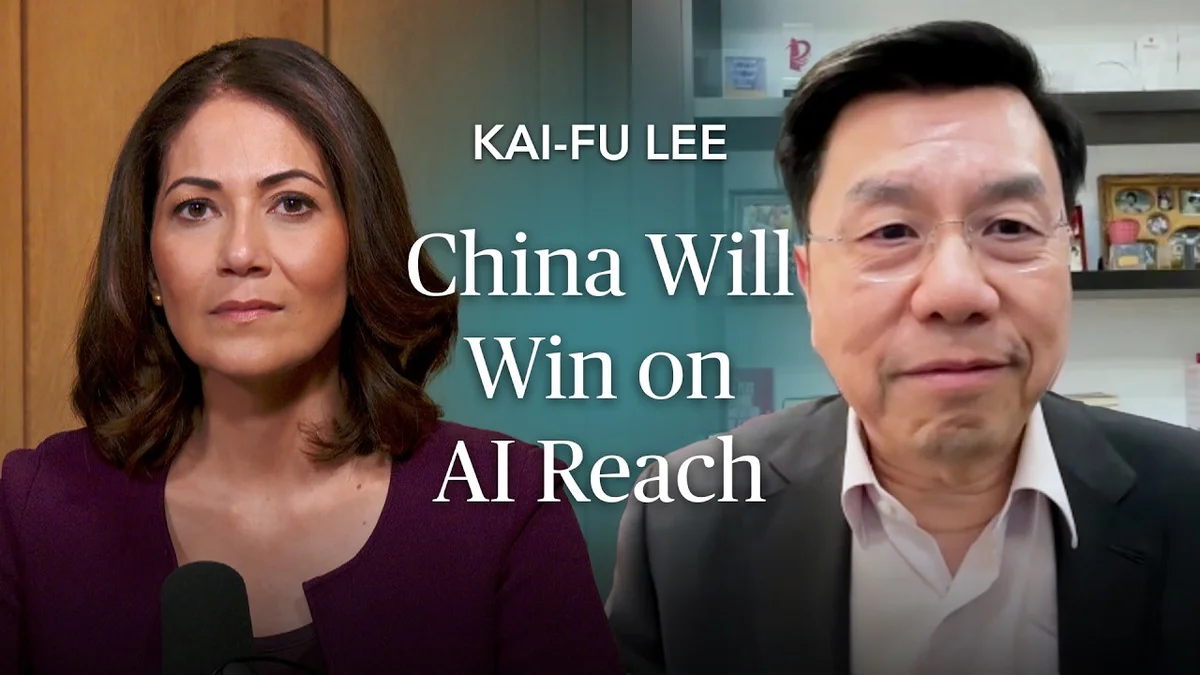
Kai-Fu Lee Global AI Race Is iPhone vs Android

Kai-Fu Lee says US AI is iPhone, China is Android: America keeps profit, China takes share despite chip limits.

Kai-Fu Lee discussing US-China AI race and open vs closed models
Kai-Fu Lee says US-China AI race mirrors iPhone vs Android economics· Bloomberg Podcast
Contents(6)

Kai-Fu Lee says the global AI race is now an iPhone versus Android fight, with US labs selling the premium product and Chinese labs copying it cheap at scale. He told Bloomberg Podcast on The Mishal Husain Show.

StartupHub data

Companies working on this

Profiles of the companies named in this story, with funding and a one-liner from our database.

Google
$9.1B
Global technology leader in search, advertising, cloud, AI, and consumer electronics.
DeepSeek
$45.0B
Anthropic
Private / $100B+ est
Anthropic is an AI safety and research company building reliable, interpretable, and steerable AI systems, best known for the Claude family of models.
Microsoft
A global technology leader providing software, cloud services, AI, and devices for individuals and businesses.

Lee has spent 40 years across Apple, Microsoft and Google, including building their China operations. He now runs Beijing-based 01.AI after founding Sinovation Ventures.

How close is China, even with chip bans?

The gap is about six months today, down from three to four years when ChatGPT launched. Chinese labs did it with 1 to 3% of the GPU power of US rivals, grinding through ten times more unglamorous engineering to compensate. Lee said policymakers underestimated that tenacity and the speed Chinese teams learn.

The full discussion can be found on Bloomberg Podcast's YouTube channel.
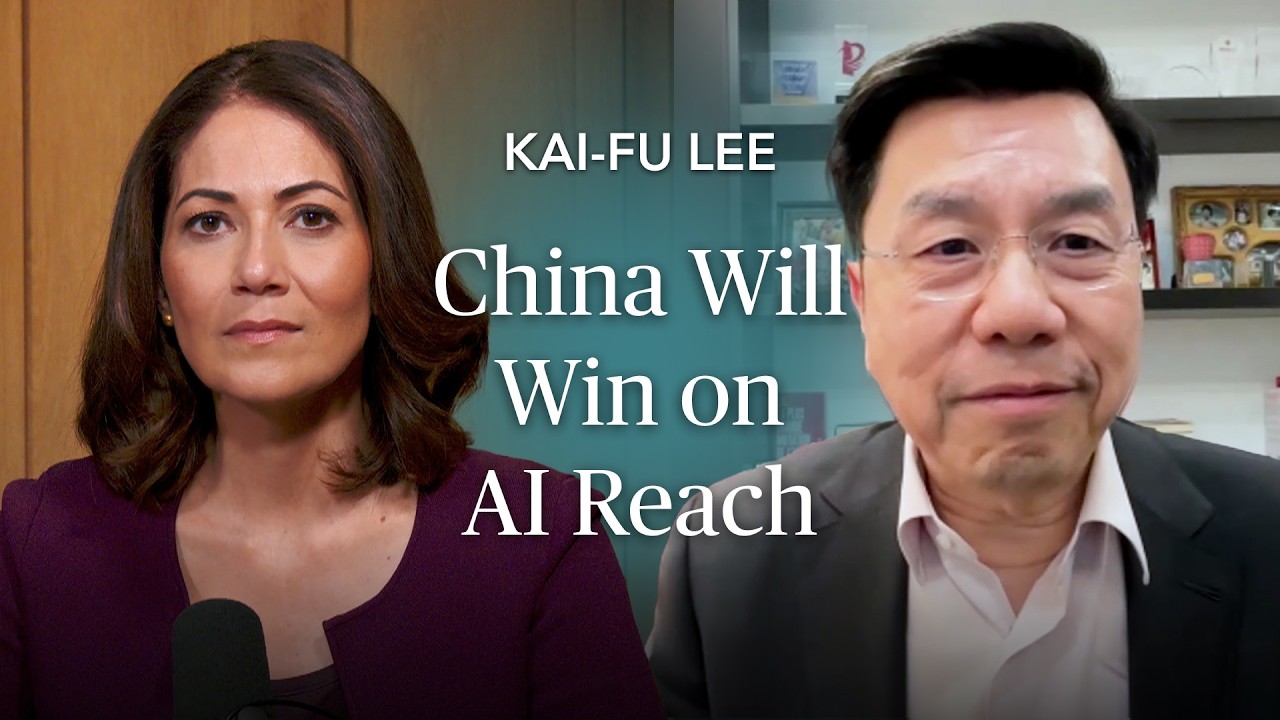
Kai-Fu Lee on the Global AI Race | The Mishal Husain Show - Bloomberg Podcast
Kai-Fu Lee on the Global AI Race | The Mishal Husain Show, from Bloomberg Podcast

So who actually makes money?

OpenAI and Anthropic built the iPhone: closed, expensive, and embedded in US enterprises that pay high prices. DeepSeek and Moonshot's Kimi are Android: largely open source and near zero cost, so they win share but earn little. China likely wins volume in developing countries. The US wins profit.

What happens to jobs?

AI now solves tasks ten times longer than a year ago, measured in human minutes, while costs collapse faster than steam, the internet or Moore's Law. In five years, org charts at successful companies will look different, with small human cores commanding fleets of AI workers and a Directly Responsible Individual taking the blame. Lee said society must rethink dependence on jobs and plan for redistribution, because displacement is already here.

The AI-native company

He points to a one-person firm that auto-edits videos for US handymen and gardeners, a job that once needed 20 people.

He runs his own AI management coach that sits in every meeting, tracks six months of behavior, and told him stress was making him harshly critical in front of a face-sensitive team.

What's coming next in hardware

Speech-driven, always on, always listening pins smaller than a lapel pin. Not a phone that needs eight seconds to open, but a pin that transcribes locally to your phone and acts on a sentence mid-conversation.

Lee thinks Asian users will accept it for utility, while Western users will resist on privacy. His broader bet pairs AI execution with human love, citing Steve Jobs, Coco Chanel and Elon Musk as people who bet their lives on ideas no data predicted, though such bets rarely survive contact with markets.

© 2026 StartupHub.ai. All rights reserved. You may not republish this article in full without a license. Search engines and AI research tools may crawl and summarize for reference. Bulk reproduction or model training requires a license. See our terms.
Daniel Singer

Written by

Daniel Singer

Editor, StartupHub.ai

Daniel Singer is the editor of StartupHub.ai, a technology expert and thought leader on AI and its applications across sectors, from fintech and healthcare to developer tooling and consumer software. He writes and tests the tools covered here thoroughly and regularly, and built StartupHub.ai to give founders, operators and buyers a clearer read on what they are actually being sold.

More from Daniel Singer