


New Money put Steve Eisman, the investor Michael Lewis made famous in The Big Short, on camera to explain how an AI bust could unfold. His answer wasn't about models getting worse.
It was about customers. Or the lack of them.
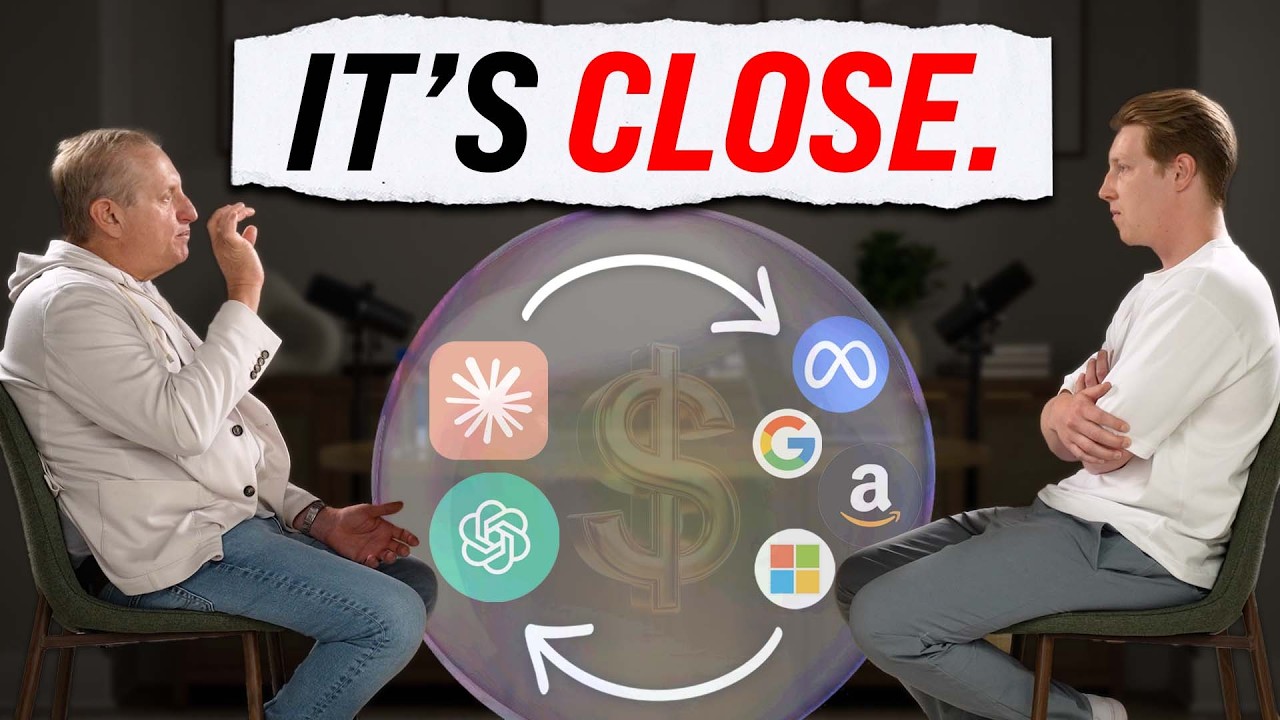
Eisman, who built his reputation betting against subprime housing before 2008 and now hosts The Real Eisman Playbook podcast with his wife Valerie, said the entire AI buildout carries a concentration risk he called awe inspiring. He walked through a chain that starts at Nvidia, runs through the hyperscalers and ends at two private model labs.
Start at the top. Nvidia just reported revenue growth over 100% and remains the largest company on earth by market cap, which Eisman owns. Then he tells viewers to open the 10-Q to Note 7. As of the end of July, 70% of accounts receivable came from five customers. Warning flag, he said, not the end of the world.
Then the hyperscalers. For Microsoft, Amazon and Google, 70% of AI revenue, which equals 25 to 30% of total cloud revenue, comes solely from Anthropic and OpenAI, he said. Throw in Oracle and the picture sharpens. Oracle's RPO, its backlog, jumped from about $150 billion to $400 billion in three months when it reported the August quarter last October. The stock ripped from $230 to $330 in two days. Sell-side work afterward attributed 50% of that RPO to OpenAI alone. Eisman said Oracle's RPO is now over $600 billion and still about half OpenAI.