

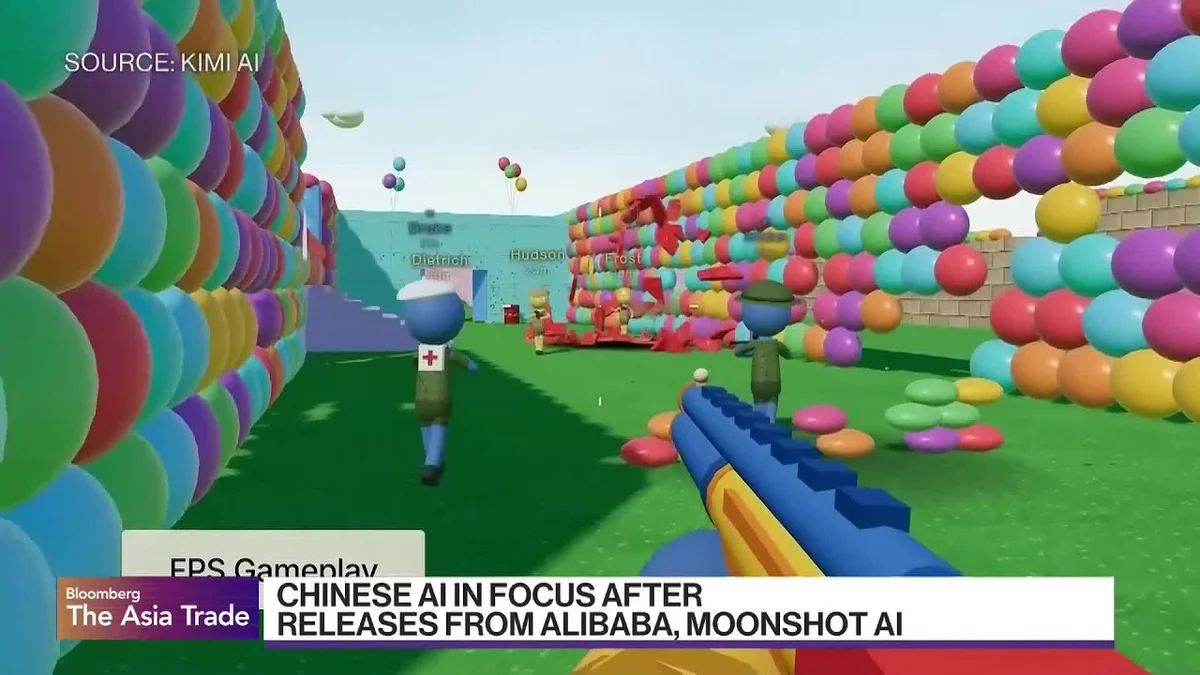
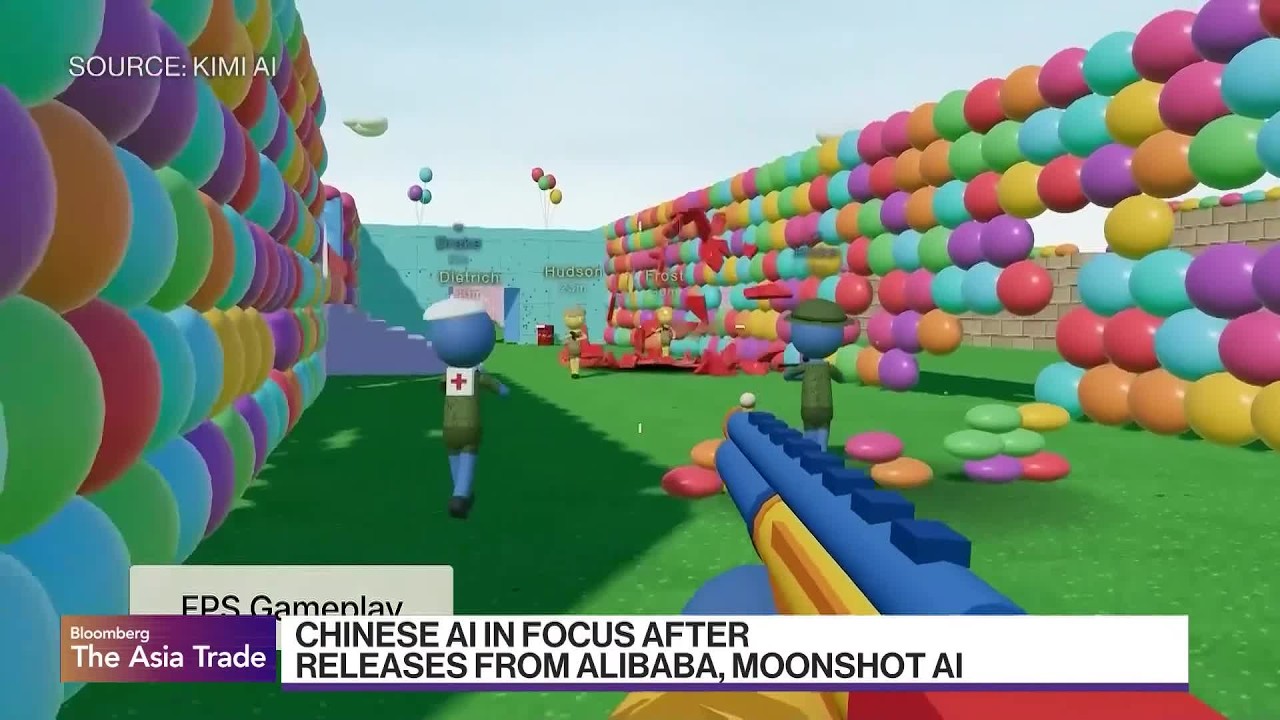
Moonshot AI's Chip-Defying AI Models

Anthony Stephens discusses Moonshot AI's Kimi K3 model, highlighting China's software innovation in overcoming hardware constraints and its market impact.

Anthony Stephens speaking on Bloomberg 'The Asia Trade' discussing Chinese AI models.
Bloomberg Technology
Visual TL;DR
China hardware constraintsDriver
From the article 2 mentionsStephens detailed how the model's technical advancements, particularly in software innovation, allow it to compete with US-developed frontier models despite China's constraints in accessing cutting-edge hardware like high-bandwidth memory (HBM) and GPUs.
Moonshot AI Kimi K3Core
new AI model from China's Moonshot AI, discussed by Anthony Stephens
From the article 3 mentionsIn a discussion on Bloomberg's "The Asia Trade," Anthony Stephens, a representative from Bloomberg News, provided an assessment of the capabilities of Chinese AI models, specifically highlighting Moonshot AI's latest offering, Kimi K3.
Software innovationCore
creative application of probabilistic mathematics for compute and memory efficiency
From the article 4 mentionsStephens explained that China's AI leaders are achieving competitive results through software innovation, effectively finding workarounds for hardware limitations.
Alibaba's stakeContext
Alibaba has a vested interest in Moonshot AI's success and capabilities
From the articleThe discussion also touched upon Alibaba Group Holding Limited's (NYSE:BABA) significant stake in Moonshot AI.
Overcome hardware limitsEffect
software workarounds effectively deal with constraints around compute and memory
Competitive AI modelsOutcome
Kimi K3 competes with US-developed frontier models despite hardware disadvantages
From the article 7 mentionsStephens noted that while the HBM market might remain stable for now due to the demand from large models, there is a growing concern that Chinese innovation could shift market focus towards DDR5 and DRAM, sectors where China possesses greater competitive capacity.
Market implicationsContext
potential impact on semiconductor and memory markets due to software advancements
From the article 3 mentionsHowever, the efficiency gains in memory usage present a potential challenge to the current bull market in memory chips.
Contents(3)

In a discussion on Bloomberg's "The Asia Trade," Anthony Stephens, a representative from Bloomberg News, provided an assessment of the capabilities of Chinese AI models, specifically highlighting Moonshot AI's latest offering, Kimi K3. Stephens detailed how the model's technical advancements, particularly in software innovation, allow it to compete with US-developed frontier models despite China's constraints in accessing cutting-edge hardware like high-bandwidth memory (HBM) and GPUs. This achievement is attributed to resource optimization techniques, including the creative application of probabilistic mathematics to enhance efficiency in compute and memory usage.

Software Innovation as a Workaround

Stephens explained that China's AI leaders are achieving competitive results through software innovation, effectively finding workarounds for hardware limitations. "There is a lot of software that is dealing very creatively with the constraints around compute and memory," he stated. The approach involves using "extreme probabilistic mathematics" to understand machine thinking more efficiently and correlate it with specific use cases. This strategy allows models like Kimi K3 to excel in areas like coding, where resource efficiency is paramount, rather than attempting to be a general-purpose solution for all tasks.

The full discussion can be found on Bloomberg Technology's YouTube channel.

Moonshot AI Makes Waves Despite China's Chip Constraints - Bloomberg Technology
Moonshot AI Makes Waves Despite China's Chip Constraints, from Bloomberg Technology

Market Implications for Semiconductors and Memory

The development of these resource-optimized AI models raises questions about their impact on the semiconductor industry. While the ability of Chinese companies to develop advanced AI without access to top-tier chips from companies like TSMC (NYSE:TSM) and Nvidia (NASDAQ:NVDA) has caused concern, Stephens suggested that the models' cost-effectiveness could open up new AI use cases and expand the overall market. However, the efficiency gains in memory usage present a potential challenge to the current bull market in memory chips. Stephens noted that while the HBM market might remain stable for now due to the demand from large models, there is a growing concern that Chinese innovation could shift market focus towards DDR5 and DRAM, sectors where China possesses greater competitive capacity.

Alibaba's Stake in Moonshot AI

The discussion also touched upon Alibaba Group Holding Limited's (NYSE:BABA) significant stake in Moonshot AI. This ownership structure adds an interesting dynamic, suggesting a potential internal competition or collaboration as both entities push the boundaries of AI development.

© 2026 StartupHub.ai. All rights reserved. You may not republish this article in full without a license. Search engines and AI research tools may crawl and summarize for reference. Bulk reproduction or model training requires a license. See our terms.
Daniel Singer

Written by

Daniel Singer

Editor, StartupHub.ai

Daniel Singer is the editor of StartupHub.ai, a technology expert and thought leader on AI and its applications across sectors, from fintech and healthcare to developer tooling and consumer software. He writes and tests the tools covered here thoroughly and regularly, and built StartupHub.ai to give founders, operators and buyers a clearer read on what they are actually being sold.

More from Daniel Singer