

Kimi K3: China's AI Challenger Rattles Silicon Valley

Moonshot AI's Kimi K3, a powerful new AI model, is challenging US dominance and raising questions about innovation and global competition in the AI race.

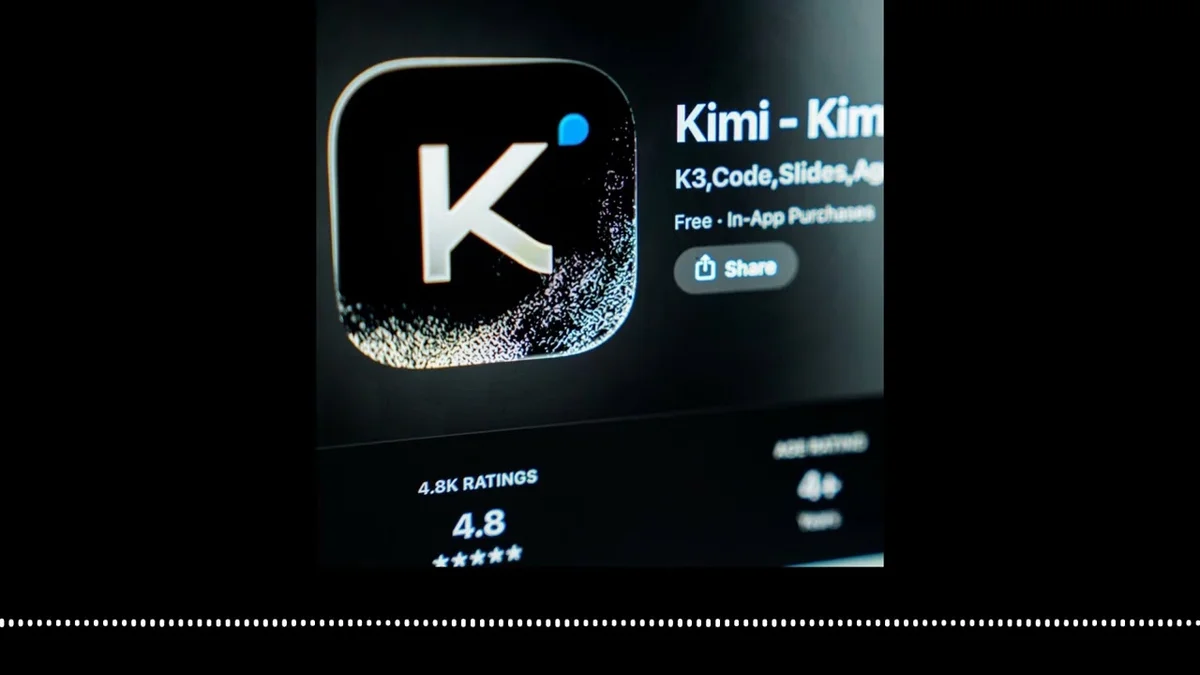
Close-up of a smartphone screen displaying the Kimi AI app interface.
Bloomberg Podcast
Visual TL;DR
Moonshot AICore
Chinese startup challenging US dominance in the global AI race
From the article 4 mentionsMoonshot AI, a Chinese startup, has released its new AI model, Kimi K3, which is reportedly stacking up favorably against industry giants like OpenAI and Anthropic.
Releases Kimi K3Core
new powerful AI model stacking up favorably against US industry giants
From the article 9 mentionsKimi K3 is being lauded for its impressive capabilities, including a staggering 2.8 trillion parameters, a metric often used to gauge the size and potential of AI models.
2.8 Trillion ParametersContext
From the articleKimi K3 is being lauded for its impressive capabilities, including a staggering 2.8 trillion parameters, a metric often used to gauge the size and potential of AI models.
Massive Context WindowContext
processes approximately 800,000 words in a single prompt for complex tasks
From the articleFurthermore, Kimi K3 features a massive context window, capable of processing approximately 800,000 words in a single prompt.
Challenges US DominanceDriver
raising questions about innovation and global competition in the AI race
From the articleThis development is particularly significant as it directly challenges the perception that only proprietary AI can be at the frontier of technological advancement.
Silicon Valley RattledOutcome
triggering memories of past market panics and tech world shockwaves
From the articleThe global AI race has a new contender, and it's making Silicon Valley and Washington take notice.
Global AI Race ShiftsOutcome
new contender making Silicon Valley and Washington take notice
From the article 3 mentionsMark Anderson, Bloomberg's Asia technology editor, notes that Kimi K3's performance, especially given its lower operational cost compared to US counterparts, signifies a significant shift in the global AI race.
Contents(4)

The global AI race has a new contender, and it's making Silicon Valley and Washington take notice. Moonshot AI, a Chinese startup, has released its new AI model, Kimi K3, which is reportedly stacking up favorably against industry giants like OpenAI and Anthropic. This development has sent shockwaves through the tech world, triggering memories of past market panics and raising questions about the methods used to develop such advanced technology with fewer resources.

The Rise of Kimi K3

Kimi K3 is being lauded for its impressive capabilities, including a staggering 2.8 trillion parameters, a metric often used to gauge the size and potential of AI models. This places it on par with the most advanced offerings from US competitors. Furthermore, Kimi K3 features a massive context window, capable of processing approximately 800,000 words in a single prompt. This makes it exceptionally powerful for tasks involving extensive documents, complex codebases, or in-depth research papers.

Adding to its disruptive nature, Kimi K3 has been released as an open-weight model, meaning its underlying architecture and 'recipe' are accessible to researchers, startups, and governments. This contrasts with proprietary models like GPT and Claude, which operate behind closed doors. This open approach, similar to other models from companies like Deepseek, allows for greater transparency and customization.

The full discussion can be found on Bloomberg Podcast's YouTube channel.

The Chinese AI Model Rattling Silicon Valley and Washington | Big Take Asia - Bloomberg Podcast
The Chinese AI Model Rattling Silicon Valley and Washington | Big Take Asia, from Bloomberg Podcast

Concerns and Investigations

Despite its impressive technical specifications, Kimi K3's rapid ascent has not been without scrutiny. Concerns have been voiced regarding the potential use of banned Nvidia chips and the alleged theft of proprietary data from rivals like Anthropic. Michael Katzios, director of the White House Office of Science and Technology Policy, has indicated that Moonshot AI may have developed an internal platform to conduct large-scale 'distillation' against US models. This technique involves training a less capable model on the outputs of a more powerful one, effectively leveraging existing advancements.

The US administration is reportedly investigating whether Chinese AI companies, including Moonshot, have violated export controls. While Moonshot AI has not directly responded to these allegations, China's foreign ministry maintains that the country's AI progress is a testament to self-reliance and homegrown innovation.

Shifting the AI Landscape

The emergence of Kimi K3, alongside Deepseek's earlier R1 model, is challenging the long-held assumption that AI leadership is solely determined by budget size, data center capacity, and access to cutting-edge hardware. Mark Anderson, Bloomberg's Asia technology editor, notes that Kimi K3's performance, especially given its lower operational cost compared to US counterparts, signifies a significant shift in the global AI race. He suggests that China is now estimated to be only about six months behind the US in AI development, a gap that is rapidly closing.

This development is particularly significant as it directly challenges the perception that only proprietary AI can be at the frontier of technological advancement. The success of models like Kimi K3 demonstrates that innovative approaches, even with limited resources, can yield remarkable results.

The Broader Implications

The Kimi K3 moment highlights China's determination to reshape the global AI landscape and its intent to rewrite the rules of the race for AI supremacy. The availability of powerful, low-cost AI models from China could democratize access to this transformative technology, but it also raises strategic questions for Western tech giants and policymakers. The debate in Washington over whether to tighten controls on AI development and access is becoming increasingly complex, especially as companies like Meta, with its CEO Mark Zuckerberg advocating for open models, continue to push the boundaries of what's possible.

Ultimately, the true measure of this seismic shift will be seen in market adoption and the ability of these models to gain traction with businesses worldwide. If Chinese AI can deliver on its promise of powerful and affordable solutions, it could fundamentally alter the trajectory of global technological development.

© 2026 StartupHub.ai. All rights reserved. You may not republish this article in full without a license. Search engines and AI research tools may crawl and summarize for reference. Bulk reproduction or model training requires a license. See our terms.
Daniel Singer

Written by

Daniel Singer

Editor, StartupHub.ai

Daniel Singer is the editor of StartupHub.ai, a technology expert and thought leader on AI and its applications across sectors, from fintech and healthcare to developer tooling and consumer software. He writes and tests the tools covered here thoroughly and regularly, and built StartupHub.ai to give founders, operators and buyers a clearer read on what they are actually being sold.