About three quarters of new code at Meta is now written with AI, Chinmay Gandhi told AI Engineer, while on-call still pages a human at 2 a.m. when that code breaks.
The bottleneck moved.
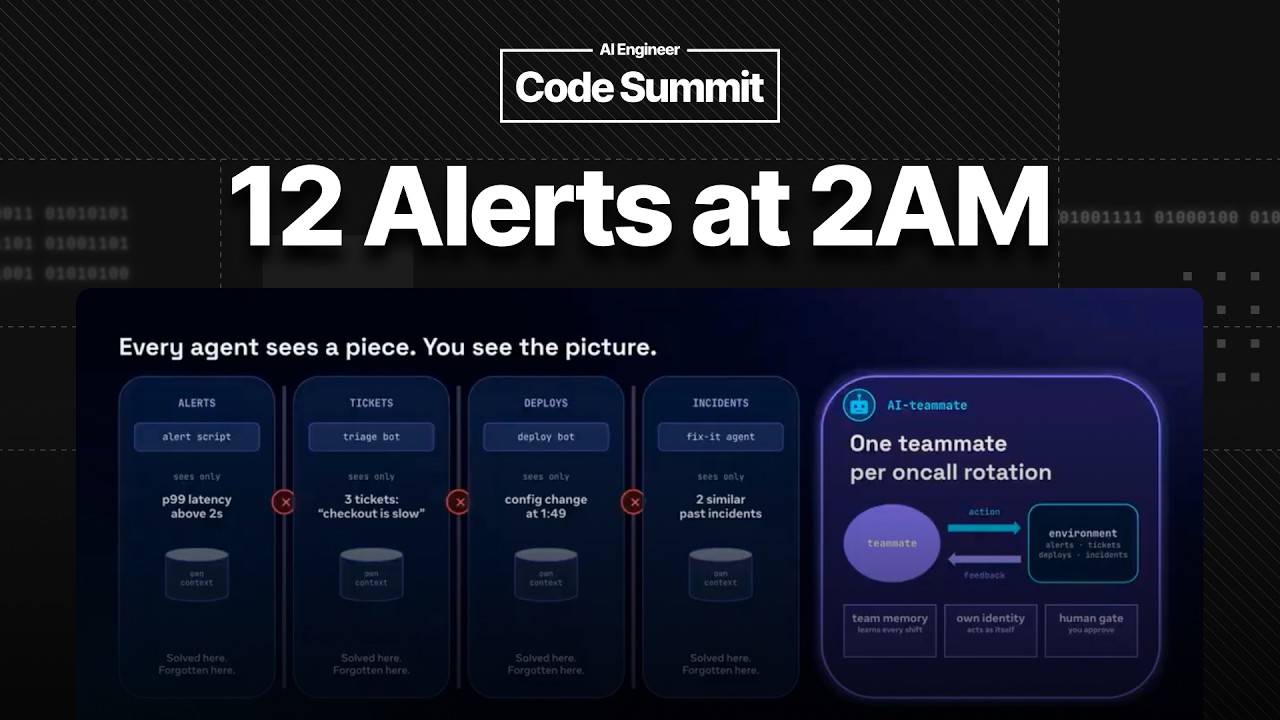
Writing got faster while operating did not, Gandhi said, so his team built one AI teammate per rotation to sit across alerts, tickets, deploys and past incidents. Swaapnika Motapothula and Vlad Tsvang, engineers on the incident response tooling team, described it as a single loop with team memory and a human gate, where engineers approve instead of operate.
The demo used the same 12 alerts at 2 a.m. to show the gap. With a question answering assistant, Gandhi said, the engineer picked each step and was still owning the rollback at 2:39. With the teammate, the system had ranked checkout first, merged payments as the same cause, linked the 1:49 config change and two past incidents, and left a hypothesis with a 30 second check and a fix for review, so the engineer verified at 2:01.
In the longer trial, 23 items arrived and only three needed the human, Motapothula said, while 18 were handled through normal review and CI and two were still in progress. That positions Meta closer to vendors that sell continuous operation than to chat assistants. NeuBird says its AI SRE investigates every alert across the stack and then keeps working to prevent the next incident, while a NeuBird survey divides the field between AI enhanced observability tools and fully autonomous investigation agents.
What the numbers do not show is time saved. The team said early signs of load reduction look promising for teams running autonomously but it will not put a number on it until a rigorous study is done. Most fix drafts do not land, the speakers said, and high criticality work stays human owned. A measured count of on-call hours returned, not usage counts, would change the read.
Can a system that earns trust on noisy alerts earn it on medium criticality mitigations without shifting risk back to the approver at 2 a.m.?