
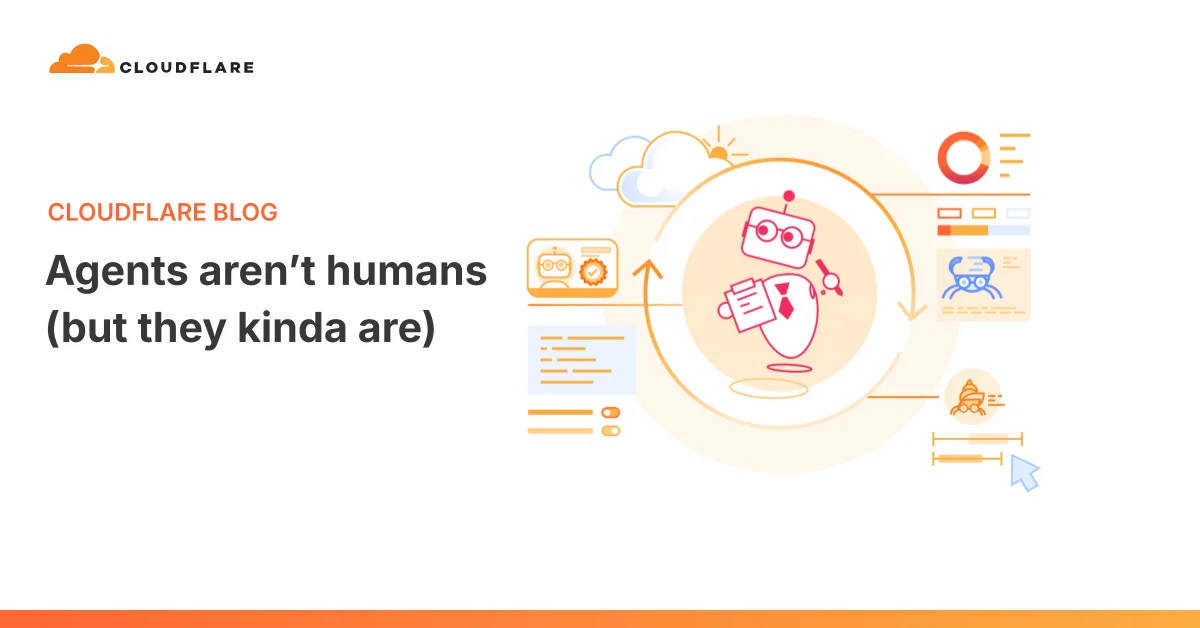
Cloudflare says agent traffic is growing fast and may soon eclipse human browsing, leaving sites unable to recognize or charge the real user. The warning covers remotely hosted agents that act as intermediaries, no local access needed.
Bryan Becker, writing on the Cloudflare blog, centers the argument on Ezra, a hypothetical personal assistant who shops for four clients.
Amy is her best client, a local CEO, plus Bob, Charlie and Debra. The corner grocer used to know Amy and what she liked. Now he only sees Ezra carrying orders for four people, and he does not want to turn her away because she brings volume.
Then Bob disputes the iPhone charge.
Becker says Bob asks Ezra to buy the phone, then tells the store he never authorized it and keeps the device. The store has to prove Bob asked for it, but it only ever saw Ezra. In the next case, Charlie hands Ezra a list of passwords to try at his bank. The bank sees what looks like an attack, yet banning Ezra would also ban Amy, Bob and Debra.
That is the intermediation problem, Becker argues. Cloudflare proposes what it calls the Intermediation Principle, that the business relationship between users and sites must hold regardless of intermediation. Sites still need to answer three questions, he writes: is the person truthful about who they are, is that person trustworthy, and who answers for the action.
The push for agents is already public. OpenAI describes its dot as an always-on agent in ChatGPT that keeps making progress between conversations, according to OpenAI help center. Fortune reported OpenAI pitched Dots at its San Francisco developer event a month ago and then took the roadshow to London. Meta is moving the same way with Muse, which Becker names alongside dots, while local tools like OpenClaw are explicitly out of scope for his post.
That scope limit matters. Becker is talking about agents hosted somewhere other than the user device, not a browser on your laptop. His accountability model assumes an operator to identify, which does not exist when the agent runs locally.
Who proves Bob told Ezra to buy the phone when the store never saw Bob?




