


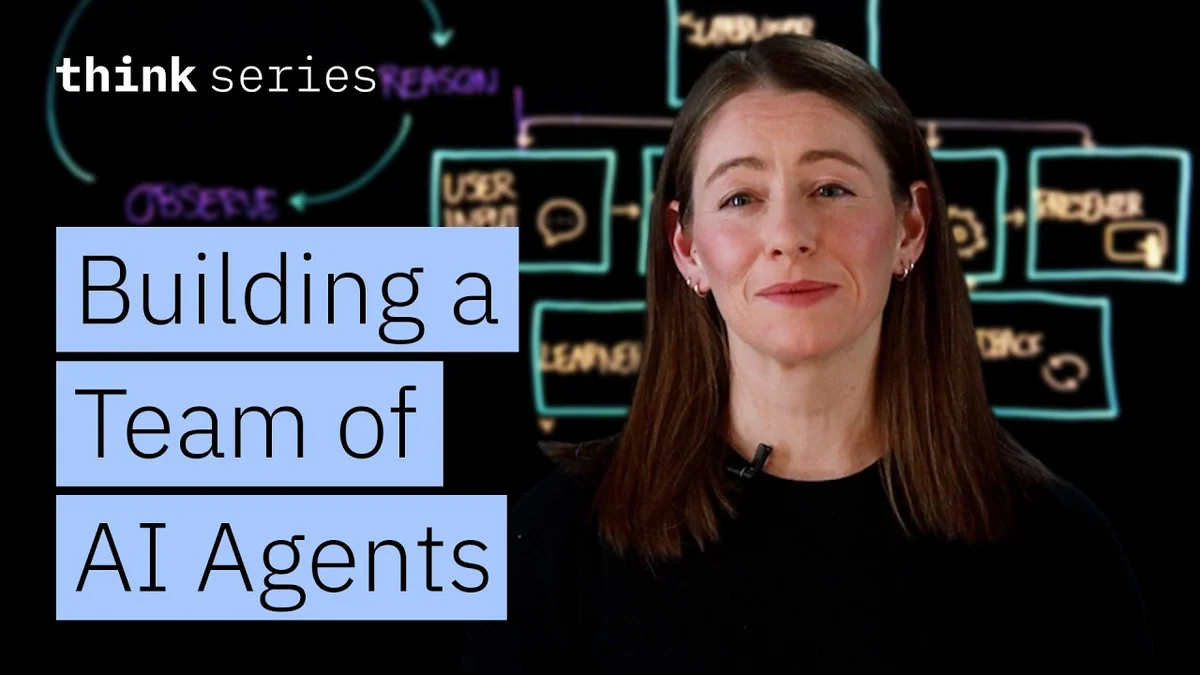
In the rapidly evolving world of artificial intelligence, the concept of AI agents is gaining significant traction. These agents are designed to perform tasks that a standalone Large Language Model (LLM) might struggle with on its own. Lauren McHugh Olende, Program Director at IBM, elaborates on this in a recent IBM Think Series video, highlighting the necessity of building AI teams for complex problem-solving.
Olende explains that AI agents, much like human collaborators, need to work together to achieve a final, cohesive output. This collaborative approach allows for a more efficient and effective tackling of intricate challenges.
The Team Structure of AI Agents
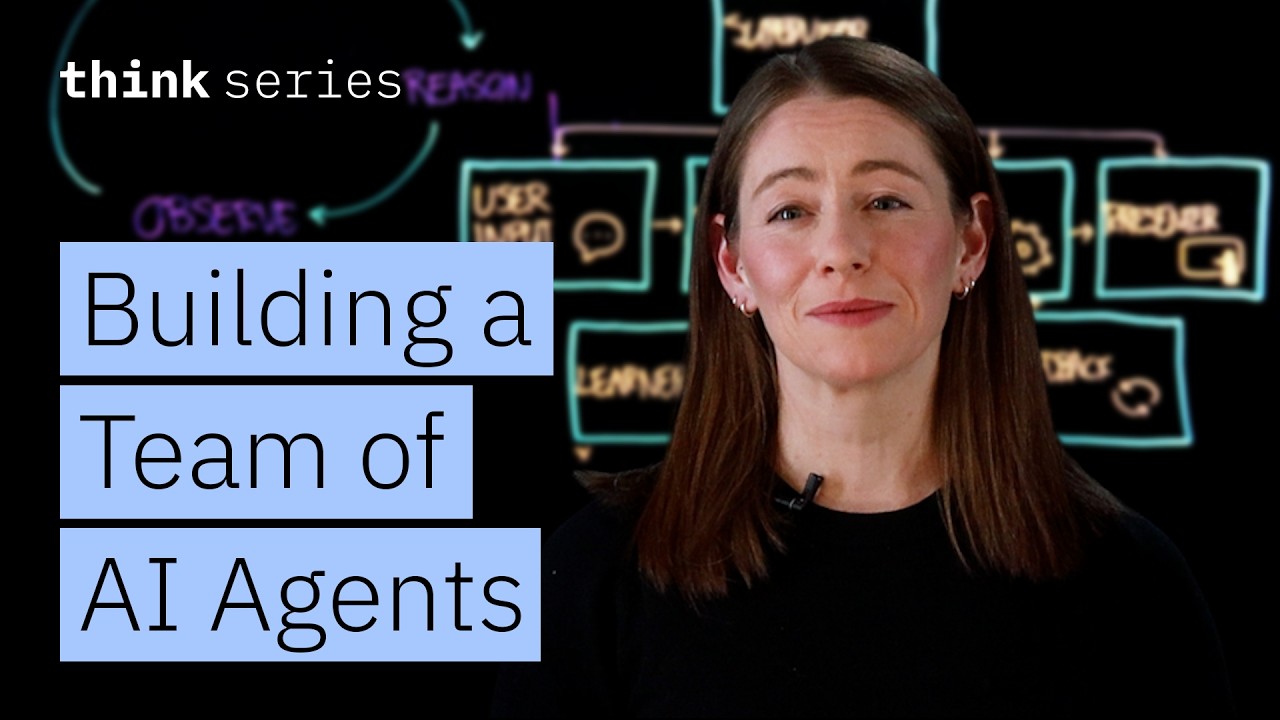
Olende draws a parallel between human teams and AI agent collaborations, stating, "Building a team of collaborators within your agent looks surprisingly like building a team of collaborators in a human." She outlines several distinct roles that AI agents can fulfill:
The full discussion can be found on IBM's YouTube channel.
- Doer: The agent that executes specific tasks.
- Planner: This agent breaks down complex problems into smaller, manageable steps.
- Tool Operator: This agent interacts with external tools or APIs to gather information or perform actions.
- Learner: This agent learns from external data sources, like blogs or social media, to stay updated.
- Feedback Provider/Critic: This agent reviews the output of other agents, identifying errors or areas for improvement.
- Supervisor: This agent oversees the entire process, ensuring the team's work aligns with the overall goal.
In the example of developing a mobile app, Olende illustrates how these roles might function. The "doer" agent might take user input, the "planner" agent would break this into actionable steps, and a "tool operator" could be used to generate code or access relevant APIs. A "learner" agent could research best practices for mobile app design, while a "feedback" agent critiques the generated code, and a "supervisor" ensures the final output meets the user's requirements.