


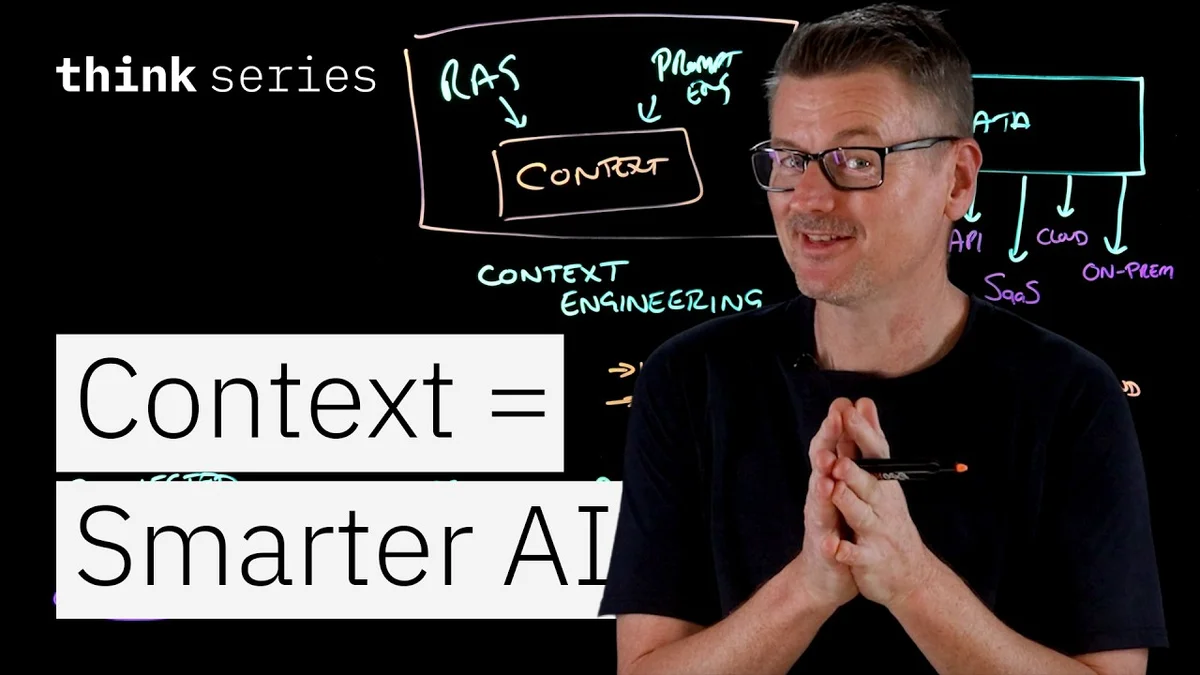
Martin Keen, a Master Inventor at IBM, recently shared insights into a critical challenge facing artificial intelligence development: context. In a video discussing the intricacies of AI models, Keen highlighted that the primary obstacle to achieving desired AI performance often lies not within the models themselves, but in the contextual information they receive and process.
Understanding the Contextual Challenge
Keen explained that current AI models, despite their impressive capabilities, can still produce incorrect or unreliable outputs when they lack the necessary contextual understanding. He drew a parallel to his own experience, where he had a list of applications to code but lacked the time or skills to complete them. Similarly, AI models can falter if they are not provided with the right context.
He identified four key pillars for effective AI context engineering:
The full discussion can be found on IBM's YouTube channel.
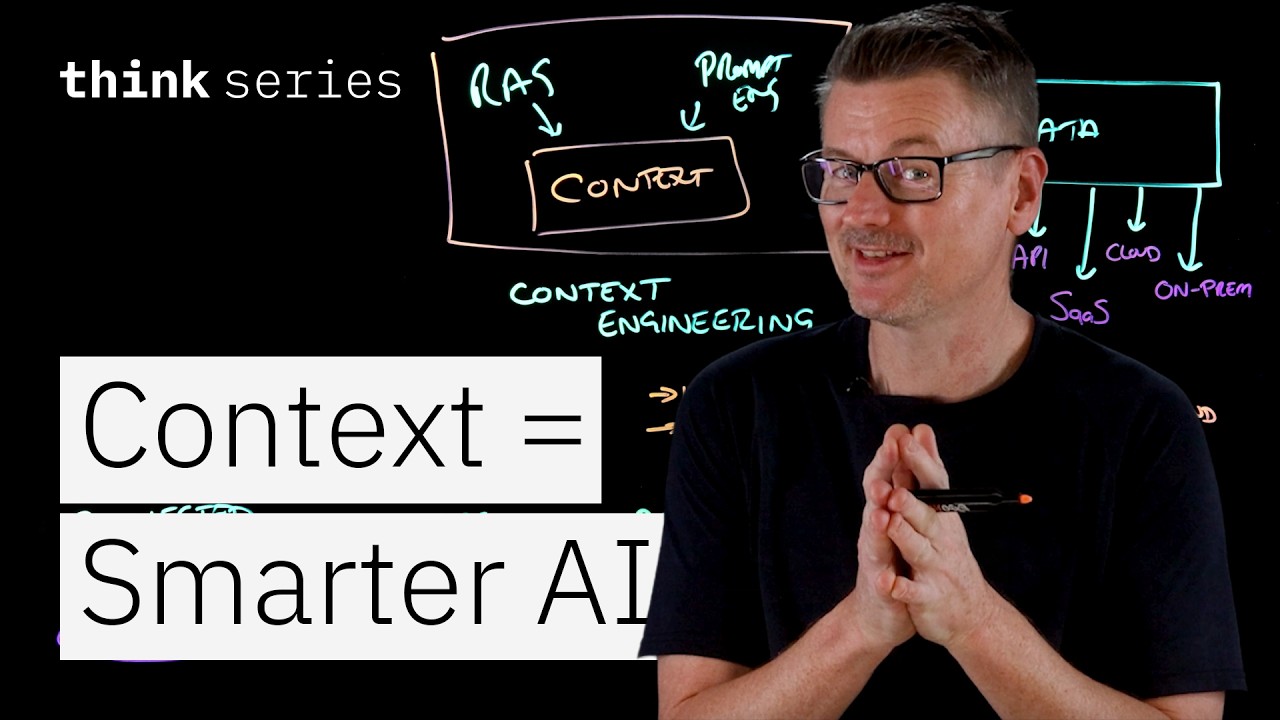
- Connected Access: The AI needs to be able to access data from various sources, including databases, APIs, SaaS platforms, and on-premises systems. This access must be reliable and, importantly, governed by appropriate permissions.
- Knowledge Layer: Raw data is not always useful. A knowledge layer is needed to process this data, extract meaning, map relationships, and provide structured information such as entity resolution, decision traces, and institutional knowledge.
- Precision Retrieval: This involves retrieving the most relevant pieces of information from the available data. Standard RAG (Retrieval-Augmented Generation) is effective for simple lookups, but advanced methods like graph RAG and context compression are crucial for more complex scenarios.
- Runtime Governance: Ensuring that AI models adhere to rules and policies in real-time is essential. This involves controlling the information the AI accesses and how it uses that information to make decisions, making the AI's output defensible.
The Nuances of Retrieval-Augmented Generation (RAG)
Keen elaborated on the different types of RAG. Standard RAG, he noted, involves chunking documents, embedding them into vectors, and then performing a similarity search at query time. While effective for basic lookups, it can struggle with complex relationships and large context windows.