Clay is betting that the winning sales agent does not need to be Clay's agent. It has publicly launched Clay CLI and rebuilt Sculptor around a coding agent, while head of AI Jeff Barg told Latent Space that usage of internal and external agent harnesses is "much closer to 50/50 than I would have thought."
I think that is a sturdier business than fighting for another chat window.
The engineering backs him up, with a caveat: Barg said the new agent uses the CLI in a cloud sandbox and can reach all Clay primitives, making it "way more expressive." Sculptor is live only in limited forms, with broad availability promised "very soon," so the architecture is not yet proof of widespread customer results. Barg said Workflows, one of 12 launches in 12 weeks earlier this summer, is drawing users away from tables, including agency owners.
Barg said Clay uses BullMQ for agent durability and LangSmith for observability. He said throttling and fallbacks help manage spiky inference, so enterprises running millions of enrichments do not crowd out customers with 10-person workflows. Yet Clay's evals still stop at whether a requested workflow was built with the specified properties; Barg wants second-order evidence such as campaign replies, and contrasted Clay with Sierra's fuller outcome-based approach.
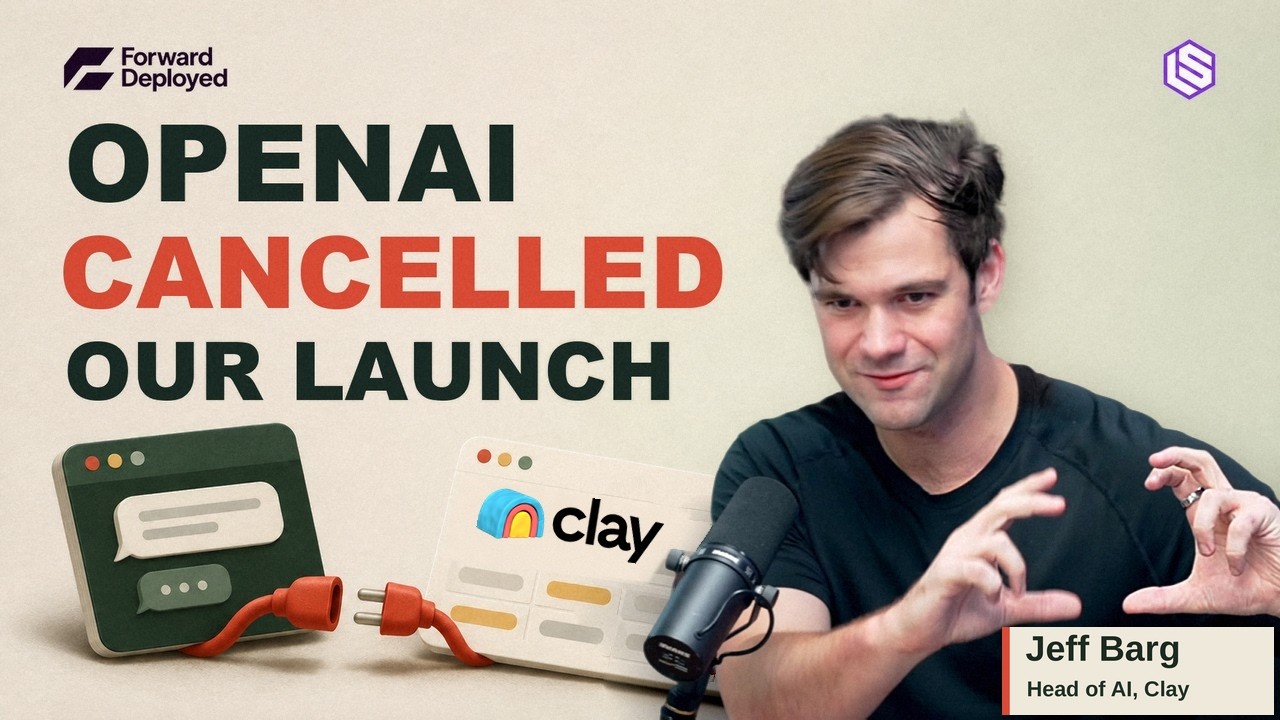
The best argument against the strategy is that neutral plumbing is not worth much if the agents remain unreliable. Barg said models are "still kind of dumb," sometimes repeating failing CLI commands, and that agents have "the wrong intuition" when diagnosing traces; feeding bad traces back for self-improvement "doesn't really work," leaving Clay handwriting many skills. The platform risk is concrete too: Barg said Clay redirected 25% of its engineering team for a month to ChatGPT apps, only for OpenAI to cancel two days before launch and reverse itself three or four days later.
My claim survives because Clay is not relying on unattended self-improvement. Its GTM engineering guide describes GTM CI/CD, adapting developer review and release practices so agents can improve their workflows through safely run learning loops, which is different from asking a model to debug itself. Putting Clay sales plays inside Codex extends the same logic: meet GTM engineers in tools they already use.
If you are building GTM software, make it indispensable to somebody else's agent before your own agent is good enough to demand loyalty.