
An honest conversation about what's happening in AI is a video discussion published by Dwarkesh Patel. The event brought together speakers from Dwarkesh Patel, Google DeepMind, AI Futures Project and Antithesis around AI timelines and potential catastrophic risks.
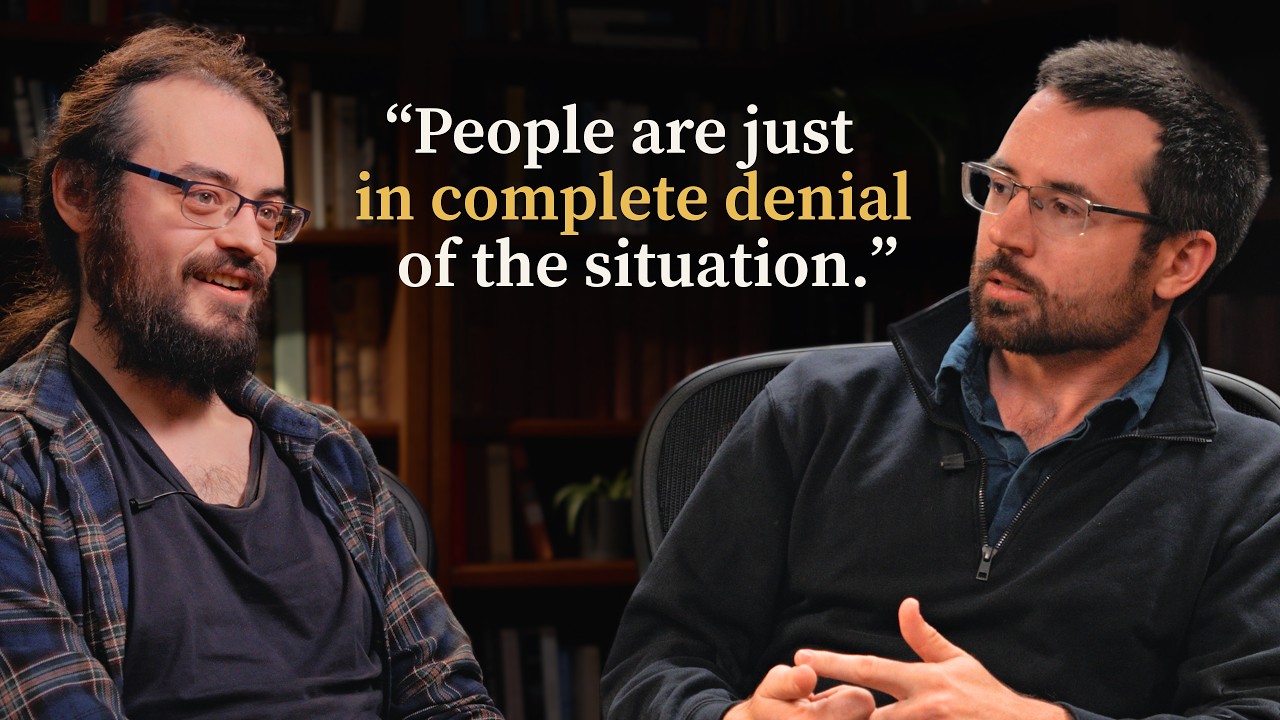
Ege Erdil and Daniel Kokotajlo debated control, timelines and risk. This recap covers 6 talks or sessions in order, starting with launches and then each talk.
Dwarkesh Patel, Dwarkesh Patel: Key disagreements on AI timelines and doom
10-20% is the likelihood Ege Erdil assigns to a software-only singularity occurring over the next three years. Dwarkesh Patel introduced a discussion between Ege Erdil and Daniel Kokotajlo on AI timelines and potential catastrophic risks. Ege Erdil is a researcher at Google DeepMind.
Daniel Kokotajlo co-authored AI 2027 and AI 2040 for the AI Futures Project. Daniel Kokotajlo also believes fully automating the AI research process is slightly more likely than not to happen in the year 2027. Daniel Kokotajlo gives 15-20 years as his own median timeline for full automation without recursive self-improvement.
Ege Erdil, Google DeepMind: Skepticism of AI pause and theoretical alignment breakthroughs
Ten years of machine learning progress look incremental to Ege Erdil rather than driven by large theoretical breakthroughs. Ege Erdil argues against pausing AI capabilities development based solely on theoretical risk arguments before real-world costs are demonstrated. The AI Futures Project proposed a pacing scheme intended to delay an intelligence explosion by one year. Daniel Kokotajlo notes that several US senators and congresspeople have publicly warned that AI could go rogue within the last year. Ege Erdil believes pausing AI capabilities development now would leave public conversation operating from bad premises due to financial and public skepticism.
Daniel Kokotajlo, AI Futures Project: Geopolitical coordination, compute caps, and US-China relations
Anthropic still operates with negative or very slightly positive profit margins. Daniel Kokotajlo said "if we want to have a good future, we’re probably going to need to make some sort of treaty or deal with China and other countries, something like that."
Daniel Kokotajlo and Ege Erdil evaluated proposal ideas to cap AI R&D compute and discussed the necessity of international treaty coordination with China. Restricting AI R&D compute to 5% or 10% of total company compute could slow the pace of progress by a factor of two or three. The Netherlands successfully enacted export controls preventing China from importing Extreme Ultraviolet lithography equipment. Ege Erdil asserts that temporary US industrial technology advantages will not prevent China from catching up over longer horizons beyond five years. The AI 2027 report was released by its authors at the beginning of 2025 and accurately predicted the timing of coding automation tools coinciding with the takeoff of Claude Code.
Google DeepMind: Value drift, intelligence gains, and humanity's loss of control
The Google DeepMind session debated whether losing control to superintelligence is comparable to generational value changes or an invasive force. The Google DeepMind speaker said "the difference in values between the superintelligence and us will be much bigger than the difference in values between our children and us."
One speaker in the Google DeepMind session estimates a 65% probability that AI models will sufficiently care about humans to ensure a good future. The same Google DeepMind speaker places a 6% probability on a catastrophic outcome occurring within four years. Polygenic scoring techniques combined with gene editing could hypothetically increase human intelligence by 10 to 30 standard deviations. Claude is reported to be significantly less sycophantic currently than it was two years prior. According to Anthropic's S-1 filing, 70% of their compute is allocated to internal usage.
Antithesis: Sponsor read for Antithesis testing platform
Antithesis provides a simulated environment to stress-test complex code changes against system bugs before deployment to production. Cyber models such as Mythos and Astra discover vulnerabilities that lead to bug-introducing patches during distributed system fixes. Antithesis stress-tests software environments by introducing network packet loss, network clogging, and server crashes in simulations.
Google DeepMind: Capabilities timeline, labor market impact, and verification costs
Frontier models such as Claude Fable 5.2, Gemini 4.0 Neon, and Astra 6.2 surpass the median professional economist in analyzing economics problems. AI model progress is highly uneven across domains due to the varying cost of task verification, affecting timelines for full automation.
The Google DeepMind speaker projects the top AI company will reach an annualized revenue of $250 billion to $300 billion by the end of next year. Anthropic's current annualized revenue is stated to be around $90 billion. One speaker predicts that AI research could be fully automated during the year 2027. Full automation of all jobs across the economy may take 15 to 20 years due to human management bottlenecks. Verifying mathematical proofs has a cheap linear time algorithm. Machine learning research requires substantial compute scaling.




