

Anthropic's Fiona Fung on Building AI-Pilled Engineering Teams

Anthropic's Fiona Fung discusses how AI is transforming engineering teams, emphasizing initiative, growth mindset, and collaboration.

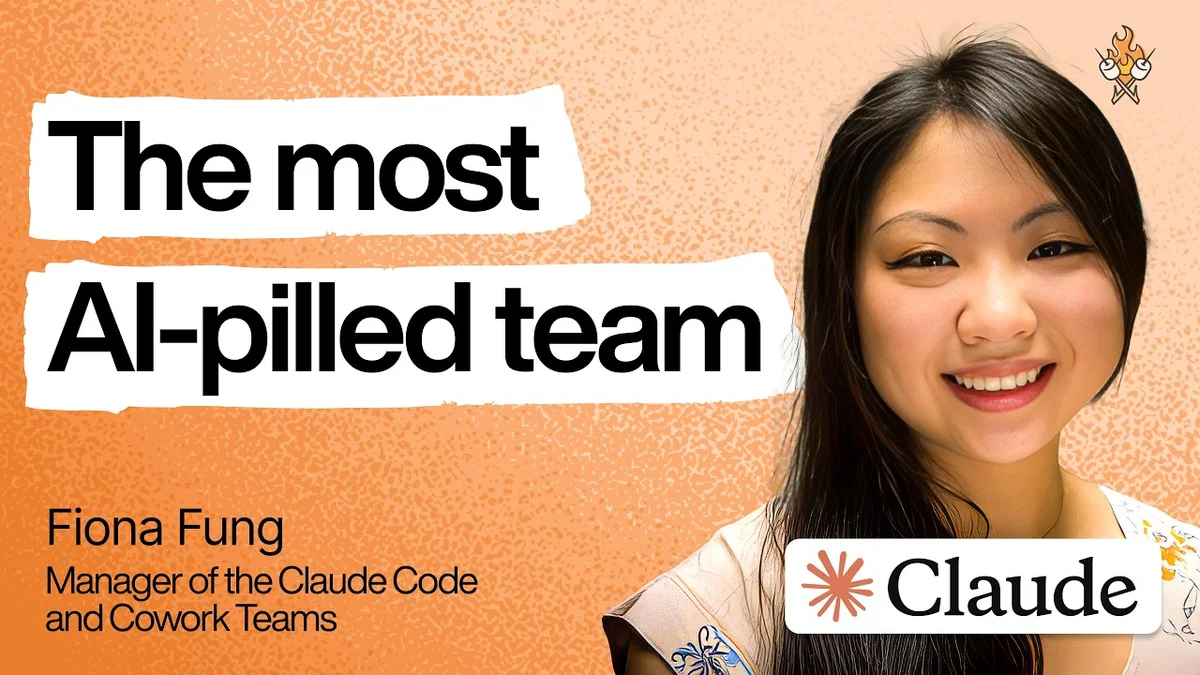
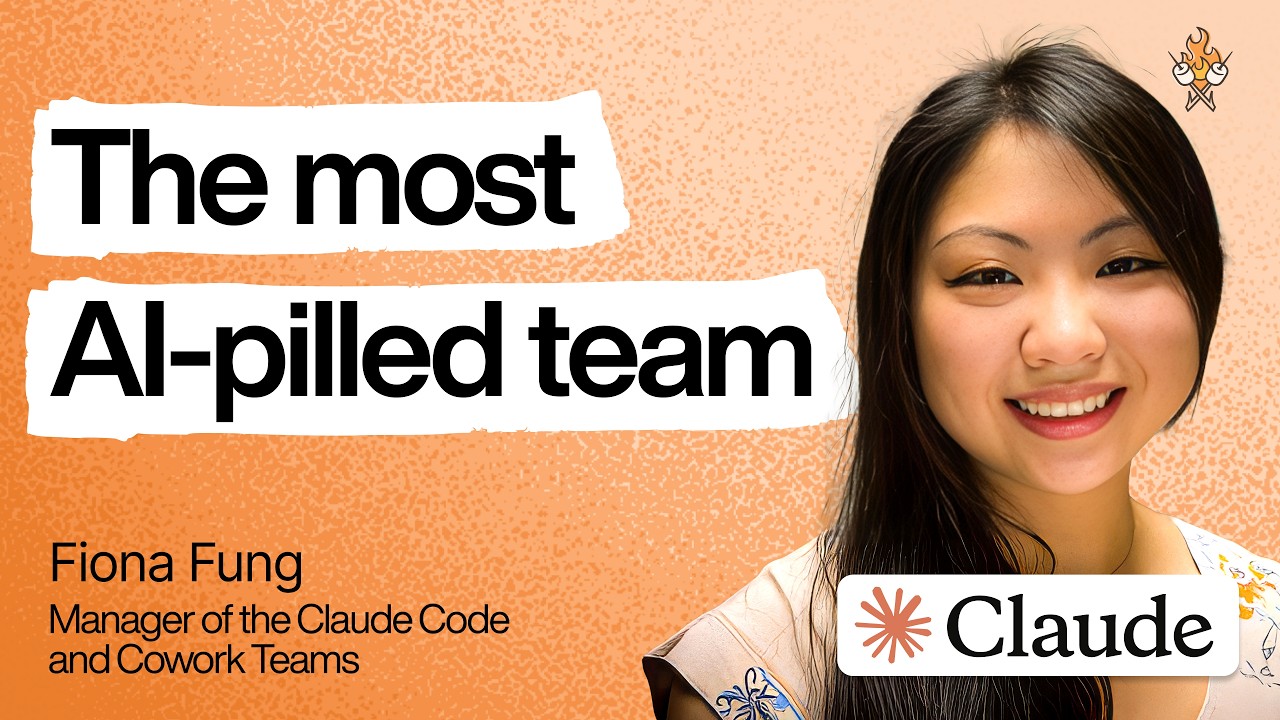
Portrait of Fiona Fung, Head of Claude Code & Cowork at Anthropic, smiling.
Lenny's Podcast
Visual TL;DR
Anthropic's Fiona FungCore
Leader at Anthropic, formerly Microsoft and Facebook
From the article 3 mentionsFiona Fung, a leader at Anthropic, recently shared insights on building highly effective engineering teams in the age of AI during a discussion on Lenny's Podcast.
Growth MindsetContext
Fostering a continuous learning and adaptation mindset
From the articleFung emphasized that this transition requires a new mindset, one that embraces experimentation, continuous learning, and the ability to adapt to rapidly advancing technologies.
AI Transforms EngineeringDriver
AI is a transformative force reshaping software building and team operations
From the article 4 mentionsFiona Fung, a leader at Anthropic, recently shared insights on building highly effective engineering teams in the age of AI during a discussion on Lenny's Podcast.
Manual Coding DiminishesContext
From the articleFung highlighted a significant shift in the software engineering landscape, noting that the traditional bottleneck of manual coding is rapidly diminishing.
Initiative & AgencyContext
Emphasis on engineers taking initiative and having agency
From the articleWhen discussing what makes engineers successful in this new paradigm, Fung pointed to those who demonstrate the most initiative and agency.
8x Code Shipping RateEffect
From the articleShe pointed to Anthropic's own data, which shows that their engineers are now shipping code at an average rate eight times higher than they did between 2021 and 2025.
Team CollaborationContext
Shifting from individual contribution to effective team collaboration
From the article 9+ mentionsFung, who leads Claude Code & Cowork at Anthropic, brings a wealth of experience from her previous roles at Microsoft and Facebook, where she was instrumental in developing key products and scaling teams.
Future AI-Pilled TeamsOutcome
Building highly effective engineering teams in the age of AI
From the articleFung's insights suggest that the future of engineering involves teams that are not just proficient in coding but are also deeply 'AI-pilled', meaning they understand and actively integrate AI into their workflows.
Contents(4)

Fiona Fung, a leader at Anthropic, recently shared insights on building highly effective engineering teams in the age of AI during a discussion on Lenny's Podcast. Fung, who leads Claude Code & Cowork at Anthropic, brings a wealth of experience from her previous roles at Microsoft and Facebook, where she was instrumental in developing key products and scaling teams. Her perspective offers a glimpse into how AI is not just a tool, but a transformative force reshaping how software is built and how teams operate.

Anthropic's Fiona Fung on Building AI-Pilled Engineering Teams - Lenny's Podcast
Anthropic's Fiona Fung on Building AI-Pilled Engineering Teams, Lenny's Podcast

A New Era for Software Engineering

Fung highlighted a significant shift in the software engineering landscape, noting that the traditional bottleneck of manual coding is rapidly diminishing. She pointed to Anthropic's own data, which shows that their engineers are now shipping code at an average rate eight times higher than they did between 2021 and 2025. This dramatic increase is attributed to the integration of AI, making coding itself less of a hurdle and more of an enabler for ambitious projects.

This evolution means that the focus for engineers is shifting. The conversation touched upon how individuals and teams are moving from being primarily coders to becoming more like 'builders' or 'orchestrators' of AI capabilities. Fung emphasized that this transition requires a new mindset, one that embraces experimentation, continuous learning, and the ability to adapt to rapidly advancing technologies.

The Power of Initiative and Agency

When discussing what makes engineers successful in this new paradigm, Fung pointed to those who demonstrate the most initiative and agency. She noted that the engineers who are taking the lead, being proactive, and actively seeking to understand and implement AI tools are the ones driving progress. This proactive approach, she suggested, is closely tied to accountability and a willingness to take ownership of outcomes.

Fung also touched on the psychological aspects of this shift, acknowledging that while AI offers immense potential, it can also bring about feelings of fear or uncertainty. Her advice for navigating these challenges is to 'lean in and ask what can I do about it?' This proactive engagement, she believes, is key to understanding what is within one's control and how to best contribute in a rapidly changing environment.

From Individual Contribution to Team Collaboration

The discussion also touched upon the collaborative nature of modern software development, especially in AI. Fung highlighted the importance of shared understanding and communication within teams. She noted that the rapid pace of AI development means that teams need to be agile and adaptable, constantly learning and iterating. The ability to leverage AI not just for individual tasks but for team-wide insights and workflows is becoming paramount.

Fung's own career trajectory, from her early days at Microsoft working on operating systems and Visual Studio, through her time at Facebook leading marketplace teams and developing AR glasses, to her current role at Anthropic, demonstrates a consistent theme of tackling complex, large-scale challenges. Her experience in building and scaling teams across different technological frontiers provides a valuable perspective on the leadership required to foster high-performing engineering organizations.

The Future of 'AI-Pilled' Teams

Fung's insights suggest that the future of engineering involves teams that are not just proficient in coding but are also deeply 'AI-pilled', meaning they understand and actively integrate AI into their workflows. This includes leveraging AI for code generation, debugging, testing, and even for market analysis and understanding user feedback. The ability to harness AI's power to enhance productivity, maintain quality, and drive innovation is what will define successful teams in the coming years.

The conversation underscored that while AI is a powerful tool, human creativity, critical thinking, and the ability to ask the right questions remain indispensable. The most effective engineers will be those who can collaborate seamlessly with AI, guiding its capabilities to achieve ambitious goals and solve complex problems.

© 2026 StartupHub.ai. All rights reserved. You may not republish this article in full without a license. Search engines and AI research tools may crawl and summarize for reference. Bulk reproduction or model training requires a license. See our terms.
Daniel Singer

Written by

Daniel Singer

Editor, StartupHub.ai

Daniel Singer is the editor of StartupHub.ai, a technology expert and thought leader on AI and its applications across sectors, from fintech and healthcare to developer tooling and consumer software. He writes and tests the tools covered here thoroughly and regularly, and built StartupHub.ai to give founders, operators and buyers a clearer read on what they are actually being sold.