

AI Learns to Smell: The Science of Olfactory AI

AI is learning to smell thanks to companies like Osmo, which are building models to understand, predict, and design scents by mapping molecular structures to olfactory perception.

5 min read
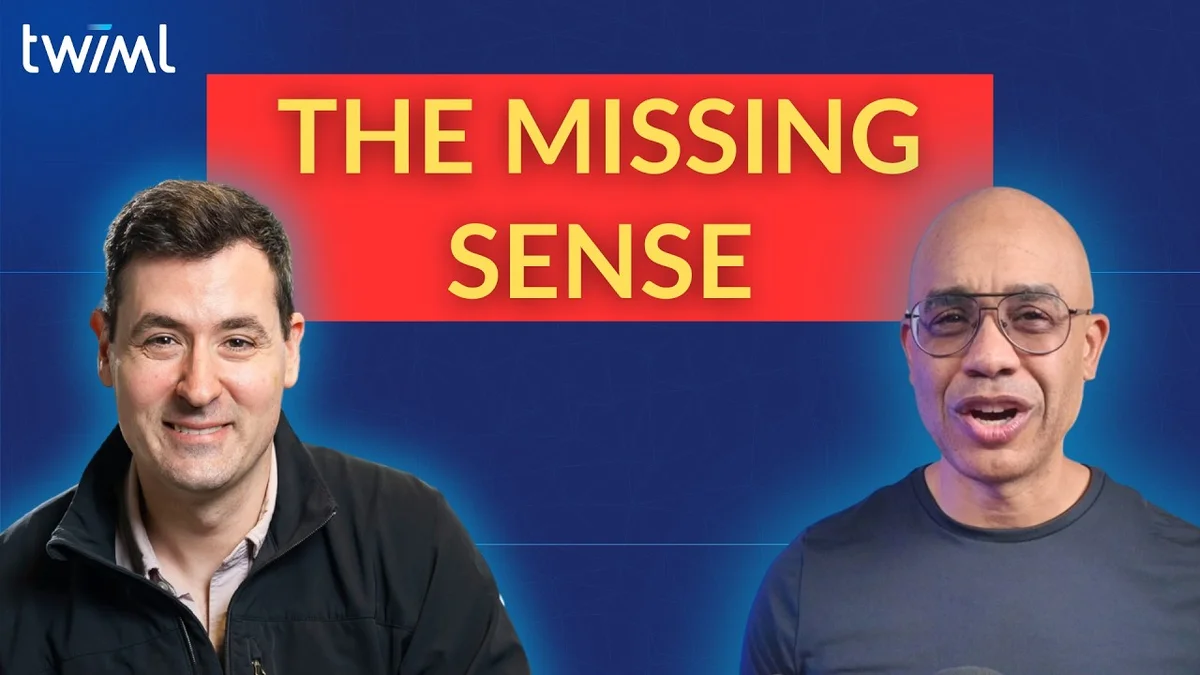
Bald man with glasses and a black t-shirt speaking into a microphone, with text overlay.
A speaker discusses how AI is learning to understand and generate scents.· TWIML
Visual TL;DR
AI struggles with smellDriver
smell is complex and subjective, unlike digital data
From the article 9 mentionsHowever, bridging the gap between the digital and physical realms, particularly through senses like smell, has remained a significant challenge.
Osmo's Olfactory AICore
mapping molecular structures to olfactory perception
From the article 9 mentionsThis is where companies like Osmo are stepping in, aiming to teach AI to 'smell' by developing sophisticated models that can understand, predict, and even design scents.
Understanding ScentsContext
AI models learn to comprehend scent profiles
From the article 7 mentionsArtificial intelligence has made significant strides in processing and understanding digital information, from text and images to audio and video.
Predicting ScentsContext
AI can forecast how molecules will smell
From the article 5 mentionsThe core difficulty in teaching AI about smell is the lack of a standardized, easily digitizable format for scent data.
Designing New ScentsEffect
creating novel fragrance compositions
From the article 6 mentionsThe goal is to move beyond simply recognizing smells to actively designing them, creating novel olfactory experiences.
Bridging Digital/PhysicalOutcome
connecting AI's digital world to physical senses
From the articleHowever, bridging the gap between the digital and physical realms, particularly through senses like smell, has remained a significant challenge.

Artificial intelligence has made significant strides in processing and understanding digital information, from text and images to audio and video. However, bridging the gap between the digital and physical realms, particularly through senses like smell, has remained a significant challenge. This is where companies like Osmo are stepping in, aiming to teach AI to 'smell' by developing sophisticated models that can understand, predict, and even design scents.

The core difficulty in teaching AI about smell is the lack of a standardized, easily digitizable format for scent data. Unlike language, which has clear structures and representations, or images, which can be broken down into pixels and color values, smells are far more complex and subjective. They are generated by molecules interacting with our olfactory system in intricate ways. This is precisely the problem Osmo is tackling, aiming to create a bridge between the world of chemistry and the power of AI.

The full discussion can be found on TWIML's YouTube channel.

How AI Learns to Smell - TWIML
How AI Learns to Smell, from TWIML

The Science Behind AI's Sense of Smell

The human olfactory system serves as a remarkable inspiration for this endeavor. Our noses contain millions of olfactory sensory neurons, each equipped with receptor proteins that bind to specific molecules. The unique combination of activated receptors and the intensity of their signals are interpreted by the brain as a distinct smell. This complex biological process, honed over millions of years of evolution, allows us to differentiate between an astonishing array of scents.

AI models, like those being developed at Osmo, aim to mimic this process. By training models on vast datasets that link molecular structures to human-perceived smells, researchers are teaching AI to understand the underlying chemical basis of scent. This involves not only identifying which molecules are present but also how their specific structures and interactions with olfactory receptors contribute to the overall smell.

From Data to Design: The Future of Olfactory AI

The ability of AI to understand and generate smells opens up a world of possibilities. Imagine AI being used to create entirely new fragrances, optimize existing ones, or even develop scent-based applications for safety, such as detecting hazardous chemicals or identifying diseases through breath analysis. The goal is to move beyond simply recognizing smells to actively designing them, creating novel olfactory experiences.

This research is not just about artificial noses; it's about building foundational models for scent. Just as large language models have revolutionized natural language processing, and vision models have transformed image analysis, these olfactory AI models could pave the way for a new era of AI understanding and interaction with the physical world. The journey is complex, involving intricate chemistry, biology, and advanced AI techniques, but the potential rewards are immense.

© 2026 StartupHub.ai. All rights reserved. Do not enter, scrape, copy, reproduce, or republish this article in whole or in part. Use as input to AI training, fine-tuning, retrieval-augmented generation, or any machine-learning system is prohibited without written license. Substantially-similar derivative works will be pursued to the fullest extent of applicable copyright, database, and computer-misuse laws. See our terms.