


AI in Law: More Work or More Efficiency?

Gary Wingens of Lowenstein Sandler discusses AI's impact on law, from efficiency gains to the evolving role of junior lawyers, and the uncertain economics of AI pricing.

9 min read
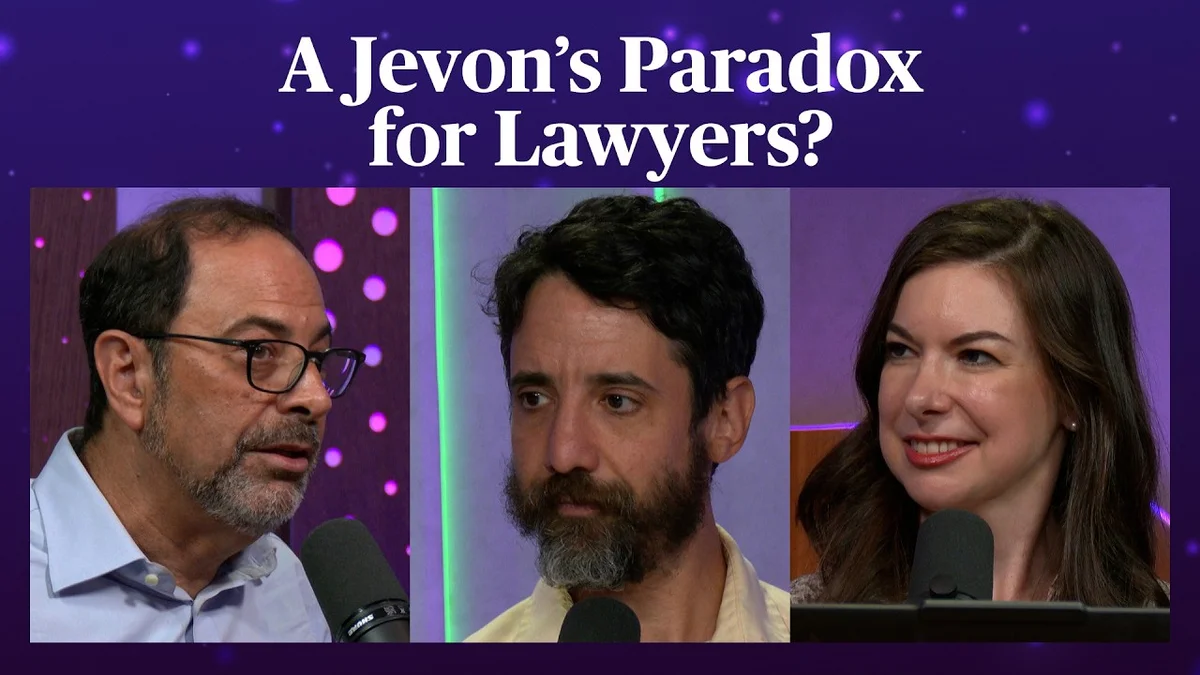
Gary Wingens, Chair of Lowenstein Sandler, speaking into a microphone.
Bloomberg Podcast

Visual TL;DR. AI in Law enables AI as Thought Partner. AI as Thought Partner leads to Efficiency Gains. AI in Law challenges Billable Hour Endures. Efficiency Gains may cause Jevons Paradox. AI in Law affects Junior Lawyer Impact. Uncertain AI Economics drives Future Legal Pricing. Billable Hour Endures influences Future Legal Pricing.

  1. AI in Law: reshaping legal work from discovery tasks to strategic thinking in complex deals
  2. AI as Thought Partner: assisting in problem-solving and enhancing quality of work product from the outset
  3. Efficiency Gains: streamlining processes and improving how legal services are delivered to clients
  4. Billable Hour Endures: long-standing dominance of the billable hour remains a point of contention
  5. Jevons Paradox: increased efficiency might lead to more demand for legal services, not less
  6. Junior Lawyer Impact: evolving roles for junior lawyers, potentially shifting training and responsibilities
  7. Uncertain AI Economics: uncertainty regarding AI pricing models and the true cost of integration
  8. Future Legal Pricing: rethinking legal pricing models in light of AI's capabilities and costs
Visual TL;DR
Visual TL;DR, startuphub.ai AI in Law enables AI as Thought Partner. AI in Law challenges Billable Hour Endures. Uncertain AI Economics drives Future Legal Pricing. Billable Hour Endures influences Future Legal Pricing enables challenges drives influences AI in Law AI as Thought Partner Billable Hour Endures Uncertain AI Economics Future Legal Pricing From startuphub.ai · The publishers behind this format
Visual TL;DR, startuphub.ai AI in Law enables AI as Thought Partner. AI in Law challenges Billable Hour Endures. Uncertain AI Economics drives Future Legal Pricing. Billable Hour Endures influences Future Legal Pricing enables challenges drives influences AI in Law AI as ThoughtPartner Billable HourEndures Uncertain AIEconomics Future LegalPricing From startuphub.ai · The publishers behind this format
Visual TL;DR, startuphub.ai AI in Law enables AI as Thought Partner. AI in Law challenges Billable Hour Endures. Uncertain AI Economics drives Future Legal Pricing. Billable Hour Endures influences Future Legal Pricing enables challenges drives influences AI in Law reshaping legal work from discovery tasksto strategic thinking in complex deals AI as Thought Partner assisting in problem-solving and enhancingquality of work product from the outset Billable Hour Endures long-standing dominance of the billablehour remains a point of contention Uncertain AI Economics uncertainty regarding AI pricing modelsand the true cost of integration Future Legal Pricing rethinking legal pricing models in lightof AI's capabilities and costs From startuphub.ai · The publishers behind this format
Visual TL;DR, startuphub.ai AI in Law enables AI as Thought Partner. AI in Law challenges Billable Hour Endures. Uncertain AI Economics drives Future Legal Pricing. Billable Hour Endures influences Future Legal Pricing enables challenges drives influences AI in Law reshaping legalwork from discoverytasks to strategic… AI as ThoughtPartner assisting inproblem-solving andenhancing quality… Billable HourEndures long-standingdominance of thebillable hour… Uncertain AIEconomics uncertaintyregarding AIpricing models and… Future LegalPricing rethinking legalpricing models inlight of AI's… From startuphub.ai · The publishers behind this format
Visual TL;DR, startuphub.ai AI in Law enables AI as Thought Partner. AI as Thought Partner leads to Efficiency Gains. AI in Law challenges Billable Hour Endures. Efficiency Gains may cause Jevons Paradox. AI in Law affects Junior Lawyer Impact. Uncertain AI Economics drives Future Legal Pricing. Billable Hour Endures influences Future Legal Pricing enables leads to challenges may cause affects drives influences AI in Law reshaping legal work from discovery tasksto strategic thinking in complex deals AI as Thought Partner assisting in problem-solving and enhancingquality of work product from the outset Efficiency Gains streamlining processes and improving howlegal services are delivered to clients Billable Hour Endures long-standing dominance of the billablehour remains a point of contention Jevons Paradox increased efficiency might lead to moredemand for legal services, not less Junior Lawyer Impact evolving roles for junior lawyers,potentially shifting training andresponsibilities Uncertain AI Economics uncertainty regarding AI pricing modelsand the true cost of integration Future Legal Pricing rethinking legal pricing models in lightof AI's capabilities and costs From startuphub.ai · The publishers behind this format
Visual TL;DR, startuphub.ai AI in Law enables AI as Thought Partner. AI as Thought Partner leads to Efficiency Gains. AI in Law challenges Billable Hour Endures. Efficiency Gains may cause Jevons Paradox. AI in Law affects Junior Lawyer Impact. Uncertain AI Economics drives Future Legal Pricing. Billable Hour Endures influences Future Legal Pricing enables leads to challenges may cause affects drives influences AI in Law reshaping legalwork from discoverytasks to strategic… AI as ThoughtPartner assisting inproblem-solving andenhancing quality… Efficiency Gains streamliningprocesses andimproving how legal… Billable HourEndures long-standingdominance of thebillable hour… Jevons Paradox increasedefficiency mightlead to more demand… Junior LawyerImpact evolving roles forjunior lawyers,potentially… Uncertain AIEconomics uncertaintyregarding AIpricing models and… Future LegalPricing rethinking legalpricing models inlight of AI's… From startuphub.ai · The publishers behind this format

The legal profession, long seen as resistant to technological disruption, is now grappling with the profound impact of artificial intelligence. On the latest episode of the Odd Lots podcast, hosts Joe Weisenthal and Tracy Alloway welcomed Gary Wingens, Chair of Lowenstein Sandler, a prominent law firm, to discuss how AI is reshaping legal work, from the mundane tasks of discovery to the strategic thinking behind complex deals.

AI as a 'Thought Partner' for Lawyers

Wingens highlighted that AI is not just about efficiency gains; it's also acting as a crucial 'thought partner' for lawyers. Unlike previous technological advancements that primarily streamlined processes, AI offers a new dimension by assisting in problem-solving and enhancing the quality of work product from the outset. This dual role is transforming how legal services are delivered.

The Enduring Billable Hour and Alternative Fees

A long-standing point of contention in the legal industry is the dominance of the billable hour model, which often draws complaints from both lawyers and clients for its perceived inefficiency. Wingens noted that while there's been a push towards alternative fee arrangements for over 15 years, these haven't fully taken hold. He speculated that a lack of mutual trust between lawyers and clients, coupled with the desire for transparency in billing, contributes to the persistence of hourly rates. However, he acknowledged that clients are increasingly seeking value and solutions rather than simply buying hours.

The full discussion can be found on Bloomberg Podcast's YouTube channel.

Why AI Might Actually Create More Work for Lawyers | Odd Lots - Bloomberg Podcast
Why AI Might Actually Create More Work for Lawyers | Odd Lots, from Bloomberg Podcast

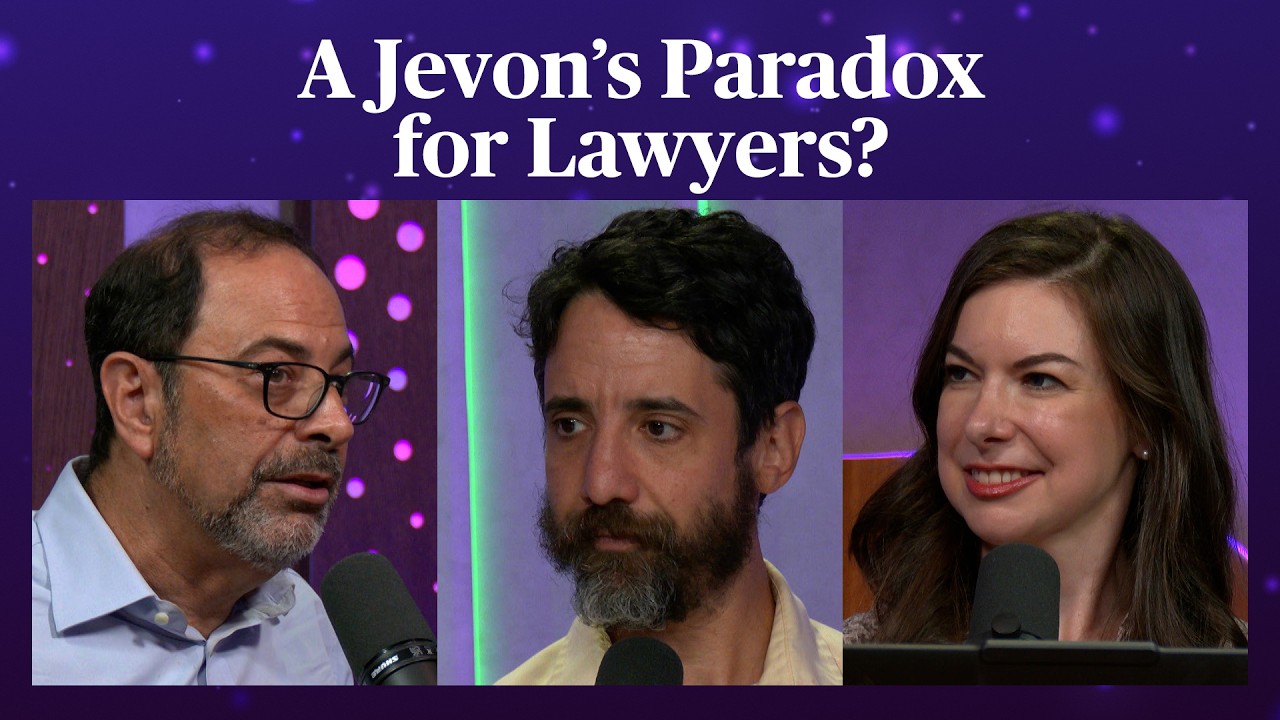
The Jevons Paradox in Legal Services

The conversation touched upon the concept of the Jevons Paradox, suggesting that increased efficiency might not necessarily lead to less work, but rather to an expansion of activities. Wingens observed this in the legal field, where reduced costs for certain tasks, like trust agreement reviews, have made previously uneconomical projects viable, thus increasing overall demand for legal services. He also drew parallels to the ballooning costs of e-discovery, which AI has the potential to drastically reduce, thereby changing the calculus for litigation.
Impact on Junior Lawyers and Training

A significant portion of the discussion focused on the implications of AI for early-career lawyers. The fear that AI might displace junior associates is tempered by the argument that tedious tasks are being automated first, freeing up junior lawyers to engage in more complex and interesting work sooner. Wingens admitted that law firms are still figuring out how to train new lawyers without the traditional grunt work, but acknowledged that the focus is shifting towards hands-on training with AI tools.

The Evolving Tech Stack and Security Concerns

Wingens detailed the firm's adoption of AI tools like Harvey and Microsoft Copilot, emphasizing the critical importance of security and ethics. He highlighted that specialized legal AI platforms offer robust security layers that protect sensitive client information, a stark contrast to the potential risks associated with using consumer-grade AI models that might compromise attorney-client privilege. The firm is also exploring how AI can ingest and analyze internal data to create playbooks and improve work product.

The Future of Legal Pricing and AI's True Cost

Looking ahead, Wingens predicted a shift towards project-based or outcome-based pricing, especially as AI makes hourly work more productive. He anticipates a continued increase in hourly rates at top-tier firms, even as the overall cost of solutions for clients decreases due to AI-driven efficiency. However, the true cost structure of AI remains somewhat opaque, with the transition from 'all-you-can-eat' pricing to token-based models potentially leading to sticker shock for some firms, highlighting the ongoing uncertainty about the optimal balance of labor and capital in the AI-augmented legal future.

© 2026 StartupHub.ai. All rights reserved. Do not enter, scrape, copy, reproduce, or republish this article in whole or in part. Use as input to AI training, fine-tuning, retrieval-augmented generation, or any machine-learning system is prohibited without written license. Substantially-similar derivative works will be pursued to the fullest extent of applicable copyright, database, and computer-misuse laws. See our terms.