

AI Game Engine Won't Need Manuals, Nereu Founder Says

Nereu founder Arturo Nunez envisions a future where AI-powered game engines eliminate the need for traditional manuals, making game development accessible through natural language.

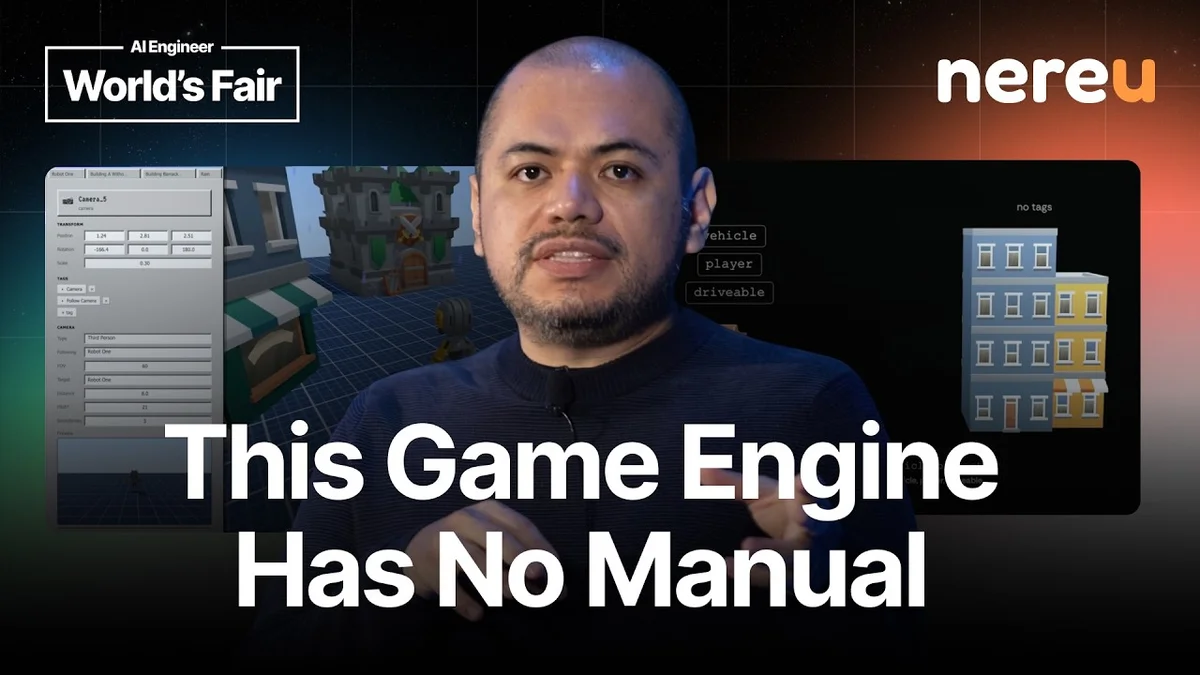
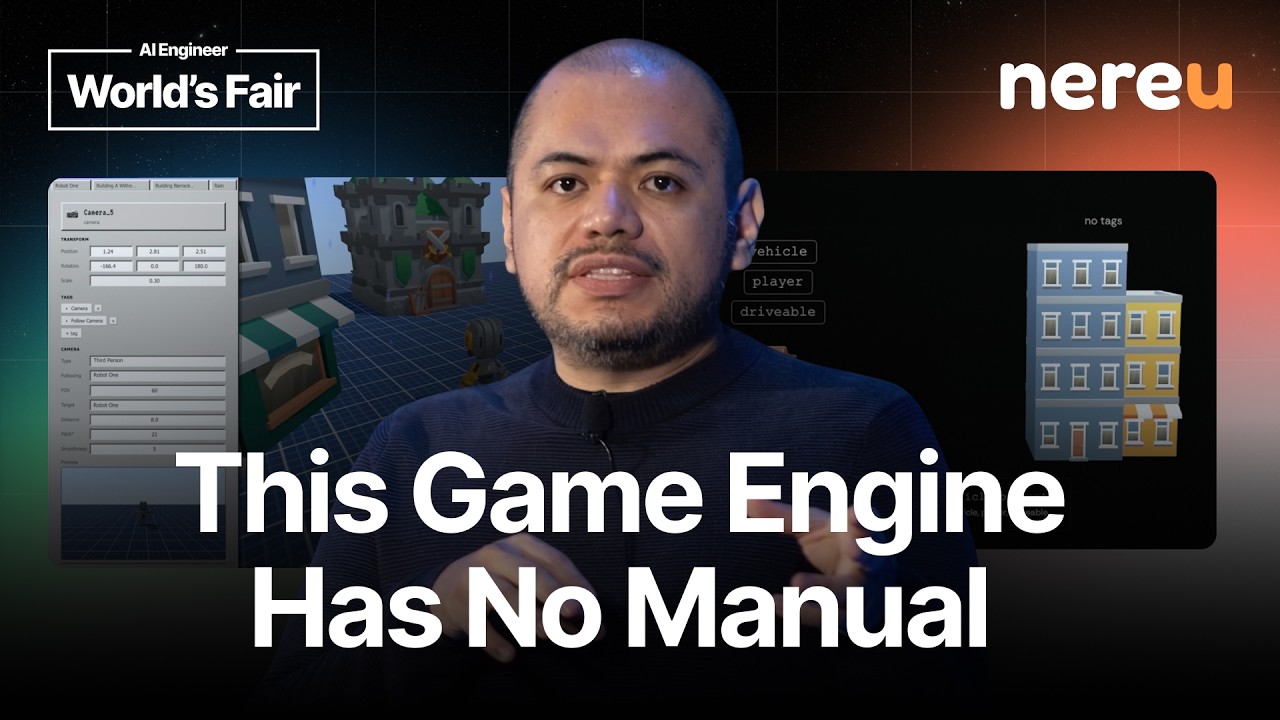
Arturo Nunez speaking at AI Engineer World's Fair stage with Nereu logo on podium.
AI Engineer
Visual TL;DR
Traditional Game EnginesDriver
From the article 5 mentionsThe traditional game development engine, with its steep learning curve and reliance on technical manuals, might soon be a relic of the past.
Developers 'Reinvent Wheel'Driver
spending considerable time and energy on repetitive technical complexities
Nereu AI EngineCore
From the article 9+ mentionsArturo Nunez, founder of Nereu, presented a vision for the next generation of game engines at the AI Engineer World's Fair, proposing that they "won't have a manual." Nereu's approach leverages AI assistants to allow creators to build games through natural language descriptions, focusing on the game design itself rather than the underlying technical complexities.
No Manuals NeededEffect
eliminates the need for traditional manuals, making development accessible
From the article 2 mentionsThe traditional game development engine, with its steep learning curve and reliance on technical manuals, might soon be a relic of the past.
Focus on Game DesignEffect
creators concentrate on design rather than underlying technical complexities
From the article 2 mentions"The focus is on making the game." The system then translates these natural language commands into the necessary game engine operations, such as spawning assets, configuring physics, and setting up animations.
AI as CollaboratorContext
AI-powered game engines act as a partner in the creative process
From the articleLooking ahead, Nunez believes that AI will continue to evolve as a collaborator in game development, enabling more people to experience the joy of creation without the typical frustrations.
Democratize Game CreationOutcome
more people can make games and enjoy the development process
From the article 2 mentionsThe platform aims to democratize game creation, allowing individuals to bring their ideas to life without requiring expertise in programming, 3D modeling, or rendering.
Contents(4)

The traditional game development engine, with its steep learning curve and reliance on technical manuals, might soon be a relic of the past. Arturo Nunez, founder of Nereu, presented a vision for the next generation of game engines at the AI Engineer World's Fair, proposing that they "won't have a manual." Nereu's approach leverages AI assistants to allow creators to build games through natural language descriptions, focusing on the game design itself rather than the underlying technical complexities.

AI Game Engine Won't Need Manuals, Nereu Founder Says - AI Engineer
AI Game Engine Won't Need Manuals, Nereu Founder Says, AI Engineer

From Unity to Nereu: A New Approach to Game Creation

Nunez, who spent nearly a decade at Unity, a leading game engine company, observed firsthand the recurring struggles of developers. He noted that many spent considerable time and energy "reinventing the same wheel," a process he believes can be significantly streamlined with AI. "I want more people to make games, and enjoy the process," Nunez stated, highlighting his motivation for developing Nereu. The platform aims to democratize game creation, allowing individuals to bring their ideas to life without requiring expertise in programming, 3D modeling, or rendering.

The Power of Natural Language in Game Development

Nereu's demo showcased a workflow where users interact with an AI assistant, named Bibi, to build a game. By simply describing desired elements and actions, such as "add a robot" or "make this robot move with WASD and animate it," users can populate their game worlds and define behaviors. This natural language interface bypasses the need for complex coding or asset import procedures. Nunez emphasized that the language used is intuitive, drawing from the common vocabulary of gamers and creators.

"You don't need to code or learn about importing models or anything like that," Nunez explained. "The focus is on making the game." The system then translates these natural language commands into the necessary game engine operations, such as spawning assets, configuring physics, and setting up animations.

Beyond Boilerplate: Simplifying the Game Engine

Nunez critiqued current game engines like Unreal and Unity, suggesting that while powerful, they still present a significant barrier to entry. He described the current process as building "a bridge between two worlds," requiring knowledge of both the engine's specific vocabulary and coding. This often involves understanding numerous components, settings, and sliders, much of which he categorizes as "boilerplate."

Nereu's proposed solution is to treat "everything as an asset" and use tags to define their intent. For instance, an asset can be tagged as a "character," "animated," or capable of a "double jump." This tag-based system, inspired by the entity component system (ECS) data-oriented design, allows the engine to interpret and act upon these descriptions. "The engine knows what to do with these tags because these systems," Nunez elaborated.

The Future of Game Creation: AI as a Collaborator

The development of Nereu itself was accelerated by AI, with Nunez highlighting that he worked closely with AI tools to build the platform at an unprecedented speed. He also discussed the challenges of composing complex game mechanics and moods through tags, noting that the AI needs to understand nuances like "a platformer but that feels like scary."

Looking ahead, Nunez believes that AI will continue to evolve as a collaborator in game development, enabling more people to experience the joy of creation without the typical frustrations. "I want to let more people have fun and experience the joy of making games without getting frustrated," he concluded, emphasizing the potential for AI to unlock creativity for a broader audience.

© 2026 StartupHub.ai. All rights reserved. You may not republish this article in full without a license. Search engines and AI research tools may crawl and summarize for reference. Bulk reproduction or model training requires a license. See our terms.
Daniel Singer

Written by

Daniel Singer

Editor, StartupHub.ai

Daniel Singer is the editor of StartupHub.ai, a technology expert and thought leader on AI and its applications across sectors, from fintech and healthcare to developer tooling and consumer software. He writes and tests the tools covered here thoroughly and regularly, and built StartupHub.ai to give founders, operators and buyers a clearer read on what they are actually being sold.