

AI Agents Tackle Payment Declines with Event Sourcing

Divakar Kumar of FlyersSoft proposes using AI agents with event-sourced systems to diagnose complex payment declines, moving beyond simple fraud detection.

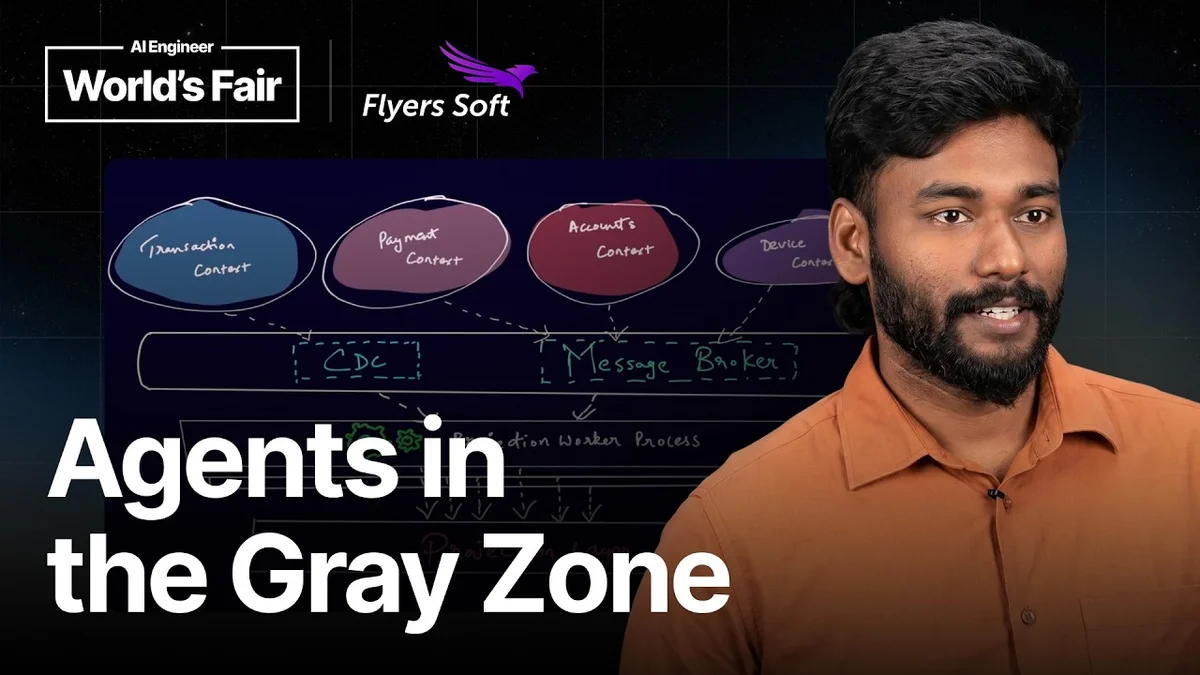
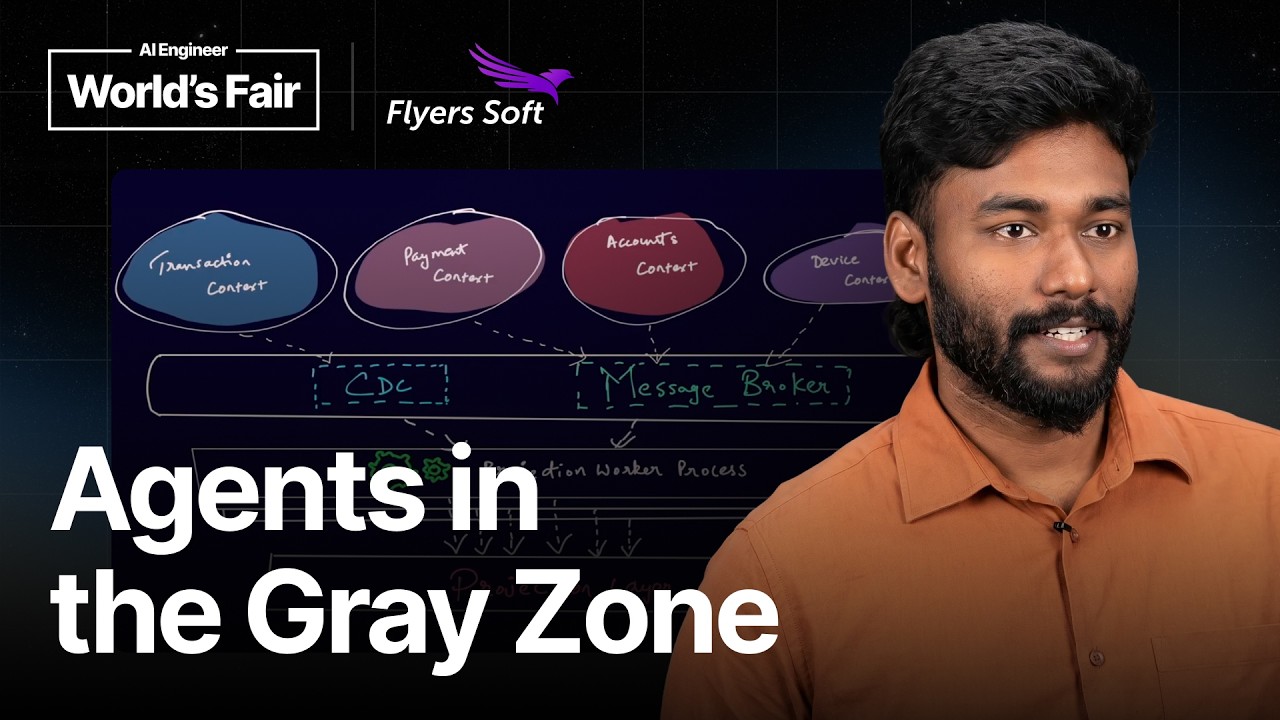
Divakar Kumar speaking at a conference about AI agents and event-sourced systems.
AI Engineer
Visual TL;DR
Payment DeclinesDriver
customers and merchants struggle to pinpoint the true cause of declined transactions
From the article 6 mentionsFor instance, an agent could detect a recurring pattern of specific data points preceding declines, even if those data points individually seem innocuous.
Opaque Gray ZonesDriver
many failures are complex, not simple isolated events within financial systems
From the article 2 mentionsIn a recent presentation, Kumar explored how integrating AI agents into event-sourced systems can illuminate these payment and fraud "gray zones," offering a more intelligent and proactive approach to problem-solving.
Event-Sourced SystemsCore
capturing every action and condition leading up to a transaction failure
From the article 7 mentionsBy adopting an event-sourced architecture, systems can maintain a complete, immutable log of every transaction step.
AI AgentsCore
Divakar Kumar proposes integrating AI to diagnose complex payment issues proactively
From the article 9+ mentionsThis nebulous space, where customers and even merchants struggle to pinpoint the cause, is precisely where Divakar Kumar, representing FlyersSoft, sees a significant opportunity for AI agents.
Transaction DetectivesEffect
AI agents analyze event data to uncover deeper root causes beyond simple fraud
From the article 8 mentionsThe integration of AI agents into this event-sourced framework transforms them from simple chatbots or process automatons into sophisticated detectives.
Intelligent Problem SolvingEffect
moving beyond typical responses like blaming the customer or insufficient funds
Clearer Decline ReasonsOutcome
illuminating payment and fraud gray zones for better understanding and resolution
Contents(3)

In the often opaque world of financial transactions, few issues are as frustrating as a declined card with no clear reason. This nebulous space, where customers and even merchants struggle to pinpoint the cause, is precisely where Divakar Kumar, representing FlyersSoft, sees a significant opportunity for AI agents. In a recent presentation, Kumar explored how integrating AI agents into event-sourced systems can illuminate these payment and fraud "gray zones," offering a more intelligent and proactive approach to problem-solving.

AI Agents Tackle Payment Declines with Event Sourcing - AI Engineer
AI Agents Tackle Payment Declines with Event Sourcing, AI Engineer

The Unseen Problem in Payments

Kumar's core thesis centers on the idea that many payment failures aren't simple, isolated events. Instead, they are the culmination of a series of preceding actions and conditions within a complex system. When a card is declined, the typical response is to blame the customer's card or insufficient funds. However, Kumar points out that the true root cause can be much deeper, residing in the intricate flow of data and decisions that led up to that moment. This is where event sourcing, a pattern that records all changes to application state as a sequence of events, becomes crucial.

By adopting an event-sourced architecture, systems can maintain a complete, immutable log of every transaction step. This log is invaluable for understanding the context surrounding a failed payment. Kumar suggests that AI agents can be trained to parse these event streams, not just looking at the final outcome, but analyzing the entire journey of the transaction. This includes everything from initial authorization requests, to fraud checks, to communication between different financial institutions.

AI Agents as Transaction Detectives

The integration of AI agents into this event-sourced framework transforms them from simple chatbots or process automatons into sophisticated detectives. Instead of providing generic troubleshooting steps, these agents can theoretically access and interpret the detailed history of a transaction. Kumar envisions agents capable of identifying subtle anomalies or patterns within the event log that might indicate an underlying issue.

For instance, an agent could detect a recurring pattern of specific data points preceding declines, even if those data points individually seem innocuous. This could involve unusual network latency, a specific sequence of API calls, or even a particular combination of customer profile attributes that, when viewed in aggregate over time, signal a higher risk or a system misconfiguration. The agents can then not only identify the problem but potentially suggest or even implement a fix, or at least provide a highly specific diagnostic to human operators.

Beyond Simple Fraud Detection

While fraud detection is a natural application, Kumar's vision extends beyond it. The "gray zone" encompasses a wide array of issues, including technical glitches, integration errors between disparate systems, or even poorly understood business logic that inadvertently triggers declines. AI agents, by diligently examining the event stream, can help untangle these complex interdependencies.

This approach moves away from reactive problem-solving to a more predictive and preventative model. By continuously monitoring transaction events, AI agents could flag potential issues before they result in customer-facing failures. This proactive stance is vital in an industry where transaction success rates directly impact revenue and customer trust.

Kumar's work with FlyersSoft suggests a future where AI agents are not just tools for customer service, but integral components of financial infrastructure, actively contributing to the reliability and integrity of payment systems. The ability to reconstruct and analyze the complete history of a transaction using event sourcing provides the rich data needed for these agents to perform at their highest potential.

© 2026 StartupHub.ai. All rights reserved. You may not republish this article in full without a license. Search engines and AI research tools may crawl and summarize for reference. Bulk reproduction or model training requires a license. See our terms.
Daniel Singer

Written by

Daniel Singer

Editor, StartupHub.ai

Daniel Singer is the editor of StartupHub.ai, a technology expert and thought leader on AI and its applications across sectors, from fintech and healthcare to developer tooling and consumer software. He writes and tests the tools covered here thoroughly and regularly, and built StartupHub.ai to give founders, operators and buyers a clearer read on what they are actually being sold.