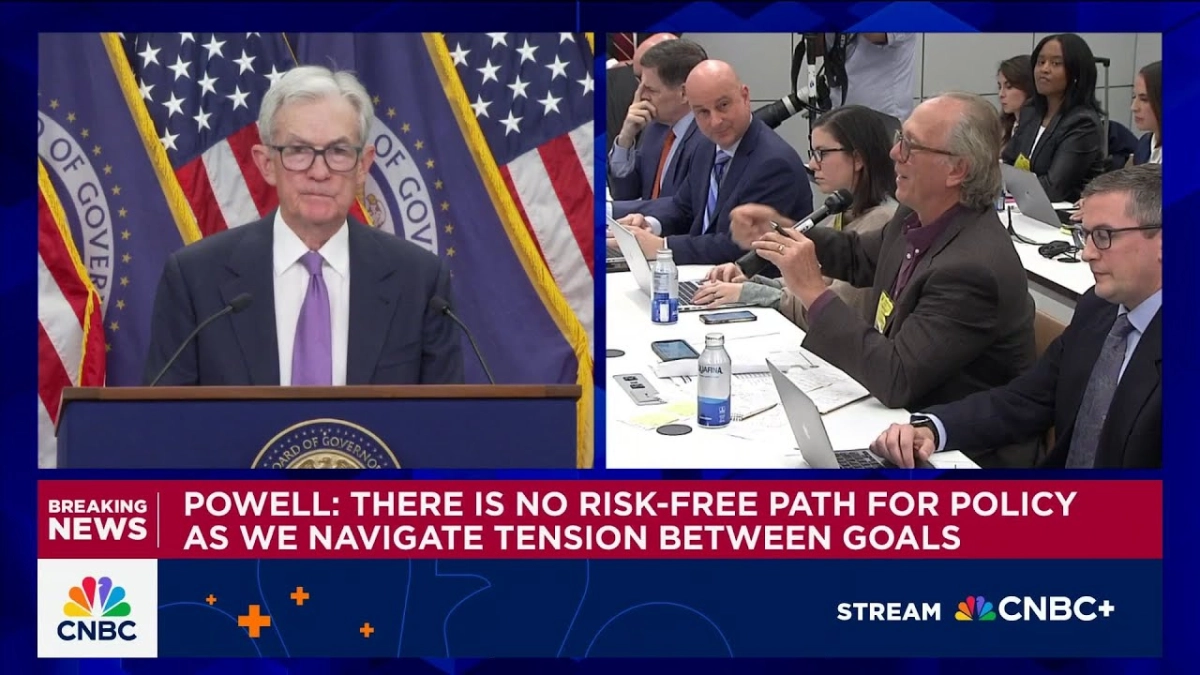
Federal Reserve Chair Jerome Powell recently articulated a measured yet watchful stance on the emerging economic shifts driven by artificial intelligence, noting that while the full implications are still unfolding, the Fed is "watching AI's impact on jobs carefully." Speaking at a press conference following the Federal Open Market Committee's decision to lower the benchmark overnight borrowing rate, Powell provided commentary on a range of economic indicators, including the nascent effects of AI on the labor market and a growing divergence in consumer spending patterns. His remarks offer a candid look into the central bank's approach to navigating an economy increasingly shaped by technological disruption and uneven recovery.
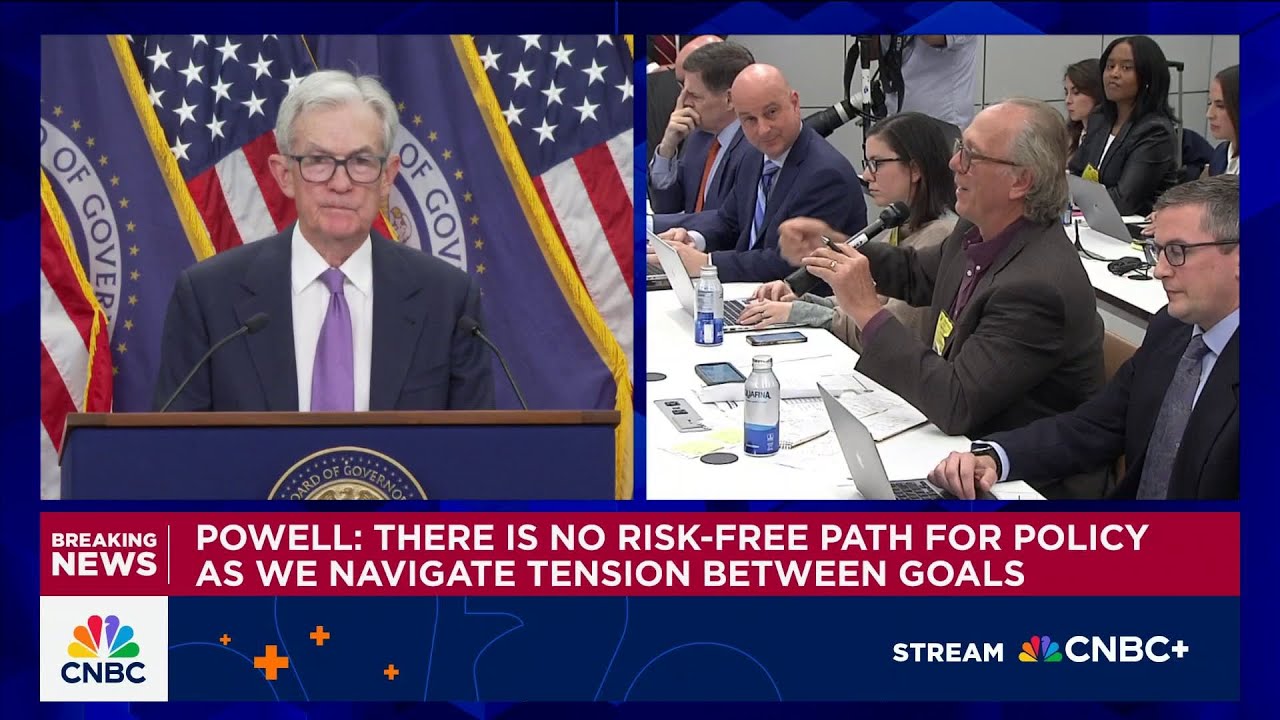
The discussion, held after the Fed's second straight interest rate cut, saw Chair Powell engaging with journalists on critical economic data points and anecdotal evidence. Among the key topics were the potential for policy decisions to be informed by less conventional data sources during periods of uncertainty, the implications of recent tech sector layoffs, and the observed "K-shaped" economic recovery, where different segments of the population experience vastly different economic realities. This comprehensive overview underscored the complexity of the current economic landscape and the meticulous data analysis guiding the Fed's monetary policy.
One of the sharpest insights from Powell's commentary centered on the direct link between recent corporate layoff announcements and the advent of AI. An interviewer specifically referenced "pretty big layoff announcements coming from Amazon and others," questioning if this signaled a resolution of the tension between growth and employment, potentially at the detriment of the latter. Powell confirmed this observation, stating, "You see a significant number of companies either announcing that they are not going to be doing much hiring or actually doing layoffs, and much of the time they're talking about AI and what it can do." This direct acknowledgment from the Fed Chair highlights that AI is no longer a distant future concern but a present factor influencing corporate human capital strategies and the broader employment outlook. For founders and VCs, this signals a critical juncture where AI adoption moves beyond efficiency gains to direct workforce restructuring, demanding strategic foresight in talent management and business model innovation.
The Fed's commitment to data-driven policy in an environment of evolving economic signals was another core insight. When pressed on the reliability of private data and surveys versus traditional "gold standard" metrics, especially during periods of potential government shutdowns, Powell emphasized a comprehensive approach. He stated, "We're going to collect every scrap of data we can find, evaluate it, and think carefully about it, and that's our jobs. That's what we're going to do." This reflects a pragmatic recognition that traditional data sources may lag or fail to capture the nuances of rapid economic shifts, necessitating a broader, more qualitative lens.
Powell further elaborated on this cautious methodology, drawing an analogy to navigating uncertainty: "What do you do if you're driving in the fog? You slow down." This concise statement underscores the Fed's inclination towards prudence when the path ahead is unclear, suggesting that the unprecedented impact of AI on the labor market might warrant a more deliberate, wait-and-see approach to monetary policy, rather than aggressive, preemptive action. The implication for tech insiders is that the Fed understands the profound, yet still opaque, nature of AI's economic integration, and will prioritize careful observation over hasty interventions.