"We must let the disruption occur, trust long-run benefits will exceed costs." This assertive stance from Federal Reserve Governor Christopher Waller encapsulates the central theme of his recent speech on artificial intelligence, as reported by CNBC’s Steve Liesman. Waller’s comments underscore a prevailing optimism within the Fed regarding AI's transformative potential, even while acknowledging the inevitable societal and economic adjustments it will necessitate.
Steve Liesman, reporting for CNBC, summarized Fed Governor Christopher Waller’s recent remarks on artificial intelligence, delivered at an undisclosed event. Waller’s speech focused on the economic implications of AI, advocating for an unhindered embrace of technological progress while acknowledging the challenges policymakers face in managing its disruptive effects on labor markets and the broader economy. His commentary provides a crucial perspective for founders, investors, and AI professionals navigating this rapidly evolving landscape, particularly concerning the interplay between innovation and economic policy.
Waller’s core message is rooted in a historical perspective on technological advancement. He posits that new technologies, despite initial dislocations, have consistently led to "growth and greater employment," with capital and labor acting as complements rather than substitutes. This view suggests that while some jobs may be automated or become obsolete, AI will ultimately create new roles and industries, fostering a net positive impact on the workforce and economic output. The immediate challenge, however, lies in the "time inconsistency between costs and benefits," where the adverse effects of job displacement are felt acutely and immediately, while the broader, more diffuse benefits of new opportunities and increased productivity emerge over a longer horizon.
This temporal mismatch presents a significant hurdle for policymakers. Waller emphasized that the real task is to "help workers and firms adjust so that the efficiency gains translate into higher wages and higher growth." This adjustment period is critical, as the ease with which one can observe jobs being destroyed often overshadows the more complex and less predictable emergence of new job categories. The example of the "influencer" profession, unforeseen before the advent of platforms like TikTok, serves as a potent illustration of how entirely new economic roles can materialize from technological shifts. So far, AI-related job losses have largely been handled through attrition, with few outright layoffs directly attributed to the technology.
However, Waller does not shy away from the darker side of AI’s potential impact. He anticipates that layoffs will increase, particularly affecting workers with college degrees, highlighting the widespread nature of this technological shift across various skill levels. "There will surely be winners and losers from AI," he stated, a candid recognition of the uneven distribution of benefits and burdens during periods of profound economic change. The Fed Governor also pointed to potential threats such as "fraud, disinformation, bias, and cybersecurity risks," areas that demand careful consideration and proactive mitigation strategies as AI systems become more integrated into critical infrastructure and daily life.
Related Reading
- AI Cycle's Long Runway: Why It's Not Your Grandfather's Tech Bubble
- Dimon: AI Bubble Requires Granular Scrutiny, Job Shifts Inevitable
- AI's Unforeseen Impact: More Jobs, Not Less, Through Jevons' Paradox
On the regulatory front, Waller articulated a clear preference for the U.S. approach to AI governance. He argued that allowing technology to develop first, followed by the development of appropriate regulations, is "superior to Europe's" strategy of regulating pre-emptively. This viewpoint aligns with a philosophy that prioritizes innovation and market-driven evolution, suggesting that overly restrictive regulations imposed too early could stifle the very growth and benefits AI promises. He drew a parallel to the technological boom of the 1990s, where the U.S. led due to its less prescriptive regulatory environment.
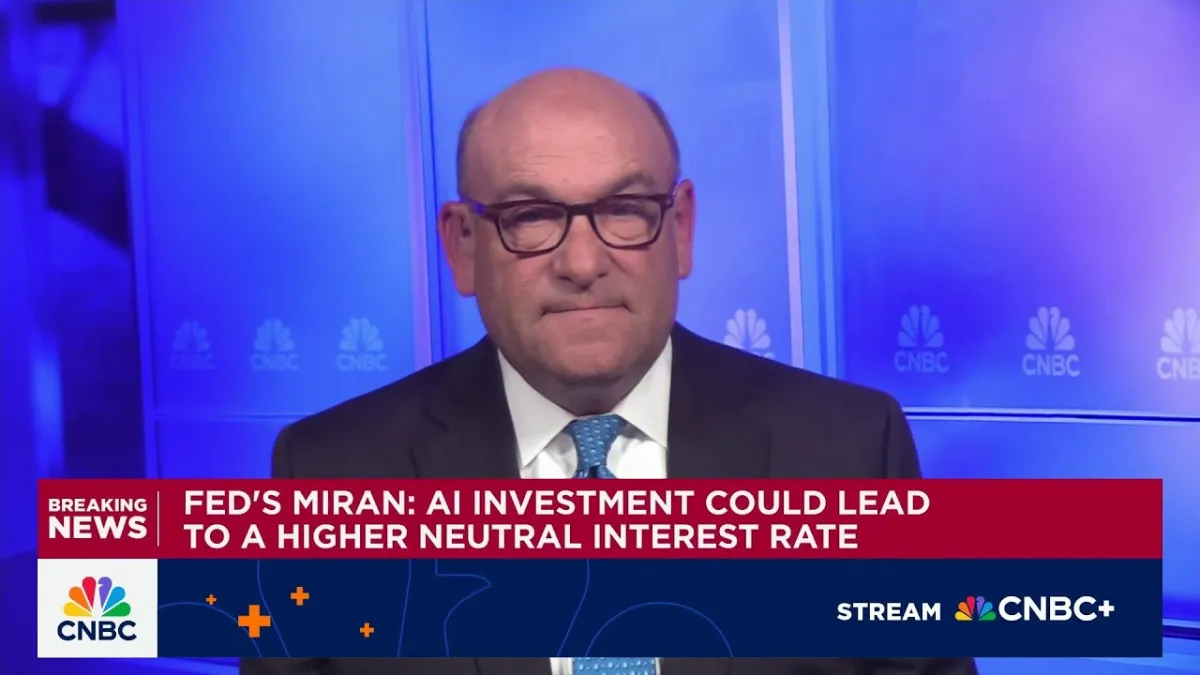
Beyond Waller's speech, additional commentary from CNBC's report highlighted further economic considerations. A recent Barclays report suggested that AI investment might have peaked in the first half of the year, signaling a potential tempering of the current AI boom. Furthermore, another Fed Governor, Miran, indicated that AI investment could lead to a higher neutral interest rate, implying long-term implications for monetary policy and the overall cost of capital. These broader economic signals underscore the comprehensive impact AI is projected to have, extending beyond just labor markets to influence investment cycles and fundamental interest rate structures.