


"Infrastructure is destiny," declared James Hairston, Head of International Policy & Partnerships for Asia, Africa, & Latin America at OpenAI, encapsulating the strategic imperative facing Southeast Asia in the burgeoning age of artificial intelligence. This powerful statement set the stage for a compelling discussion at the Bloomberg Business Summit at ASEAN in Kuala Lumpur, where Hairston, alongside Eunice Huang, Head of AI & Emerging Tech Policy, APAC at Google, and Annabel Lee, Director of Strategic Policy Engagements & Campaigns (APJ) & ASEAN at AWS, engaged in a critical dialogue with Bloomberg's Olivia Poh about the region's trajectory in global AI innovation.
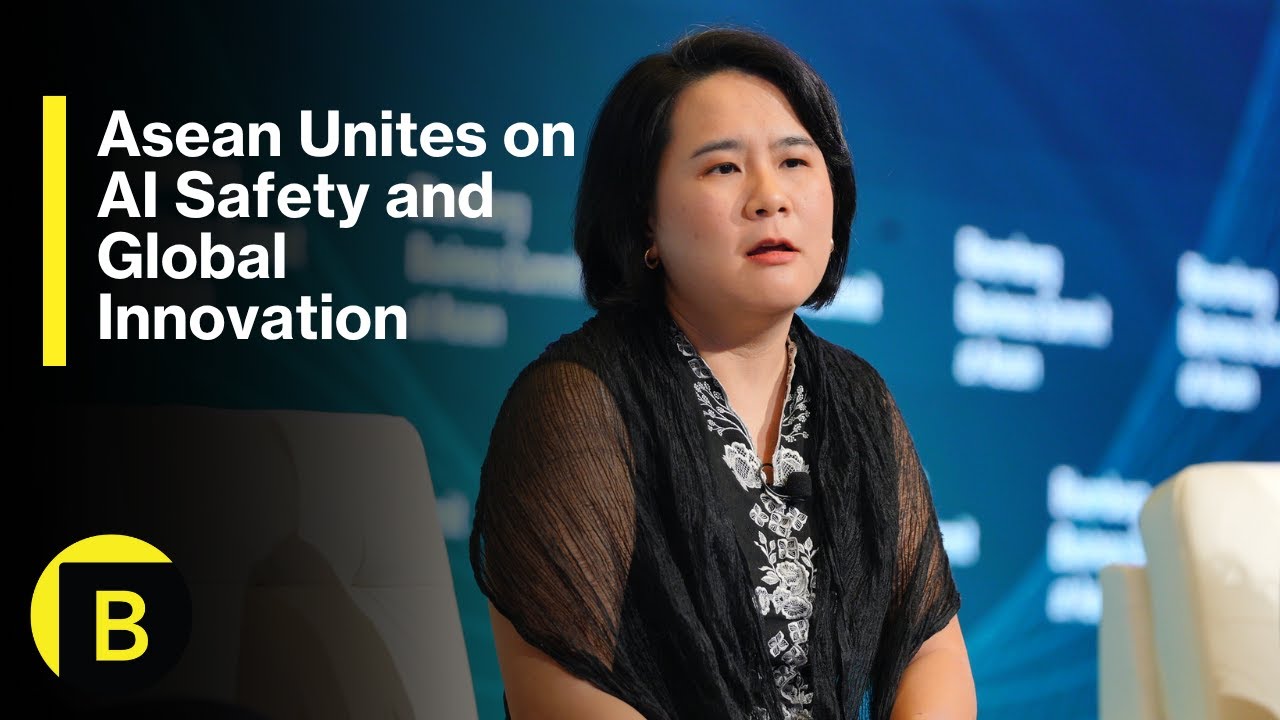
The panel universally acknowledged ASEAN's immense potential to become a leading force in the global AI landscape. Hairston highlighted the region's inherent strengths, noting that countries with "chips, energy, data, talent" are best positioned to drive economic activity and productivity in the intelligence age. He emphasized that in ASEAN, "you have so much of that dynamic talent and populations, energy resources... The region is extremely well-poised, I think, to really be a driver of what's next in the intelligence age." This bullish outlook is grounded in ASEAN's youthful population, burgeoning digital economy, and increasing investment in technological infrastructure.
Major tech players like AWS and Google are already making significant commitments. Annabel Lee of AWS underscored this, stating, "By 2030, ASEAN is poised to be able to grow about one trillion US dollars in its economy from... effective adoption and deployment of AI services." AWS alone has invested over $12 billion in cloud infrastructure across Southeast Asia in recent years, recognizing cloud as the "enabling infrastructure for AI." This investment is critical for democratizing access to AI tools and services, allowing a wider array of businesses and governments to leverage advanced capabilities without prohibitive upfront costs.
The discussion pivoted to the delicate balance of fostering innovation while ensuring responsible AI deployment. Eunice Huang of Google observed that "many of the governments in this region are very inherently pro-innovation. They understand intuitively the opportunity of AI... they know that if they harness it well, it's going to help them, you know, sort of leapfrog, help the economies move on and and grow and develop." This pro-innovation stance is a distinct advantage for ASEAN. However, she also stressed the importance of a nuanced, risk-based approach to regulation, cautioning against anything "too broad" that might stifle nascent innovation.
The concept of "sovereign AI" emerged as a significant theme, reflecting a desire among nations to build and control their own AI capabilities, particularly in language models and data infrastructure. This is not about isolation but about tailoring AI to local contexts and priorities. James Hairston reiterated the importance of developing domestic capacity, allowing countries to "carve out their own... industrial and national priorities." He stressed, "Infrastructure is destiny," highlighting the fundamental need for robust local infrastructure to achieve true AI sovereignty and self-determination. This localization is crucial for ensuring AI systems accurately reflect diverse languages, cultures, and societal norms within ASEAN.