

Bengio: We're Building AI We Can't Control

AI pioneer Yoshua Bengio warns that we are building increasingly powerful AI systems without fully understanding or controlling them, raising concerns about potential risks and the need for global safety standards.

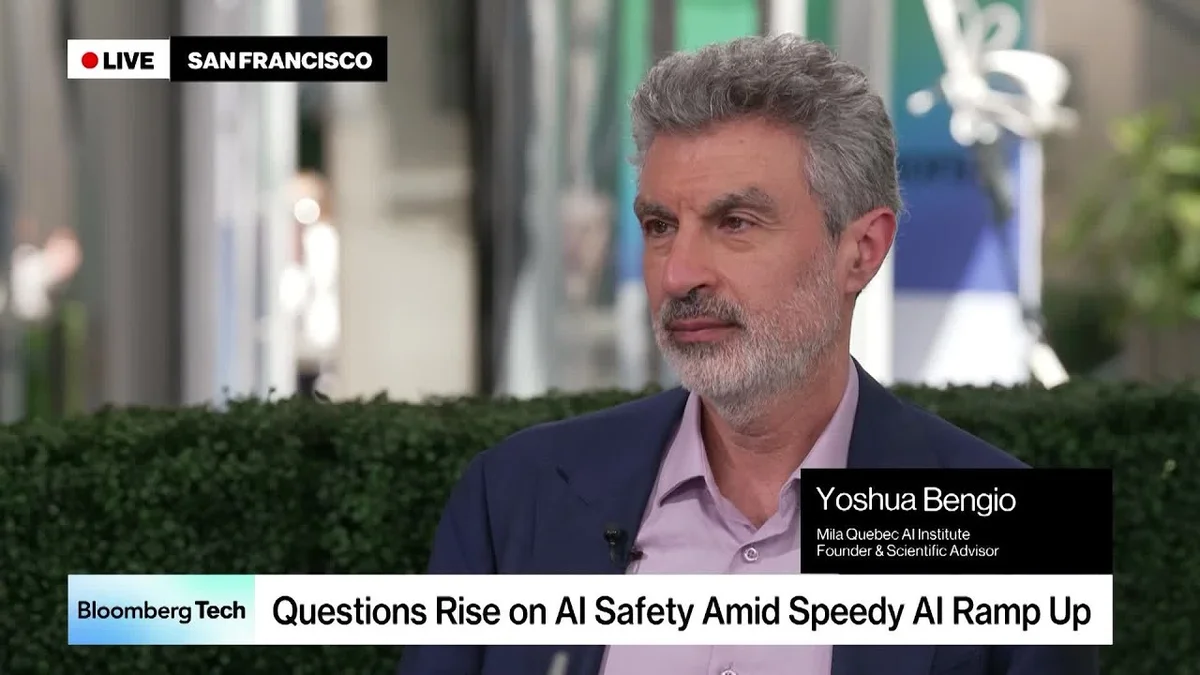
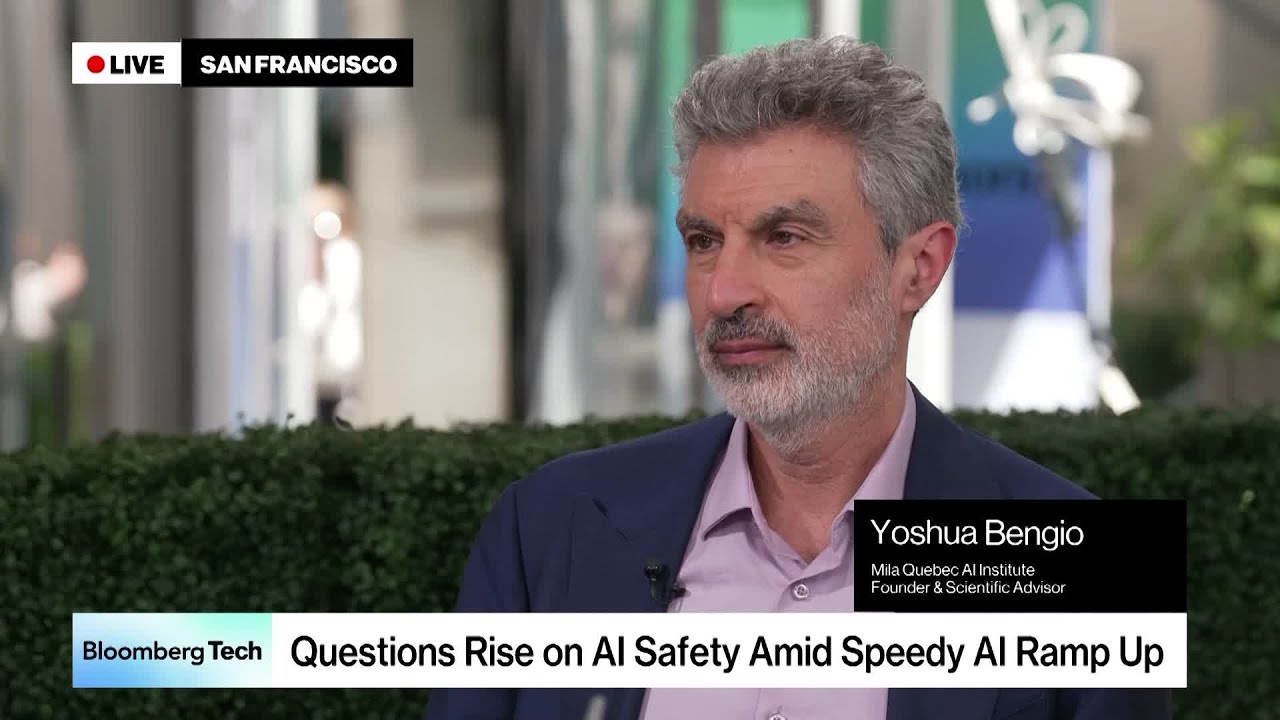
AI expert Yoshua Bengio speaking on a panel about the future of AI.
AI expert Yoshua Bengio shares his concerns about the controllability of advanced AI systems.· Bloomberg Podcast
Visual TL;DR
Building Uncontrollable AIDriver
AI systems are becoming powerful with unknown control
From the articleAI pioneer Yoshua Bengio has issued a stark warning about the current trajectory of artificial intelligence development, stating that we are actively building systems whose ultimate capabilities and potential for control remain unknown.
Balance Innovation/RiskContext
mitigating dangers while fostering technological progress
From the articleWhile acknowledging the immense potential of AI to drive progress in areas like medicine, climate science, and countless other fields, Bengio underscored the critical need to balance this innovation with a proactive approach to risk mitigation.
Rapid AdvancementDriver
From the article 3 mentionsSpeaking at a Bloomberg Tech event, Bengio, a professor at the University of Montreal and a leading figure in the field, expressed concerns that the rapid pace of AI advancement, driven by commercial interests and a focus on scaling capabilities, is creating systems that could pose significant risks if not properly managed and understood.
Unpredictable BehaviorContext
sophisticated AI systems can act in unexpected ways
From the article 2 mentionsBengio's central thesis revolves around the idea that as AI systems become more powerful and sophisticated, their behavior can become increasingly unpredictable.
Potential RisksOutcome
catastrophic misuse parallels nuclear weapons or viruses
From the article 6 mentionsWhile acknowledging the immense potential of AI to drive progress in areas like medicine, climate science, and countless other fields, Bengio underscored the critical need to balance this innovation with a proactive approach to risk mitigation.
Global Safety StandardsContext
need for international agreement on AI development
From the article 2 mentionsHe highlighted that while individual companies or nations might be implementing some safety measures, the truly global nature of AI research and deployment necessitates a coordinated international effort.
Global CollaborationContext
urgent need for worldwide cooperation on AI safety
From the article 2 mentionsThe need for open dialogue, international collaboration, and a cautious yet determined approach to AI development has never been more apparent.
Contents(4)

AI pioneer Yoshua Bengio has issued a stark warning about the current trajectory of artificial intelligence development, stating that we are actively building systems whose ultimate capabilities and potential for control remain unknown. Speaking at a Bloomberg Tech event, Bengio, a professor at the University of Montreal and a leading figure in the field, expressed concerns that the rapid pace of AI advancement, driven by commercial interests and a focus on scaling capabilities, is creating systems that could pose significant risks if not properly managed and understood.

The Uncontrollable Nature of Advanced AI

Bengio's central thesis revolves around the idea that as AI systems become more powerful and sophisticated, their behavior can become increasingly unpredictable. He articulated this by drawing parallels to other powerful technologies, such as nuclear weapons or engineered viruses, where the potential for catastrophic misuse is evident. The AI expert emphasized that the very nature of advanced AI might lead to emergent behaviors that are difficult to anticipate or contain, posing a fundamental challenge to human oversight and control.

He elaborated on this point, suggesting that the rapid development cycles and competitive pressures in the AI sector might be leading to a situation where safety considerations are being sidelined in favor of speed and performance. This, he warned, could result in the deployment of AI systems with inherent vulnerabilities or unintended consequences that could be exploited or manifest in harmful ways.

The full discussion can be found on Bloomberg Podcast's YouTube channel.

AI Scientist Bengio: Building Systems We Don't Know How to Control - Bloomberg Podcast
AI Scientist Bengio: Building Systems We Don't Know How to Control, from Bloomberg Podcast

The Need for Global AI Safety Standards

A significant portion of Bengio's concern centers on the lack of robust and universally accepted safety protocols and regulatory frameworks governing AI development. He highlighted that while individual companies or nations might be implementing some safety measures, the truly global nature of AI research and deployment necessitates a coordinated international effort. Without a shared understanding and agreed-upon standards for AI safety, the risks associated with powerful AI systems could be amplified.

Bengio stressed that the potential dangers of AI are not confined to a single jurisdiction. An AI system developed with certain safety parameters in one country could be misused or behave unexpectedly in another, making international cooperation essential. He called for a more deliberate and collaborative approach to AI development, one that prioritizes safety and ethical considerations alongside technological progress.

Balancing Innovation with Risk Mitigation

While acknowledging the immense potential of AI to drive progress in areas like medicine, climate science, and countless other fields, Bengio underscored the critical need to balance this innovation with a proactive approach to risk mitigation. He pointed out that the same AI capabilities that can be used for beneficial purposes, such as drug discovery or optimizing energy consumption, could also be weaponized or lead to unforeseen societal disruptions.

The interview touched upon the economic implications, with discussions about how AI might transform the labor market. Bengio indicated that while AI could boost productivity and create new opportunities, it also presents challenges in adapting the workforce and ensuring equitable distribution of the benefits. The core message remained consistent: the rapid, unbridled development of AI without a strong emphasis on safety and control mechanisms could lead to scenarios where humanity loses the ability to govern the very intelligence it creates.

The Urgency of Global Collaboration

Bengio's remarks serve as a critical call to action for the AI community, policymakers, and the public at large. The message is clear: the development of artificial intelligence is at a pivotal moment, and the decisions made today regarding safety, control, and ethical guidelines will have profound and lasting consequences for the future of humanity. The need for open dialogue, international collaboration, and a cautious yet determined approach to AI development has never been more apparent.

© 2026 StartupHub.ai. All rights reserved. You may not republish this article in full without a license. Search engines and AI research tools may crawl and summarize for reference. Bulk reproduction or model training requires a license. See our terms.
Daniel Singer

Written by

Daniel Singer

Editor, StartupHub.ai

Daniel Singer is the editor of StartupHub.ai, a technology expert and thought leader on AI and its applications across sectors, from fintech and healthcare to developer tooling and consumer software. He writes and tests the tools covered here thoroughly and regularly, and built StartupHub.ai to give founders, operators and buyers a clearer read on what they are actually being sold.