

Anthropic's CCA Exam: A Field Guide to Agentic Engineering

Frank Coyle uses Anthropic's CCA exam scenarios to provide a field guide for agentic engineering, emphasizing prompt design and system architecture.

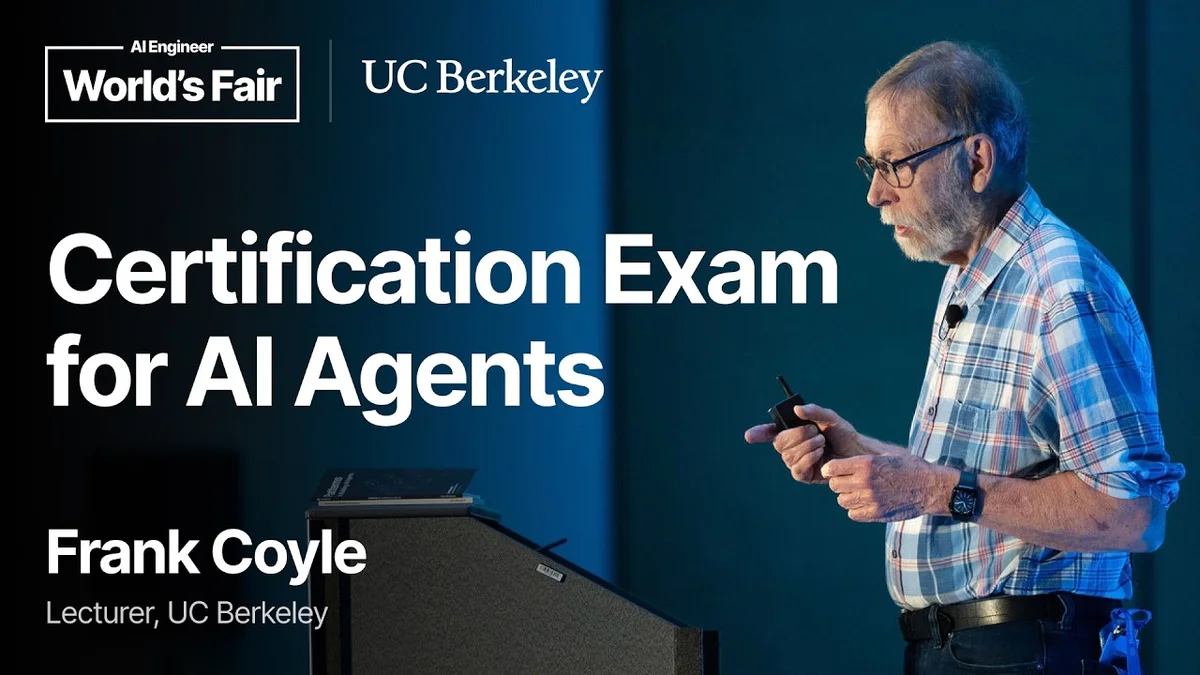
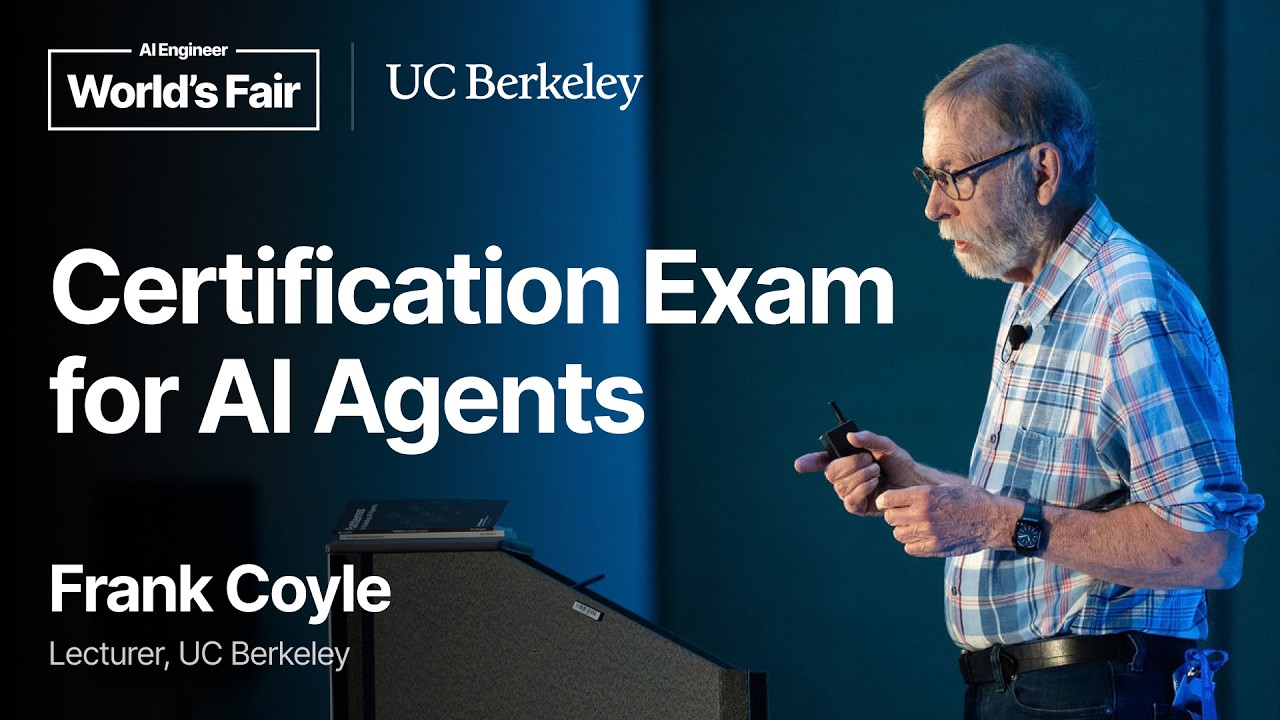
Frank Coyle speaking at a podium, with a screen displaying "Anthropic's CCA Exam as a Field-Guide for Agentic Engineering"
AI Engineer
Visual TL;DR
Anthropic CCA ExamCore
tests practical AI application skills through real-world production scenarios
From the article 3 mentionsAnthropic's Claude Certified Architect (CCA) exam, designed to test practical AI application skills, is being reframed as a valuable field guide for agentic engineering.
Frank Coyle's ApproachContext
dissects exam scenarios, working backwards from desired outcomes to understand agentic engineering
From the articleFrank Coyle of UC Berkeley is dissecting the exam's production scenarios, offering a unique perspective on how to approach complex AI system design and implementation.
Production ScenariosDriver
exam presents six real-world challenges, four randomly selected for evaluation
From the article 6 mentionsHe emphasizes that mastering these scenarios is not just about passing a certification but about developing a robust understanding of how to deploy AI effectively in production environments.
Agentic EngineeringContext
core skillset for designing and implementing complex AI systems effectively
From the article 6 mentionsThis approach allows for a deep dive into the intricacies of agentic engineering, starting from the desired outcome and tracing the steps required to achieve it.
Prompt EngineeringCore
critical for guiding AI agents and achieving specific desired behaviors
From the article 7 mentionsThis involves a keen eye for prompt engineering, system architecture, and the iterative refinement of AI agent behavior.
System DesignCore
architecting robust AI solutions for effective deployment in production environments
From the article 8 mentionsBeyond prompts, Coyle also stresses the significance of overall system design.
Robust AI DeploymentOutcome
mastering scenarios leads to a deep understanding of deploying AI effectively
From the article 2 mentionsFor instance, StartupHub.ai data indicates that Anthropic, the creator of Claude, holds a strong StartupHub score of 76/100, reflecting its position in the competitive AI development space, where robust system design is paramount for realizing the full potential of their models.
Contents(4)

Anthropic's Claude Certified Architect (CCA) exam, designed to test practical AI application skills, is being reframed as a valuable field guide for agentic engineering. Frank Coyle of UC Berkeley is dissecting the exam's production scenarios, offering a unique perspective on how to approach complex AI system design and implementation. The exam presents candidates with six real-world scenarios, randomly selecting four for evaluation, pushing them to demonstrate their proficiency in building and managing AI agents.

Anthropic's CCA Exam: A Field Guide to Agentic Engineering - AI Engineer
Anthropic's CCA Exam: A Field Guide to Agentic Engineering, AI Engineer

Frank Coyle's Approach to Agentic Engineering

Coyle's method focuses on working backwards through the exam's challenges. This approach allows for a deep dive into the intricacies of agentic engineering, starting from the desired outcome and tracing the steps required to achieve it. He emphasizes that mastering these scenarios is not just about passing a certification but about developing a robust understanding of how to deploy AI effectively in production environments. This involves a keen eye for prompt engineering, system architecture, and the iterative refinement of AI agent behavior.

Deconstructing Production Scenarios

The CCA exam's production scenarios are designed to mirror the complexities faced by AI engineers in real-world applications. These challenges often involve integrating large language models (LLMs) into larger systems, managing state, handling user interactions, and ensuring reliable performance. By analyzing these scenarios, Coyle highlights the practical skills needed to translate theoretical AI knowledge into functional, deployed systems. He suggests that the exam's structure, with its random selection of four out of six scenarios, encourages a broad and deep understanding of agentic design principles rather than narrow specialization.

The Importance of Prompt Engineering and System Design

A central theme emerging from Coyle's walkthrough is the critical role of prompt engineering. Crafting effective prompts is not merely about instructing an AI model; it's about designing the interaction layer that guides the agent's behavior and ensures it aligns with the intended task. Beyond prompts, Coyle also stresses the significance of overall system design. This includes how agents communicate, how data is processed, and how errors are managed. For instance, StartupHub.ai data indicates that Anthropic, the creator of Claude, holds a strong StartupHub score of 76/100, reflecting its position in the competitive AI development space, where robust system design is paramount for realizing the full potential of their models.

Agentic Engineering as a Core Skillset

The concept of agentic engineering, where AI systems are designed to act autonomously and intelligently to achieve specific goals, is rapidly becoming a core competency in the AI field. Coyle's utilization of the CCA exam as a teaching tool underscores this trend. He is not just preparing individuals for a certification; he is cultivating a generation of engineers capable of building sophisticated AI agents. This involves understanding the nuances of LLM capabilities, limitations, and how to orchestrate them within larger software frameworks. The skills honed through such practical, scenario-based learning are directly applicable to the development of advanced AI products and services.

© 2026 StartupHub.ai. All rights reserved. You may not republish this article in full without a license. Search engines and AI research tools may crawl and summarize for reference. Bulk reproduction or model training requires a license. See our terms.
Daniel Singer

Written by

Daniel Singer

Editor, StartupHub.ai

Daniel Singer is the editor of StartupHub.ai, a technology expert and thought leader on AI and its applications across sectors, from fintech and healthcare to developer tooling and consumer software. He writes and tests the tools covered here thoroughly and regularly, and built StartupHub.ai to give founders, operators and buyers a clearer read on what they are actually being sold.