

Ulysses Aims to Conquer the Ocean with Robots

Ulysses is building advanced underwater robots to tackle challenges in ocean restoration, industry, and defense, aiming to become the leading 'ocean company'.

6 min read
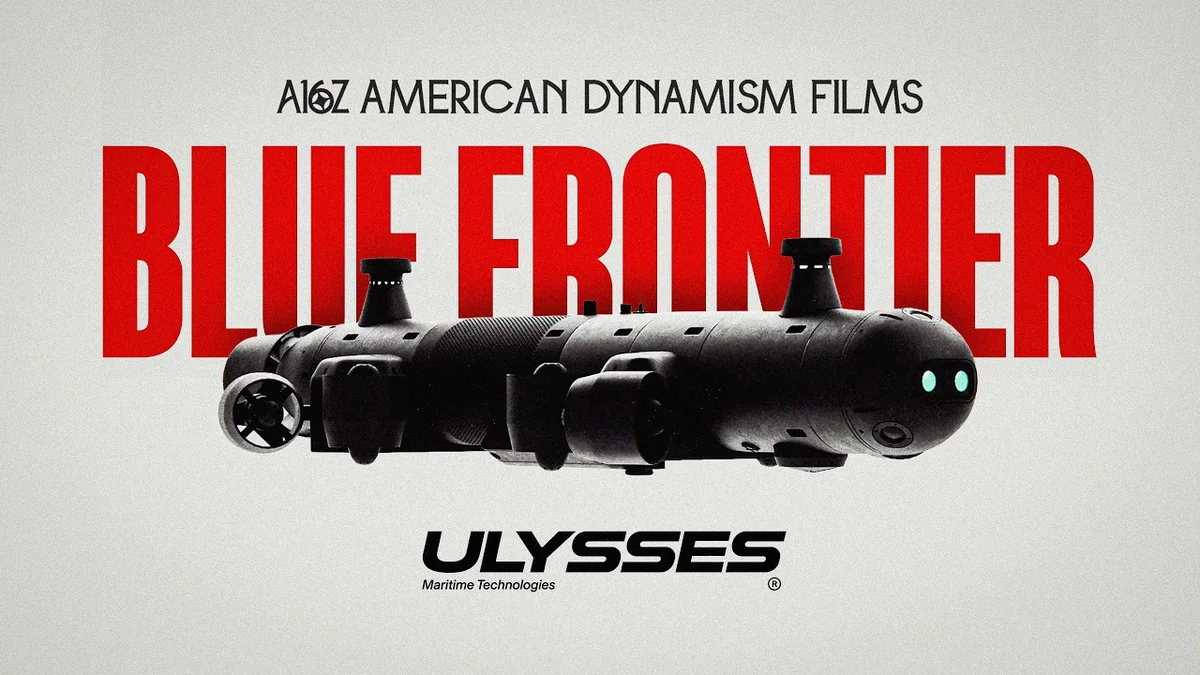
A Ulysses underwater robot shown in a schematic or in the water.
a16z
Visual TL;DR
Ocean largely unexploredDriver
understanding of deep sea lags far behind our knowledge of space
From the articleThe vast, largely unexplored ocean is becoming a critical frontier for technological advancement, and Ulysses, a company focused on underwater robotics, is positioning itself at the forefront of this domain.
High cost underwater workDriver
From the articleHowever, in pursuing this objective, Ulysses realized that the high cost and difficulty of underwater work were limiting factors across numerous sectors, including offshore industries and defense.
Ulysses builds robotsCore
advanced underwater robots to tackle challenges in ocean restoration, industry, and defense
From the articleUlysses aims to meet this demand by developing robots capable of operating and managing various underwater domains.
Modular designContext
robots designed for versatility, adapting to various tasks and environments easily
From the article 2 mentionsBy bringing machining in-house, Ulysses can rapidly design and test new components.
Ocean restorationEffect
From the article 9+ mentionsThe company's journey began with a specific goal: to scale underwater ecosystem restoration.
Address challengesEffect
tackling geopolitical and environmental challenges with advanced robotic solutions
From the article 3 mentionsThe broader vision is to create a network of surface and undersea vehicles operating 24/7 to address critical ocean tasks, effectively creating fixed infrastructure akin to satellites in orbit.
Revolutionize maritime opsOutcome
revolutionize how humanity interacts with the underwater world, from ecosystem restoration to defense
Leading 'ocean company'Outcome
aiming to become the leading 'ocean company' by conquering the ocean with robots
From the article 3 mentionsThe company emphasizes the importance of real-world data, contrasting the ease of ocean testing with the challenges of space exploration.
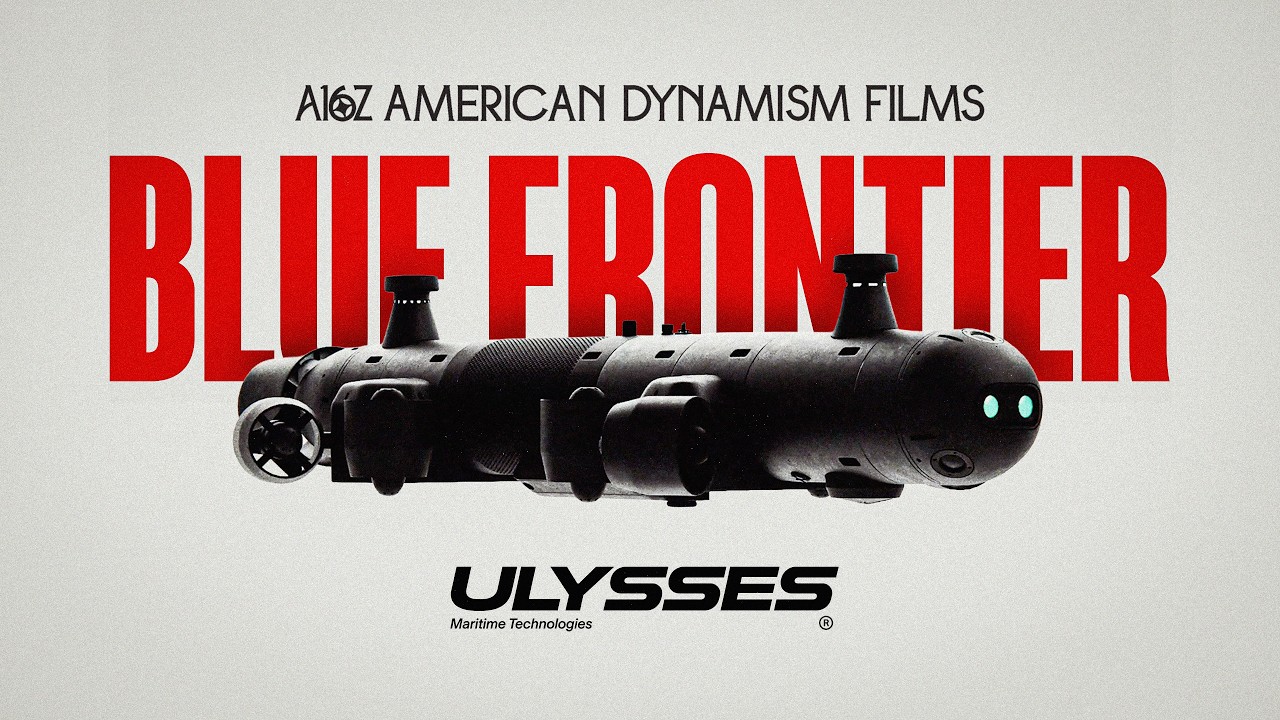
The vast, largely unexplored ocean is becoming a critical frontier for technological advancement, and Ulysses, a company focused on underwater robotics, is positioning itself at the forefront of this domain. In a recent feature presented by a16z American Dynamism, the founders of Ulysses discuss their ambitious mission to revolutionize how humanity interacts with the underwater world, from ecosystem restoration to resource extraction and defense applications.

Ulysses Aims to Conquer the Ocean with Robots - a16z
Ulysses Aims to Conquer the Ocean with Robots — from a16z

The video introduces Ulysses' vision to tackle the significant challenges of operating in the ocean, noting that our understanding of the deep sea lags far behind our knowledge of space. The company's journey began with a specific goal: to scale underwater ecosystem restoration. However, in pursuing this objective, Ulysses realized that the high cost and difficulty of underwater work were limiting factors across numerous sectors, including offshore industries and defense.

The Expanding Role of Underwater Robotics

The burgeoning demand for AI, fueled by an increasing need for subsea cables, critical minerals, and energy, underscores the growing strategic importance of the ocean. Ulysses aims to meet this demand by developing robots capable of operating and managing various underwater domains. The founders draw parallels to advancements on land with self-driving cars and in the air with delivery drones, asserting that Ulysses is building the equivalent for the ocean.

The company's co-founders, Will O'Brien and Akhil Voorakkara, explain that demand for their reliable and cost-effective underwater vehicles is outstripping supply. They highlight the need for vehicles that can perform critical tasks at meaningful scales and at a cost that enables widespread adoption.

Addressing Geopolitical and Environmental Challenges

The video touches upon the increasing geopolitical tensions and their impact on maritime security, referencing threats in crucial shipping lanes like the Strait of Hormuz. Incidents such as mine placements, threats to undersea cables, and sabotage of oil pipelines underscore the need for advanced maritime capabilities. The narrative shifts to the changing nature of warfare, becoming more distributed, autonomous, and less centralized, which necessitates new types of systems beyond traditional, high-cost military assets.

The founders also draw inspiration from their origins in environmental restoration. Jamie Wedderburn, one of the co-founders, recounts observing manual seagrass restoration efforts in Scotland, which involved manually planting seeds in challenging weather conditions. This led to the initial idea of mechanizing the process, which ultimately drove the creation of Ulysses' specialized planting attachments.

Modular Design for Versatility

A key aspect of Ulysses' approach is its focus on modularity. The team found that off-the-shelf underwater vehicles were prohibitively expensive. By bringing machining in-house, Ulysses can rapidly design and test new components. This modularity allows customers to configure vehicles with their desired sensors, add battery capacity, or enhance maneuverability with extra thrusters, all through standardized interfaces. This flexibility means a vehicle can be adapted for tasks like multi-beam sonar surveys within minutes.

The company emphasizes the importance of real-world data, contrasting the ease of ocean testing with the challenges of space exploration. Ulysses' ability to quickly iterate on designs based on direct ocean feedback is a significant advantage. The broader vision is to create a network of surface and undersea vehicles operating 24/7 to address critical ocean tasks, effectively creating fixed infrastructure akin to satellites in orbit.

The Future of Maritime Operations

Ulysses aims to be the "ocean company," much like SpaceX is the "space company," fundamentally rethinking how humanity interacts with and benefits from the ocean. They envision a future where fleets of autonomous underwater vehicles are as commonplace as satellites, driving progress in resource management, environmental protection, and scientific discovery.

© 2026 StartupHub.ai. All rights reserved. Do not enter, scrape, copy, reproduce, or republish this article in whole or in part. Use as input to AI training, fine-tuning, retrieval-augmented generation, or any machine-learning system is prohibited without written license. Substantially-similar derivative works will be pursued to the fullest extent of applicable copyright, database, and computer-misuse laws. See our terms.