


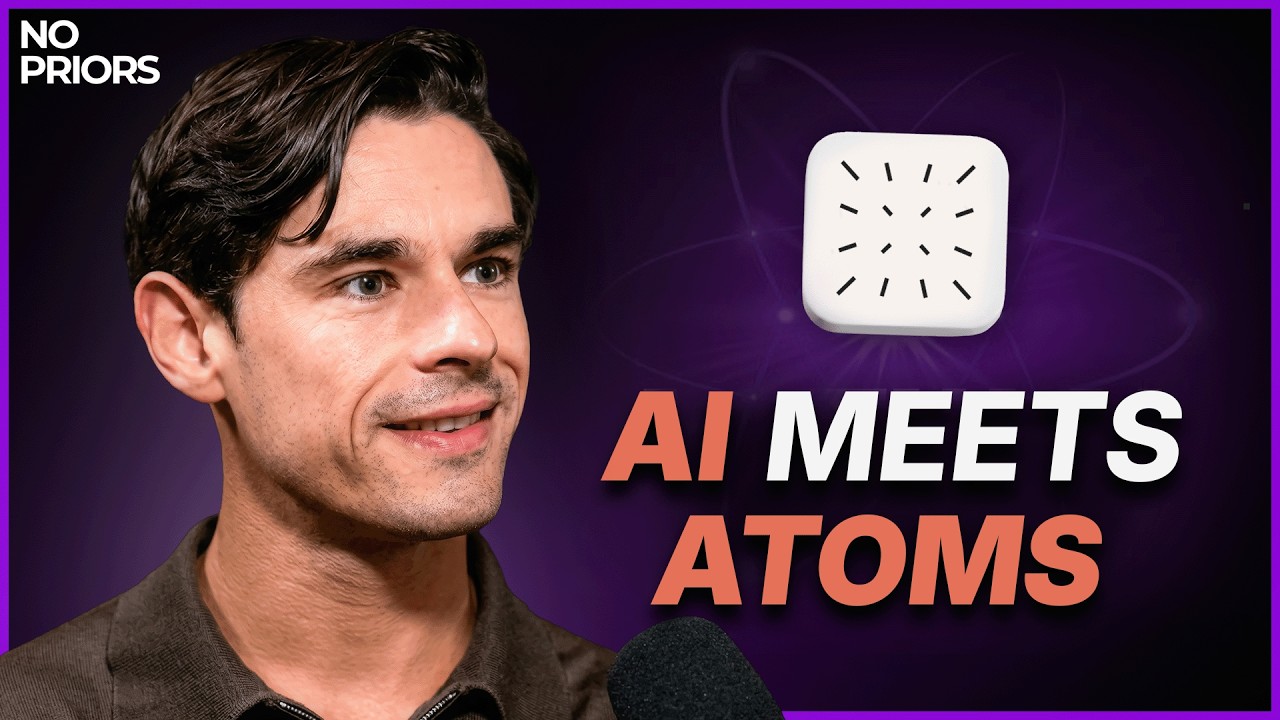
Liam Fedus on AI for Scientific Discovery

Liam Fedus, co-founder of Periodic Labs and former OpenAI VP, discusses the growing role of AI in scientific discovery, drawing on his physics background.

4 min read
Liam Fedus on AI for Scientific Discovery
NoPriors

In a recent episode of the "No Priors" podcast hosted by Elad Gil, Liam Fedus, co-founder of Periodic Labs, shared insights into the burgeoning field of applying AI to scientific discovery. Fedus, whose background as a physics major and his prior work at Google Brain and as VP of post-training at OpenAI, positions him uniquely at the intersection of cutting-edge AI research and practical application. Periodic Labs is dedicated to building AI foundational models for atoms, focusing on impacting the physical sciences, chemistry, and material science through AI.
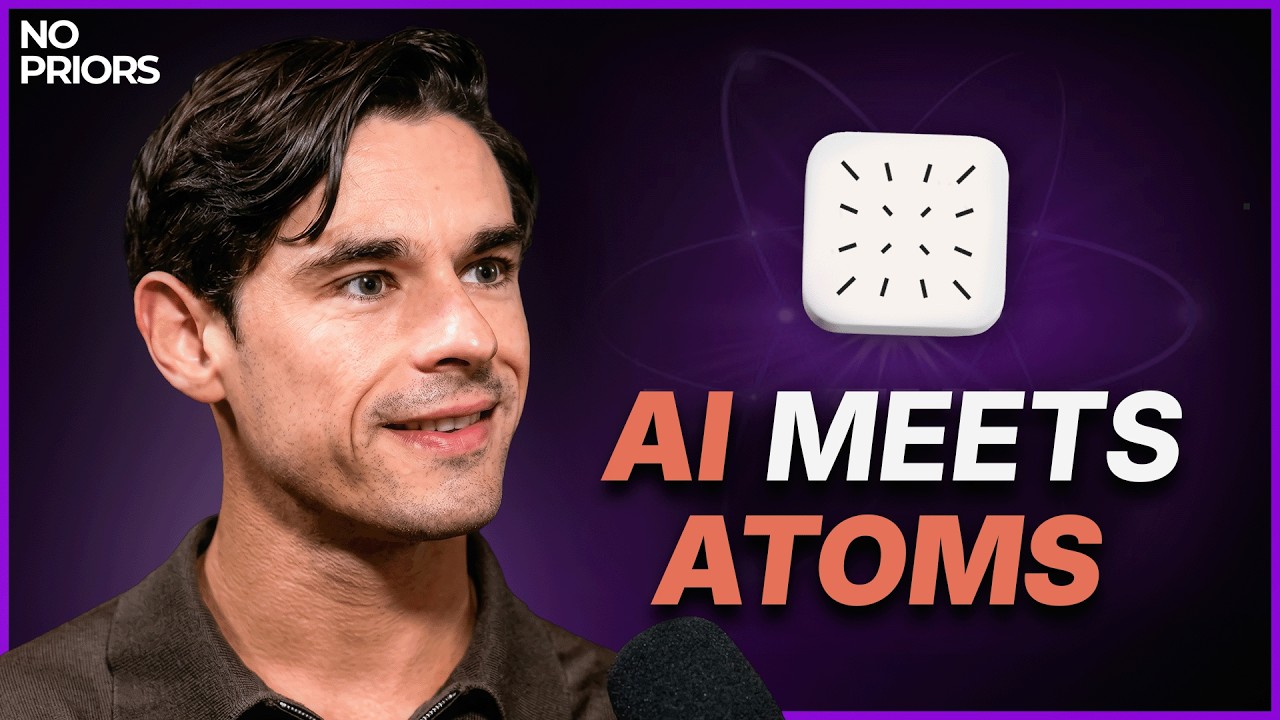
Liam Fedus on AI for Scientific Discovery - NoPriors
Liam Fedus on AI for Scientific Discovery — from NoPriors

Guest Context: Liam Fedus

Liam Fedus brings a strong foundation in physics and a deep understanding of large-scale AI systems. His early career involved research in dark matter at the undergraduate level, utilizing specialized apparatus sensitive to particle interactions. This scientific rigor and experience with complex experimental setups likely informed his transition into the AI domain. At Google Brain, he was involved in foundational AI research, and later, at OpenAI, he served as VP of post-training, contributing to the development and deployment of models like ChatGPT. This blend of fundamental science and advanced AI engineering makes his perspective on the future of AI in scientific discovery particularly valuable.

Related startups

The AI Landscape in Science: A Physicist's Perspective

The conversation highlighted a significant trend: the increasing influx of physicists and scientists from other quantitative fields into AI research and development. Fedus explained that the skills honed in physics—analytical thinking, problem-solving, understanding complex systems, and a data-driven approach—are highly relevant to the challenges in AI. He noted that many of his colleagues at Google Brain and OpenAI also had physics backgrounds, drawn by the potential to apply AI to tackle grand scientific challenges. Fedus elaborated on his own journey, stating, "I think it's a great way to think about the world, like very principled, very like hard-nosed scientist, and you have such high leverage in computer science and AI. I think a lot of physicists were seeing that progress elsewhere and saying, like, 'Hey, I think I could be a huge contributor elsewhere.'" This sentiment underscores the appeal of AI as a tool for scientific advancement.

Periodic Labs: AI for Atoms

Fedus discussed his current venture, Periodic Labs, which aims to build AI foundational models for atoms. The goal is to leverage AI to accelerate discovery in areas like material science, chemistry, and physics. He elaborated on the company's mission: "We're building an AI foundation lab for atoms, so we're impacting the physical sciences, chemistry, and material science using AI." He emphasized that while AI has made significant strides in language and code generation, its application to the physical sciences is still in its nascent stages, presenting immense opportunities.

The conversation delved into the nature of the data and challenges in this domain. Unlike language models trained on vast amounts of text, scientific AI models often require highly specialized, sparse, and complex data. Fedus highlighted the difficulty in obtaining and interpreting this data, drawing parallels to scientific research where experiments are often costly and time-consuming. However, he also pointed out the potential for AI to revolutionize this process by identifying patterns and making predictions that human researchers might miss.

The Role of Data and Simulation

A key theme was the critical role of data, both real-world experimental data and simulation data, in training effective scientific AI models. Fedus noted that while large language models are trained on the internet, scientific models often rely on curated datasets from experiments and simulations. He mentioned the challenges of data scarcity and the need for AI models that can learn from limited data or generalize well from simulation data to real-world applications. The ability to generate synthetic data through simulations and then use it to train AI models is a crucial aspect of accelerating scientific discovery.

The Future of AI in scientific discovery

Fedus expressed optimism about the future of AI in science, envisioning a future where AI acts as a powerful collaborator for scientists, accelerating the pace of discovery and innovation. He believes that AI can help researchers navigate the vast landscape of scientific knowledge, identify promising avenues of research, and design more efficient experiments. The ability of AI to analyze complex datasets and uncover hidden patterns is particularly valuable in fields like drug discovery, material science, and climate modeling.

The discussion also touched upon the ethical considerations and the importance of responsible AI development, especially when applied to critical areas like scientific research. Ensuring that AI systems are transparent, interpretable, and aligned with human values is paramount.

© 2026 StartupHub.ai. All rights reserved. Do not enter, scrape, copy, reproduce, or republish this article in whole or in part. Use as input to AI training, fine-tuning, retrieval-augmented generation, or any machine-learning system is prohibited without written license. Substantially-similar derivative works will be pursued to the fullest extent of applicable copyright, database, and computer-misuse laws. See our terms.