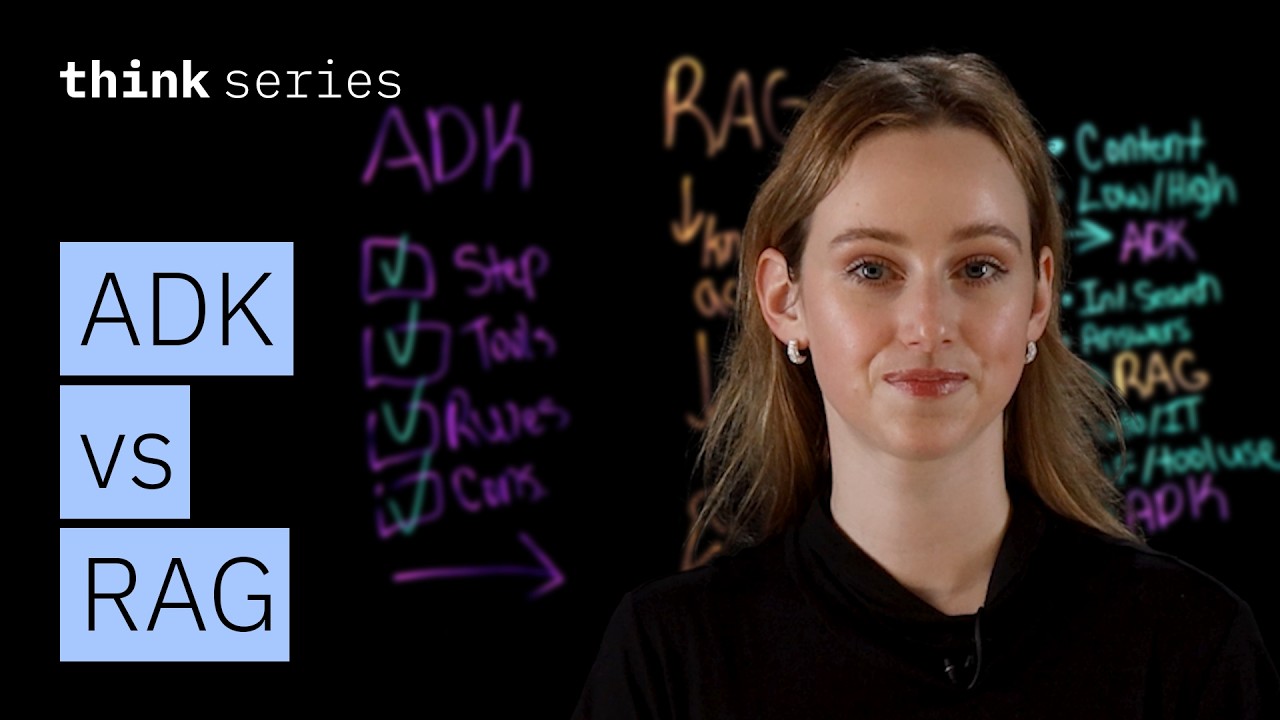
In a concise explanation, IBM Demand Strategist Katie McDonald breaks down the fundamental differences between two key AI agent architectures: Agent Development Kits (ADK) and Retrieval Augmented Generation (RAG). McDonald, whose role at IBM focuses on strategic demand generation for AI solutions, offers a clear framework for understanding when to employ each approach, and when a hybrid model might be most effective.
Understanding the Architectures
McDonald begins by drawing a relatable analogy to hardware stores. One aisle is stocked with tools for performing tasks, and another with reference guides and information. This metaphor serves to illustrate the core functions of ADK and RAG.