

AI Translation Tools in 2026: The Complete Guide for Agentic AI and AI Agents

Every AI translation tool available in 2026, ranked by relevance for agentic AI and autonomous agents. From LLM-native translation to real-time speech, video dubbing, and website localization.

6 min read
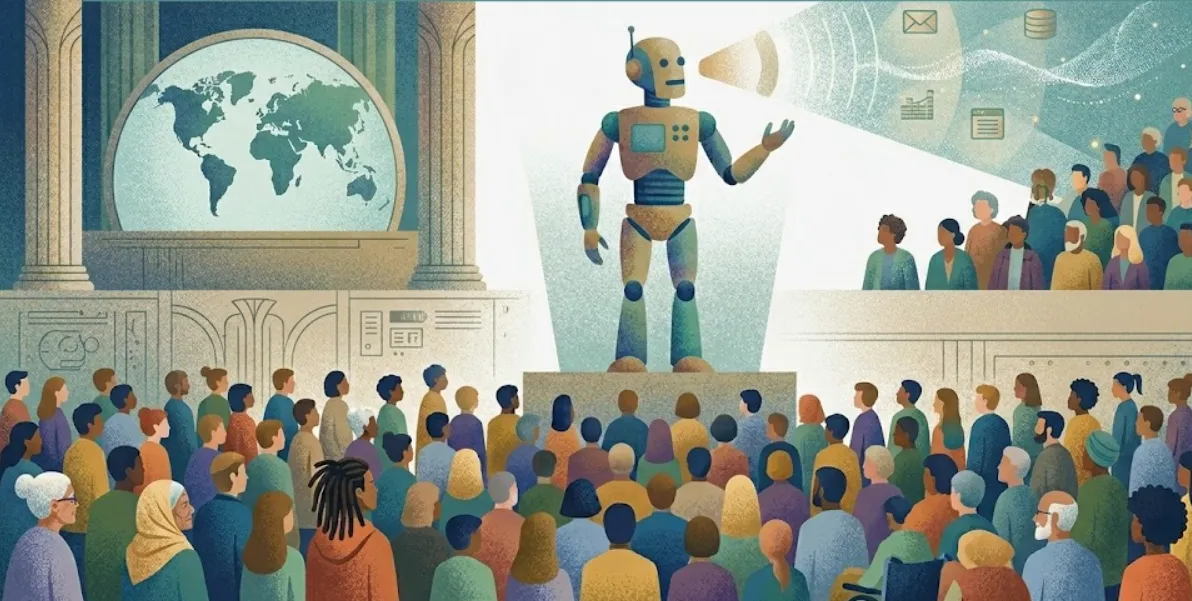
AI robot translating languages to a global audience — illustration of agentic AI translation tools in 2026
AI-powered translation has become infrastructure for autonomous agents operating across languages and borders.

Translation is no longer a standalone product. In the age of agentic AI, where autonomous agents operate across borders, languages, and data sources, translation has become infrastructure. Every AI agent that reads a webpage, processes a document, or communicates with a user needs translation baked in, not bolted on.

The economics have shifted dramatically. What cost $0.20 per word with human translators, then $0.02 with neural machine translation, now costs fractions of a cent per token through LLM-native translation. Google indexed Grok in multiple languages. Claude, GPT-4, and Gemini all handle 50+ languages natively. The question is no longer "can AI translate?" but "which translation layer should your AI agent use?"

Here is every major AI translation tool available today, ranked by relevance for agentic AI workflows.

Tier 1: LLM-Native Translation (Built Into the Model)

The biggest shift in translation is that frontier LLMs now translate as a side effect of their training. No separate API call needed. Your agent prompts in English, the model responds in Japanese. Cost: included in your existing token spend.

ModelLanguagesBest ForCost/1M tokens
Claude 4.650+Nuanced, context-aware$3-15
GPT-4o50+General-purpose, fast$2.50-10
Gemini 2.0100+Multimodal + grounded$1-7
Grok 330+Real-time web context$2-5
Cohere Command R+10 optimizedEnterprise multilingual RAG$1-3

For most agentic AI use cases, LLM-native translation is the right default. Your agent is already calling the model; translation adds zero latency and near-zero marginal cost.

Tier 2: Dedicated Translation APIs

DeepL - $536M raised

The gold standard for European language translation. DeepL consistently outperforms LLMs on German, French, Dutch, and Nordic languages. Their API supports glossary and formal/informal tone control. They also launched DeepL Voice for real-time meeting translation. DeepL was reportedly planning an IPO and is valued at $2B+.

Google Translate API / Cloud Translation

134 languages, $20 per million characters. The largest coverage of any translation API. Google Cloud Translation Advanced (v3) offers glossaries, model selection, and batch translation for agentic workflows.

Naver Papago

Dominant in Korean, Japanese, and Chinese translation. If your agents operate in East Asian markets, Papago often outperforms Western-built models on CJK language pairs.

Tier 3: Agentic Translation Platforms

A new category has emerged: AI translation agents that combine LLMs with translation memory, glossaries, and QA workflows. These are purpose-built for enterprises that need more than raw translation.

Related startups

Smartcat

Enterprise-ready AI agents that translate, localize, and adapt content instantly. Smartcat combines generative AI speed with human expertise, learning from every project to improve accuracy, terminology, and brand voice. Their agentic approach uses RAG to pull context from translation memory and style guides.

Lokalise

RAG-powered AI orchestration for context-aware localization. Lokalise grounds LLM output in your translation memory, glossary, and style rules, ensuring consistent, governed translations. The closest thing to an autonomous localization agent.

Smartling

Neural Machine Translation with human-in-the-loop workflows. Smartling routes translations through AI first, then human review for quality assurance. Their API integrates with CMS platforms for continuous localization.

Tier 4: Real-Time Speech Translation

Voice AI agents need translation that works in real-time, mid-conversation, with accent handling and emotional preservation.

Sanas - $121M raised

Real-time accent translation and noise cancellation. Sanas processes 75 billion+ minutes monthly in contact centers. Their speech-to-speech pipeline handles accent localization, meaning your AI voice agent can speak with a local accent in any market. Raised $65M Series B in Feb 2025 led by Quadrille Capital.

Krisp - $19M raised

AI-powered noise cancellation with speech-to-speech translation. Krisp operates at the audio layer, ideal for voice AI agents that need clean, translated audio in real-time calls.

Ultravox.ai - $17M raised

Open-weight speech language model that outperforms GPT-4o Realtime on speech understanding. Offers APIs and SDKs with lower latency than cloud-hosted alternatives for building voice AI agents.

Tier 5: Video and Content Translation

HeyGen - $65.6M raised

AI video platform with voice cloning and lip-syncing across 175+ languages. Upload a video in English, get back a perfectly lip-synced version in any target language. Valued at $500M after their 2024 raise led by Benchmark.

Sync - $21.6M raised

Studio-grade lip-sync and visual dubbing that preserves actor performances across languages.

Colossyan - $27M raised

AI video for workplace learning with automatic translation into 80+ languages. Raised $22M Series A led by Lakestar in Feb 2024. Trusted by Paramount Pictures and Vodafone.

Veed - $35M raised

Browser-based video editor with AI subtitles and translation. 8 million+ creators worldwide.

Akool - $40M raised

Generative AI platform with avatar videos, translation, and face swap for marketing content at scale.

Tier 6: Website and App Localization

Weglot - $50.5M raised

No-code website translation with SEO optimization. Auto-detects new content, translates, and serves localized versions with proper hreflang tags. Raised $49M backed by Partech Partners. Powers localization for 70,000+ websites.

BLEND - $20M raised

End-to-end localization platform combining AI-driven translation with a global community of language experts. Formerly One Hour Translation.

Unbabel - $110M raised (acquired)

AI-powered translation for customer service, combining machine translation with human editors. Note: Unbabel was acquired by TransPerfect in August 2025. The technology lives on as part of TransPerfect's enterprise offering.

Tier 7: Consumer Translation

Monica - $10M raised

All-in-one AI browser extension with GPT, Claude, and Gemini for chatting, copywriting, and translation. 10M+ users worldwide. Backed by Tencent at a ~$100M valuation.

Hi Translate / TransAI

Mobile-first AI translation apps targeting the consumer market.

The Agentic AI Translation Stack

If you are building AI agents that operate multilingually, here is the practical recommendation:

Use CaseRecommendedWhy
Text in/outYour existing LLMZero additional cost
High-volume docsDeepL APIBest quality European languages, glossary support
Enterprise localizationSmartcat or LokaliseRAG-powered, TM-aware, agentic workflows
Voice agentsSanas / UltravoxReal-time speech-to-speech
Video contentHeyGen175+ languages, lip-sync, voice cloning
Website localizationWeglotNo-code, SEO-optimized, 70K+ sites
Customer supportTransPerfect (Unbabel)AI + human review, enterprise scale

The Cost Collapse

Translation costs have fallen 99% in a decade. Human translation averaged $0.15-0.30 per word. Google Translate API charges $20 per million characters. LLM-native translation costs less than $0.001 per word at Haiku/Flash pricing.

For agentic AI, translation is effectively free. An agent processing 10,000 documents per day across 5 languages adds $2-5 in translation costs. The bottleneck is no longer cost but quality for specialized domains and real-time latency for voice.

What Comes Next

Three trends are converging:

  1. Agentic translation platforms like Smartcat and Lokalise are building AI agents that autonomously manage the full localization workflow: detect content, translate with context from glossaries and TM, run QA, and route to human review only when needed.
  2. Real-time voice translation from Sanas, Ultravox, and DeepL Voice is making speech-to-speech translation indistinguishable from native speech. This unlocks truly global voice AI agents.
  3. Universal multilingual models: every new frontier model improves on multilingual capability. Within 2 years, dedicated translation APIs may only survive for certified, legal, and domain-specific translation.

The companies listed above represent the current state of the art. The ones that survive will be those that integrate most deeply into agentic AI workflows, not those that offer standalone translation.

© 2026 StartupHub.ai. All rights reserved. Do not enter, scrape, copy, reproduce, or republish this article in whole or in part. Use as input to AI training, fine-tuning, retrieval-augmented generation, or any machine-learning system is prohibited without written license. Substantially-similar derivative works will be pursued to the fullest extent of applicable copyright, database, and computer-misuse laws. See our terms.