



Visual TL;DR
Code Comprehension BottleneckDriver
understanding existing codebases is the biggest challenge for engineers
From the article 4 mentionsReferencing a blog post by Jacky Natson, "Vibe Coding Our Way to Disaster," Oliveira echoed the sentiment that the true bottleneck in software development is not typing code, but understanding it.
AI for ComprehensionCore
leveraging AI models like Claude for understanding code
From the article 6 mentionsPriscila Andre de Oliveira, a Senior Software Engineer at Sentry, shared her insights on how she utilizes AI to enhance her daily workflow, emphasizing the crucial role of comprehension in software development.
Engineer's Workflow ShiftContext
transitioning from Senior Engineer to Agent Manager role
From the articlePriscila Andre de Oliveira, a Senior Software Engineer at Sentry, shared her insights on how she utilizes AI to enhance her daily workflow, emphasizing the crucial role of comprehension in software development.
Catch Me Up SkillEffect
AI assists engineers in quickly grasping complex code context
From the article 3 mentionsDue to the repetitive nature of her questions to AI regarding code comprehension, Oliveira developed a custom skill named "Catch Me Up." This skill, stored locally on her machine, structures prompts into six distinct exploration modes: Architecture, Convention, Feature Trace, Syntax/API, Testing, and History.
Focus on UnderstandingContext
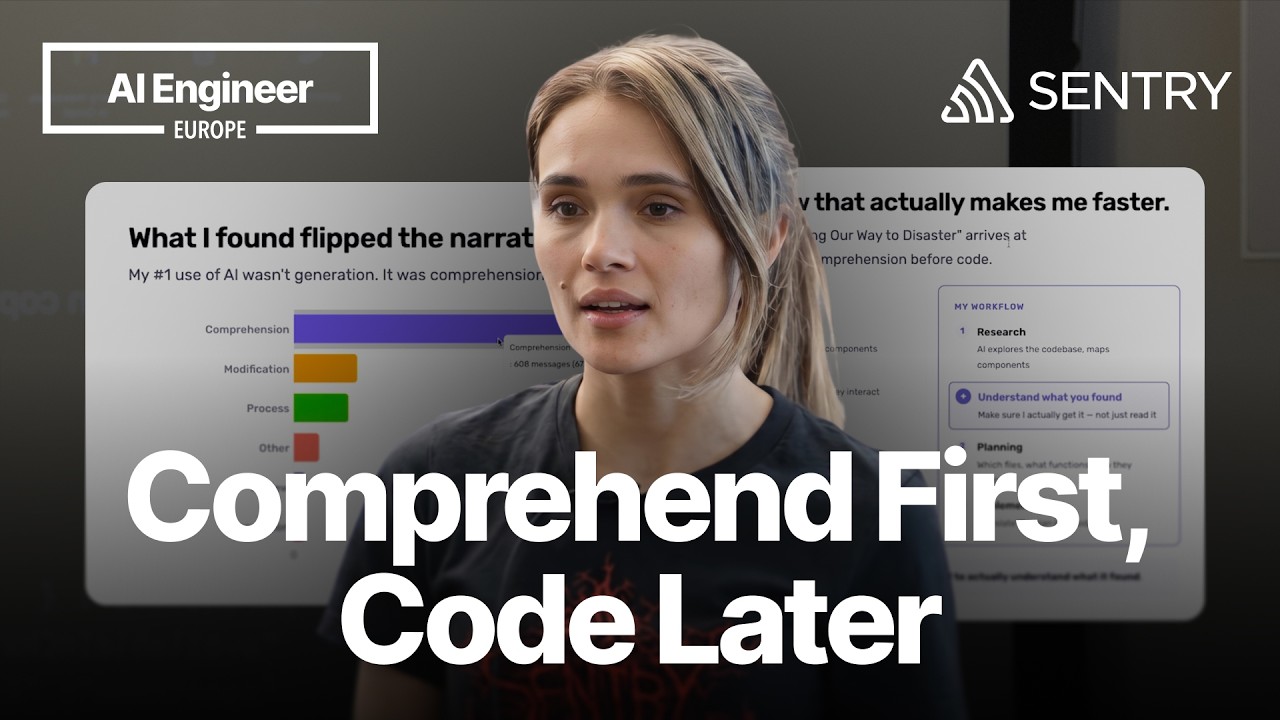
most AI prompts (67%) are for comprehension, not generation
From the article 6 mentionsIn a presentation titled "Comprehend First, Code Later: The AI Skill I Rely On Daily," Oliveira highlighted that the most significant impact of AI in her work is not in generating new code, but in understanding existing codebases.
Faster, Deeper UnderstandingOutcome
AI enables engineers to grasp code more efficiently and thoroughly
From the articleShe demonstrated how this skill helps her gain a deeper understanding of unfamiliar code, enabling her to contribute more effectively.
Improved Engineer EfficiencyOutcome
engineers spend less time deciphering code, more on impactful tasks