


Visual TL;DR
Automation Bias RiskDriver
Users overly trust automated decisions, leading to potential issues like API key leakage
From the article 3 mentionsThe integration, detailed on the Mozilla Blog, seeks to address the risks associated with automation bias.
Human OversightEffect
Ensures human review and accountability in the coding agent's decision-making process
From the article 6 mentionsThis also requires significant human oversight.
VIBE✓ FrameworkCore
Introduces deliberate friction to coding agent workflows, ensuring human oversight
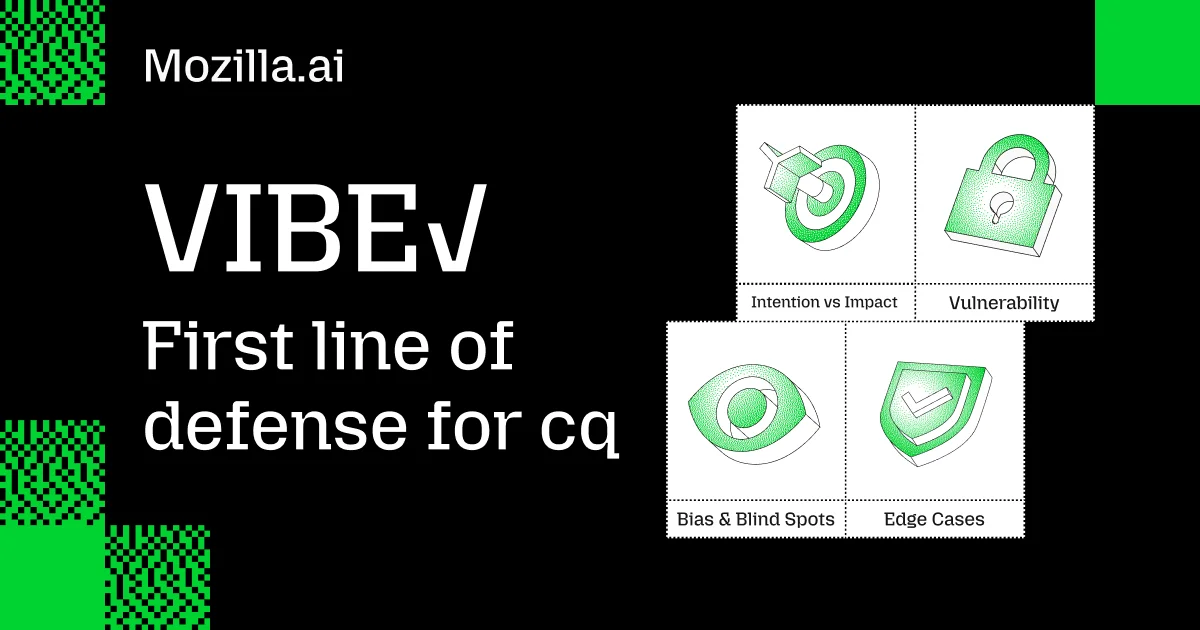
From the article 9 mentionsMozilla.ai is introducing VIBE✓, a human-centered design framework, to its cq coding agent.
Mitigates MistakesOutcome
From the articleThis system aims to prevent coding agents from repeating mistakes by reviewing shared knowledge units before they enter a common memory store.
Automation Bias RiskDriver
Users overly trust automated decisions, leading to potential issues like API key leakage
From the article 3 mentionsThe integration, detailed on the Mozilla Blog, seeks to address the risks associated with automation bias.
cq Coding AgentCore
Allows agents to share error resolution paths and developers to reflect on solutions
From the article 6 mentionsMozilla.ai is introducing VIBE✓, a human-centered design framework, to its cq coding agent.
VIBE✓ FrameworkCore
Introduces deliberate friction to coding agent workflows, ensuring human oversight
From the article 9 mentionsMozilla.ai is introducing VIBE✓, a human-centered design framework, to its cq coding agent.
Adds Deliberate FrictionContext
Reviews shared knowledge units before they enter a common memory store
Human OversightEffect
Ensures human review and accountability in the coding agent's decision-making process
From the article 6 mentionsThis also requires significant human oversight.
Mitigates MistakesOutcome
From the articleThis system aims to prevent coding agents from repeating mistakes by reviewing shared knowledge units before they enter a common memory store.
Pre-Deployment AccountabilityContext
A core principle of VIBE✓, ensuring checks before agent actions are finalized
From the articleVIBE✓ acts as pre-deployment accountability infrastructure, reintroducing necessary friction into the development pipeline.