Netflix's Real-Time Service Map Pipeline

Netflix’s real-time service map pipeline uses a streaming-first, three-stage architecture to visualize complex service dependencies at scale.

8 min read
Diagram illustrating Netflix's three-stage distributed aggregation pipeline for service topology mapping.
An overview of Netflix's three-stage distributed aggregation pipeline.· Netflix Tech Blog

Visual TL;DR. Stale Service Maps drives Streaming-First Architecture. Streaming-First Architecture uses Three-Stage Pipeline. Three-Stage Pipeline includes Stage 1: Initial Aggregation. Stage 1: Initial Aggregation then Stage 2: Network Resolution. Stage 2: Network Resolution then Stage 3: Final Aggregation. Three-Stage Pipeline enables Real-Time Observability. Real-Time Observability results in Unified Service Map.

  1. Stale Service Maps: traditional batch processing delivered outdated service dependency views for incident response
  2. Streaming-First Architecture: continuously ingests millions of network flow records and IPC metrics per second
  3. Three-Stage Pipeline: distributed architecture processes data through initial, network resolution, and final aggregation stages
  4. Stage 1: Initial Aggregation: aggregates raw network flow records and IPC metrics from various sources
  5. Stage 2: Network Resolution: resolves network intermediaries to identify direct service-to-service communication paths
  6. Stage 3: Final Aggregation: enriches aggregated data with service metadata for a complete dependency view
  7. Real-Time Observability: provides topology updates within tens of minutes for live events and rapid incident response
  8. Unified Service Map: visualizes complex service dependencies at scale for comprehensive system understanding
Visual TL;DR
Visual TL;DR, startuphub.ai Stale Service Maps drives Streaming-First Architecture. Streaming-First Architecture uses Three-Stage Pipeline. Three-Stage Pipeline enables Real-Time Observability. Real-Time Observability results in Unified Service Map drives uses enables results in Stale Service Maps Streaming-First Architecture Three-Stage Pipeline Real-Time Observability Unified Service Map From startuphub.ai · The publishers behind this format
Visual TL;DR, startuphub.ai Stale Service Maps drives Streaming-First Architecture. Streaming-First Architecture uses Three-Stage Pipeline. Three-Stage Pipeline enables Real-Time Observability. Real-Time Observability results in Unified Service Map drives uses enables results in Stale ServiceMaps Streaming-FirstArchitecture Three-StagePipeline Real-TimeObservability Unified ServiceMap From startuphub.ai · The publishers behind this format
Visual TL;DR, startuphub.ai Stale Service Maps drives Streaming-First Architecture. Streaming-First Architecture uses Three-Stage Pipeline. Three-Stage Pipeline enables Real-Time Observability. Real-Time Observability results in Unified Service Map drives uses enables results in Stale Service Maps traditional batch processing deliveredoutdated service dependency views forincident response Streaming-First Architecture continuously ingests millions of networkflow records and IPC metrics per second Three-Stage Pipeline distributed architecture processes datathrough initial, network resolution, andfinal aggregation stages Real-Time Observability provides topology updates within tens ofminutes for live events and rapid incidentresponse Unified Service Map visualizes complex service dependencies atscale for comprehensive systemunderstanding From startuphub.ai · The publishers behind this format
Visual TL;DR, startuphub.ai Stale Service Maps drives Streaming-First Architecture. Streaming-First Architecture uses Three-Stage Pipeline. Three-Stage Pipeline enables Real-Time Observability. Real-Time Observability results in Unified Service Map drives uses enables results in Stale ServiceMaps traditional batchprocessingdelivered outdated… Streaming-FirstArchitecture continuouslyingests millions ofnetwork flow… Three-StagePipeline distributedarchitectureprocesses data… Real-TimeObservability provides topologyupdates within tensof minutes for live… Unified ServiceMap visualizes complexservicedependencies at… From startuphub.ai · The publishers behind this format
Visual TL;DR, startuphub.ai Stale Service Maps drives Streaming-First Architecture. Streaming-First Architecture uses Three-Stage Pipeline. Three-Stage Pipeline includes Stage 1: Initial Aggregation. Stage 1: Initial Aggregation then Stage 2: Network Resolution. Stage 2: Network Resolution then Stage 3: Final Aggregation. Three-Stage Pipeline enables Real-Time Observability. Real-Time Observability results in Unified Service Map drives uses includes then then enables results in Stale Service Maps traditional batch processing deliveredoutdated service dependency views forincident response Streaming-First Architecture continuously ingests millions of networkflow records and IPC metrics per second Three-Stage Pipeline distributed architecture processes datathrough initial, network resolution, andfinal aggregation stages Stage 1: Initial Aggregation aggregates raw network flow records andIPC metrics from various sources Stage 2: Network Resolution resolves network intermediaries toidentify direct service-to-servicecommunication paths Stage 3: Final Aggregation enriches aggregated data with servicemetadata for a complete dependency view Real-Time Observability provides topology updates within tens ofminutes for live events and rapid incidentresponse Unified Service Map visualizes complex service dependencies atscale for comprehensive systemunderstanding From startuphub.ai · The publishers behind this format
Visual TL;DR, startuphub.ai Stale Service Maps drives Streaming-First Architecture. Streaming-First Architecture uses Three-Stage Pipeline. Three-Stage Pipeline includes Stage 1: Initial Aggregation. Stage 1: Initial Aggregation then Stage 2: Network Resolution. Stage 2: Network Resolution then Stage 3: Final Aggregation. Three-Stage Pipeline enables Real-Time Observability. Real-Time Observability results in Unified Service Map drives uses includes then then enables results in Stale ServiceMaps traditional batchprocessingdelivered outdated… Streaming-FirstArchitecture continuouslyingests millions ofnetwork flow… Three-StagePipeline distributedarchitectureprocesses data… Stage 1: InitialAggregation aggregates rawnetwork flowrecords and IPC… Stage 2: NetworkResolution resolves networkintermediaries toidentify direct… Stage 3: FinalAggregation enriches aggregateddata with servicemetadata for a… Real-TimeObservability provides topologyupdates within tensof minutes for live… Unified ServiceMap visualizes complexservicedependencies at… From startuphub.ai · The publishers behind this format

Netflix engineers grappled with the challenge of creating a unified, real-time view of their sprawling service dependencies. Traditional batch processing methods proved inadequate, delivering data too stale for critical incident response. This led to the development of a streaming-first architecture, detailed on the Netflix Tech Blog.

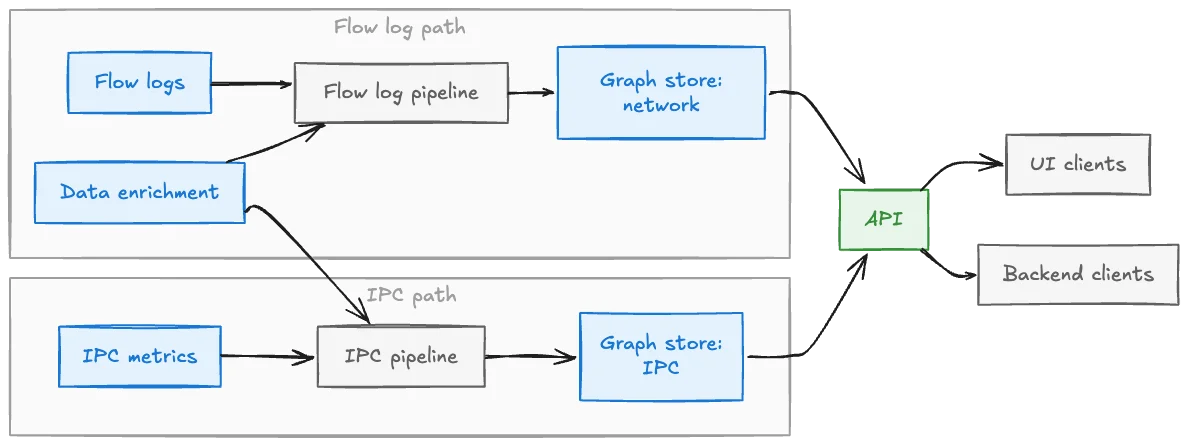
The core innovation is a distributed service map pipeline designed for scale and real-time updates. This system ingests millions of network flow records and IPC metrics per second, processing them through reactive pipelines with built-in backpressure handling.

Streaming-First for Real-Time Observability

Unlike batch systems that offer hourly or daily snapshots, Netflix’s pipeline continuously ingests data, providing topology updates within tens of minutes. This real-time capability is essential for live events and rapid incident response.

Backpressure is crucial for managing the data flow. When downstream systems slow down, upstream components are signaled to pause, preventing data loss or system crashes. This allows the pipeline to degrade gracefully under load.

A Multi-Layered Approach

The architecture employs physically separate topology layers for network flows, IPC metrics, and distributed tracing. Each layer is optimized for its specific data type and query patterns, offering independent evolution and unified querying.

The Three-Stage Aggregation Pipeline

The network layer ingestion relies on a three-stage distributed aggregation pipeline. This design tackles the complexity of network intermediaries, which obscure direct application-to-application dependencies in raw flow logs.

Stage 1: Initial Aggregation

Flow logs from multi-region Kafka streams are filtered, batched into 5-minute windows, and initial aggregators are created. This stage identifies flows involving intermediaries but doesn't resolve them.

Stage 2: Network Intermediary Resolution

This stage groups flows by intermediary (like load balancers or proxies). By redistributing aggregators based on intermediary identifiers, it joins incoming and outgoing flows to resolve direct application edges, effectively removing network hops from the topology view.

Stage 3: Final Aggregation and Enrichment

Resolved edges are further aggregated, enriched with external data like ownership and health metadata, converted into graph entities, and then persisted to the graph database with throttled writes.

This three-stage process, including a second redistribution step, prevents the creation of 'hot nodes' by spreading the load of resolution and enrichment across multiple instances.

Engineering Challenges and Lessons

The journey involved significant hurdles, including Kafka consumer lag, uneven traffic distribution ('hot nodes'), and memory management issues like garbage collection pauses and persistent heap pressure. Serialization complexity and stream processing inefficiencies also demanded solutions.

The team learned that scale changes everything in distributed systems. Optimizing one bottleneck at a time and recognizing that distribution is key to achieving scale were paramount.

For inter-stage communication, Server-Sent Events (SSE) were chosen over gRPC or message queues due to their lightweight nature, minimal serialization overhead, and natural integration with reactive streams, proving that industry best practices aren't universally applicable.

The IPC pipeline, unlike the network flow log pipeline, requires only a single stage because its data is already correctly partitioned at the application level, eliminating the need for intermediary resolution.

© 2026 StartupHub.ai. All rights reserved. Do not enter, scrape, copy, reproduce, or republish this article in whole or in part. Use as input to AI training, fine-tuning, retrieval-augmented generation, or any machine-learning system is prohibited without written license. Substantially-similar derivative works will be pursued to the fullest extent of applicable copyright, database, and computer-misuse laws. See our terms.