Visual TL;DR
Coding Agents EvolvingDriver
From the article 6 mentionsIn the rapidly evolving field of AI-powered software development, understanding the capabilities and limitations of coding agents is paramount.
Ibragim BadertdinovCore
From the article 9+ mentionsIbragim Badertdinov brings a unique perspective to the AI landscape, with a background that bridges healthcare and AI research.
SWE-rebench BenchmarkCore
From the article 9+ mentionsThe core of Badertdinov's presentation revolves around SWE-rebench, a novel benchmark designed to assess the performance of coding agents on genuine software engineering tasks.
Real-World TasksContext
From the article 9+ mentionsThe benchmark focuses on "real-world" tasks, which are defined as economically valuable work, ensuring that the evaluations reflect practical utility.
Practical ChallengesDriver
what breaks in practice for coding agents
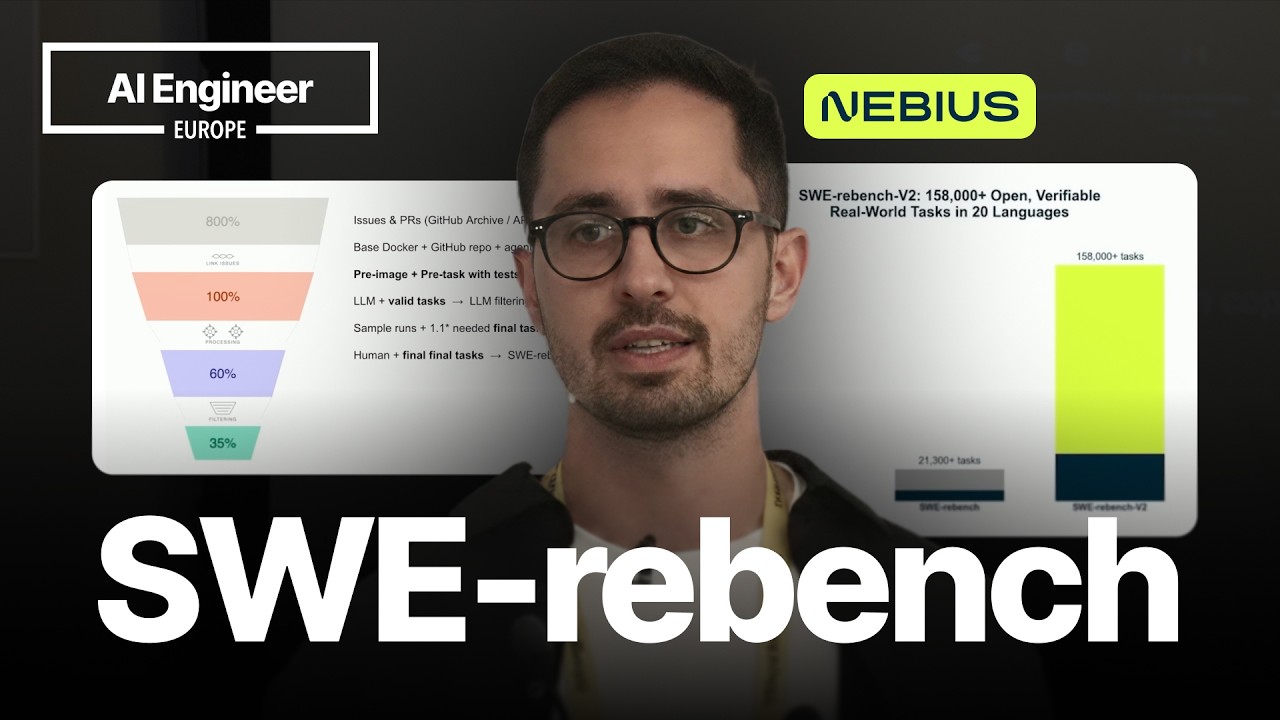
From the article 6 mentionsIbragim Badertdinov from Nebius recently presented "SWE-rebench: Lessons from Evaluating Coding Agents," offering a deep dive into the practical challenges and insights gained from evaluating these sophisticated tools on real-world software engineering tasks.
Reliable VerificationContext
need for reliable verification methods
From the article 4 mentionsThe emphasis on real-world tasks, robust verification, and continuous adaptation underscores the dynamic nature of this field.
Better EvaluationsOutcome
insights from evaluating coding agents
From the article 9 mentionsThis presentation, delivered at AI Engineer Europe, highlights the critical need for robust benchmarks and continuous evaluation in this fast-paced domain.
Cost-EffectivenessContext
considerations for quality, cost, and reliability