


Visual TL;DR
Enterprise needs controlDriver
large enterprises need distinct controls for budgets, security, and feature access
From the article 2 mentionsThis prevents the need for duplicate accounts and allows for rapid iteration without compromising control.
Cursor Enterprise OrganizationsCore
From the article 2 mentionsTo address this, Cursor has launched Organizations for Cursor Enterprise, a new structural layer designed to manage multiple Cursor teams from a unified dashboard.
Centralized ManagementContext
consolidates identity, administration, and membership management at the top level
From the article 4 mentionsAn Organization serves as the top-level container, consolidating identity, administration, and membership management.
Decentralized OperationContext
teams nested within organizations, independently configured for specific needs
Improved ScalabilityOutcome
enables enterprises to scale their AI development and usage effectively
Granular ControlsEffect
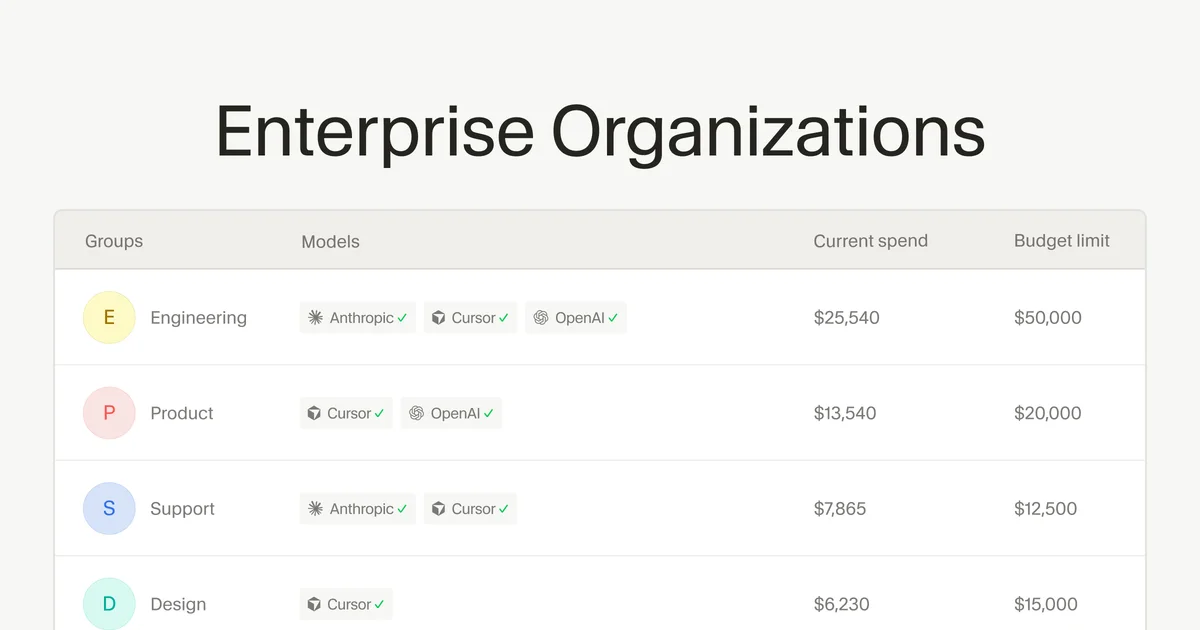
set separate budgets, enable varied AI models, create sandboxed environments
From the article 6 mentionsThis granular control supports chargebacks and cost center accounting through detailed usage analytics aggregated at the organization level.
Company-wide AnalyticsEffect
monitor company-wide usage analytics for better oversight and optimization
From the article 3 mentionsThis feature, now generally available, allows administrators to set separate budgets, enable varied AI models for different user groups, create sandboxed environments for testing, and monitor company-wide usage analytics.