

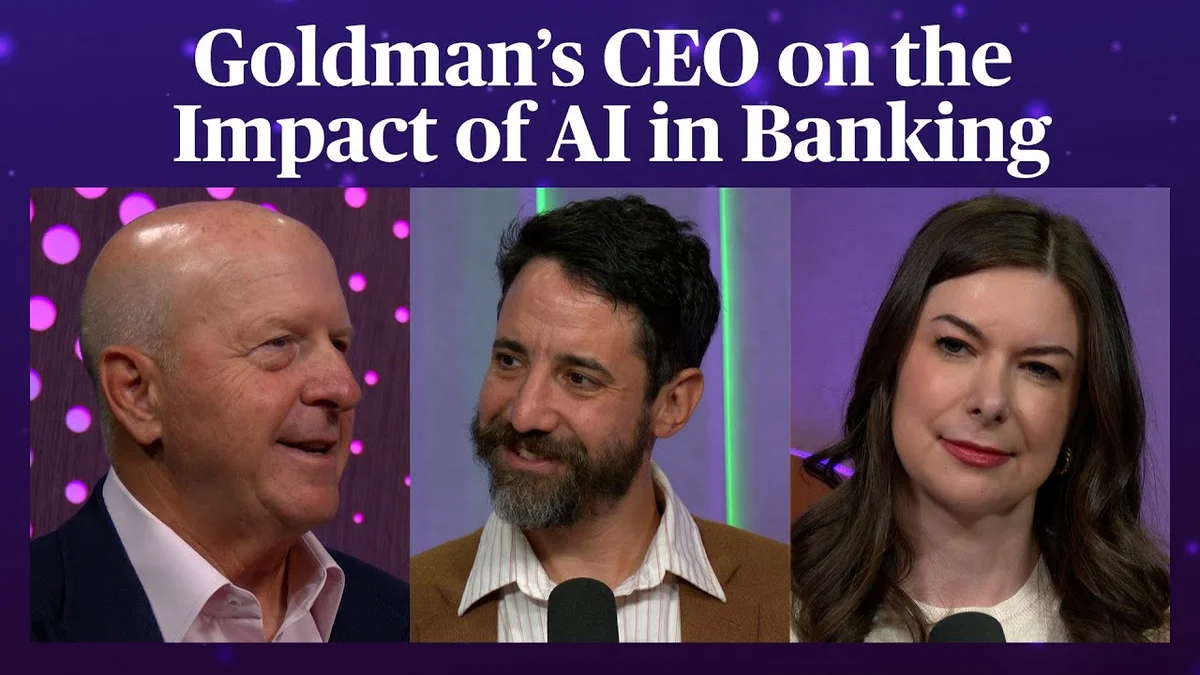
Goldman Sachs CEO on AI's Impact on Banking and Jobs

Goldman Sachs CEO David Solomon discusses AI's impact on banking, productivity gains, job shifts, and the need for workforce adaptation.

David Solomon, CEO of Goldman Sachs, speaking into a microphone.
Bloomberg Podcast
Visual TL;DR
David SolomonCore
Goldman Sachs CEO's perspective on AI's dual nature
From the article 9+ mentionsAs AI technology matures, its influence on how banks operate, serve clients, and manage risk will only continue to grow, presenting both challenges and opportunities for leaders like David Solomon and the institutions they lead.
AI's Banking ImpactDriver
Goldman Sachs CEO David Solomon discusses AI's transformative potential
From the article 3 mentionsIn a recent appearance on the Bloomberg Odd Lots podcast, Goldman Sachs CEO David Solomon offered his perspective on how artificial intelligence is reshaping the banking industry and the broader economy.
Productivity GainsEffect
AI will drive significant efficiency improvements in the financial sector
From the article 2 mentions"AI is going to drive productivity gains in the financial sector, similar to how other technologies have," Solomon stated, emphasizing that this is not entirely new territory for the industry.
Job Market ShiftsOutcome
Workforce adaptation is crucial due to AI-driven disruption
From the articleSolomon, who has navigated the firm through significant technological and market shifts during his tenure, highlighted the transformative potential of AI and the challenges it presents for businesses and their workforces.
Strategic ImplementationContext
Need for careful planning in adopting AI technologies
From the article 2 mentionsWhen discussing the strategic implementation of AI within a large financial institution like Goldman Sachs, Solomon underscored the importance of a thoughtful and measured approach.
Future of FinanceOutcome
AI reshaping the industry and its workforce dynamics
From the articleSolomon's comments suggest a future where AI is deeply integrated into the fabric of financial services, driving efficiency, enhancing customer experiences, and creating new avenues for growth.
Contents(4)

In a recent appearance on the Bloomberg Odd Lots podcast, Goldman Sachs CEO David Solomon offered his perspective on how artificial intelligence is reshaping the banking industry and the broader economy. Solomon, who has navigated the firm through significant technological and market shifts during his tenure, highlighted the transformative potential of AI and the challenges it presents for businesses and their workforces.

David Solomon's Vision for AI in Finance

Solomon, who has led Goldman Sachs since 2018, discussed the dual nature of technological advancement: the opportunities for increased productivity and efficiency, alongside the potential for disruption. He articulated a nuanced view on AI's impact, acknowledging both the excitement and the apprehension surrounding its widespread adoption.

"AI is going to drive productivity gains in the financial sector, similar to how other technologies have," Solomon stated, emphasizing that this is not entirely new territory for the industry. He drew parallels to previous technological shifts, such as the automation of trading and the rise of data analytics, which have fundamentally altered how financial institutions operate.

The full discussion can be found on Bloomberg Podcast's YouTube channel.

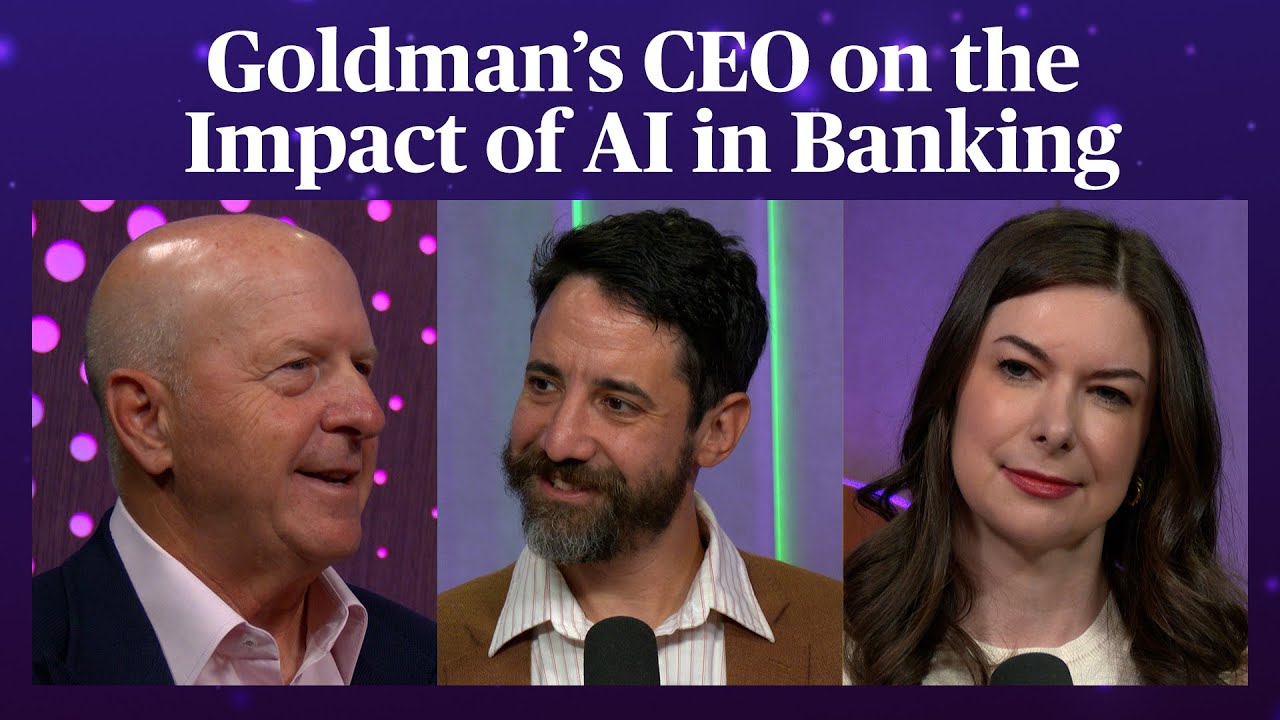
Goldman Sachs CEO David Solomon on Running a Bank in the Age of AI | Odd Lots - Bloomberg Podcast
Goldman Sachs CEO David Solomon on Running a Bank in the Age of AI | Odd Lots, from Bloomberg Podcast

The conversation naturally turned to the impact of AI on employment. Solomon addressed concerns about job displacement, suggesting that while some roles may become redundant, new opportunities will emerge. He stressed the need for continuous learning and adaptation within the workforce.

Solomon's perspective aligns with a broader industry trend where AI is seen not just as a tool for automation but also as an enabler of new services and capabilities. He highlighted the firm's commitment to investing in its people and equipping them with the skills necessary to thrive in an AI-augmented environment.

Strategic AI Implementation in Banking

When discussing the strategic implementation of AI within a large financial institution like Goldman Sachs, Solomon underscored the importance of a thoughtful and measured approach. He noted that while the potential is immense, banks must also navigate significant risks associated with data security, ethical considerations, and regulatory compliance.

The scale of data available to financial firms like Goldman Sachs provides a unique advantage in developing and deploying AI models. Solomon suggested that the ability to leverage this data effectively will be a key differentiator for success in the coming years. He also touched upon the critical role of human oversight and judgment in conjunction with AI-driven insights.

"We have to find ways to apprentice and teach people," Solomon remarked, emphasizing the human element in this technological evolution. He believes that rather than simply replacing human workers, AI should be viewed as a tool that augments human capabilities, allowing professionals to focus on higher-value tasks and strategic decision-making.

Looking Ahead: The Future of Finance with AI

Solomon's comments suggest a future where AI is deeply integrated into the fabric of financial services, driving efficiency, enhancing customer experiences, and creating new avenues for growth. However, he also cautioned that the transition will require significant adaptation from both institutions and individuals.

The conversation underscored the dynamic nature of the financial industry and the imperative for continuous innovation. As AI technology matures, its influence on how banks operate, serve clients, and manage risk will only continue to grow, presenting both challenges and opportunities for leaders like David Solomon and the institutions they lead.

© 2026 StartupHub.ai. All rights reserved. You may not republish this article in full without a license. Search engines and AI research tools may crawl and summarize for reference. Bulk reproduction or model training requires a license. See our terms.
Daniel Singer

Written by

Daniel Singer

Editor, StartupHub.ai

Daniel Singer is the editor of StartupHub.ai, a technology expert and thought leader on AI and its applications across sectors, from fintech and healthcare to developer tooling and consumer software. He writes and tests the tools covered here thoroughly and regularly, and built StartupHub.ai to give founders, operators and buyers a clearer read on what they are actually being sold.

More from Daniel Singer