

Zo Computer Bets Your Cloud Should Be Yours

Ben Guo demoed Zo Computer, a personal cloud to replace SaaS sprawl and keep agent intelligence with the owner, not the platform.

S
StartupHub.ai Staff
3 min read
Benjamin Guo presenting Zo Computer personal cloud at AI Engineer claw session
Ben Guo demoed Zo Computer as a personal cloud alternative to SaaS sprawl· AI Engineer

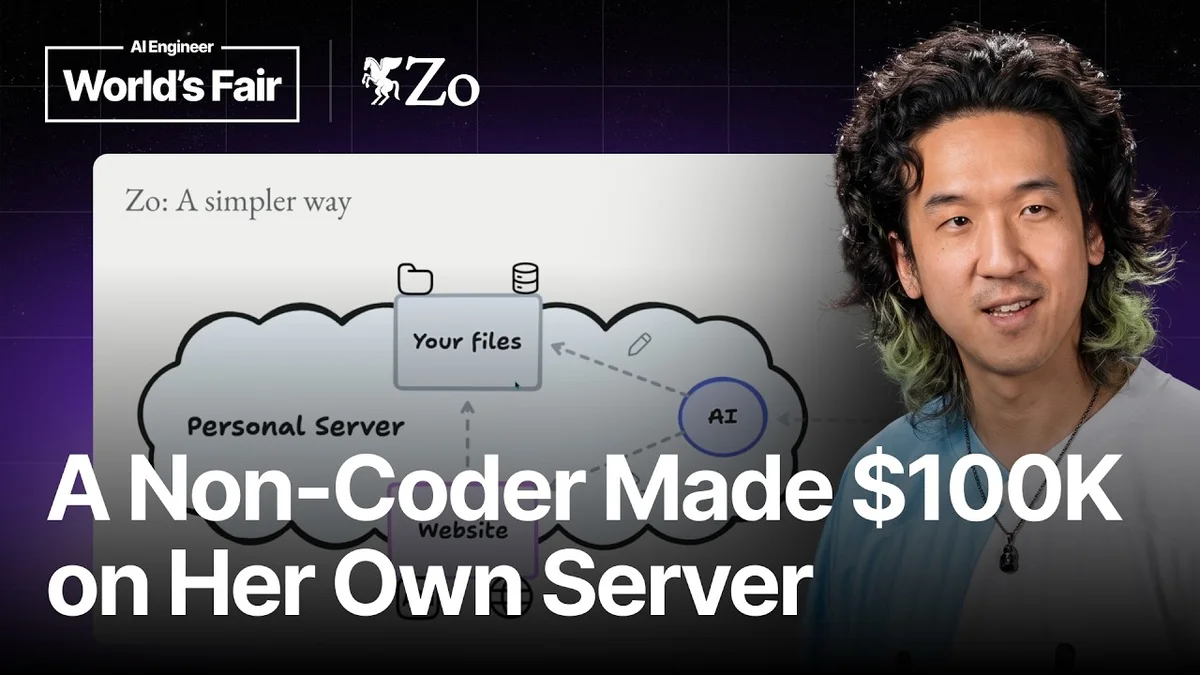
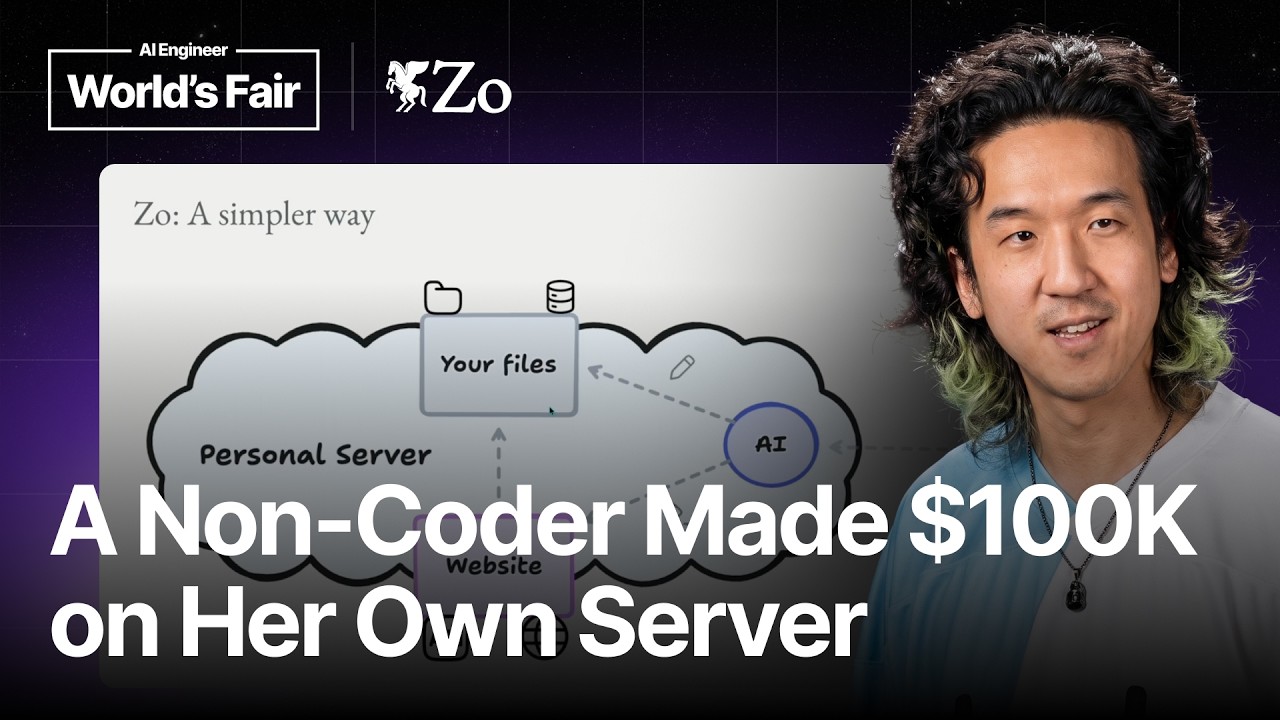
Benjamin Guo pitched Zo Computer as a personal cloud, not another app to rent. It's a Linux VM you own, with storage, hosting and AI in one place.
Zo Computer Bets Your Cloud Should Be Yours - AI Engineer
Zo Computer Bets Your Cloud Should Be Yours, from AI Engineer

Guo, speaking at AI Engineer, framed it against what he calls techno-feudalism. You pay rent to SaaS, SaaS pays rent to clouds, clouds pay rent to Nvidia.

He co-founded Zo in Bushwick after early roles at Venmo and Stripe. His co-founder Rob was the first engineer at Substack.

Zo has been live about a year.

Guo says regular people run real businesses on it.

His example is Charlotte, an LA private chef and life coach. She hosts sites, invoices, bookkeeping and scheduling on Zo.

The sharper case is Anthia, a free-diving instructor. Guo said she's on track to make $100,000 on Zo after canceling Squarespace, Calendly and other subscriptions.

What Zo Computer actually hosts

Zo is a personal server with AI built in. You get a file system like Dropbox, chat with any model including Claude Code via your own key, automations, a skills library, and a built-in browser that can log in and act for you.

Guo demoed it live. He spun up a site for the day's speakers, showed cloud storage, scheduled AI tasks, and edited his Zo Space personal website by chatting.

Anything can be hosted. HTTP or TCP services, APIs, sites on custom domains, all on your Zo.

For developers, it offers root access, SSH, and control via API or MCP. Guo positioned it as a home for OpenClaw or Hermes and any Codex or Gemini subscription you bring. Zo's positioning directly counters Anthropic's Cowork/Tag centralization by offering root-access personal hosting for existing agents like Hermes and OpenClaw.

The philosophy is FTP-era simple. You tell your Zo to update the site, add retreat photos, generate a payment link, or text a lead at the moment of intent.

Why owning the cloud still has rent

Guo's second argument is about intelligence feudalism. He called company-level cloud agents like Claude Tag ergonomic but pointed the value arrow the wrong way, with improvements accruing to Anthropic, not you.

Zo's bet is inverted. Users and companies publish agents they own, and usage improves their own agents. A beta for that publishing platform is now open.

The trade isn't free. Guo offered $100 in AI credits to try Zo, but didn't detail ongoing compute, storage or model costs.

Anthia's story is compelling, but it still depends on model quality, uptime and support for a single-tenant VM. Ownership reduces SaaS lock-in and fragmentation. It doesn't remove operations.

If Zo works, your SaaS sprawl collapses into one place you control. If it doesn't, you've just moved the rent.

© 2026 StartupHub.ai. All rights reserved. You may not republish this article in full without a license. Search engines and AI research tools may crawl and summarize for reference. Bulk reproduction or model training requires a license. See our terms.
S

Written by

StartupHub.ai Staff

Editorial team

The staff writers of StartupHub.ai, ranging from investment analysts to avid AI tool users, early adopters and critical enthusiasts. Backgrounds span engineering, business and the arts. We hold every piece to rigorous standards of research and review.