

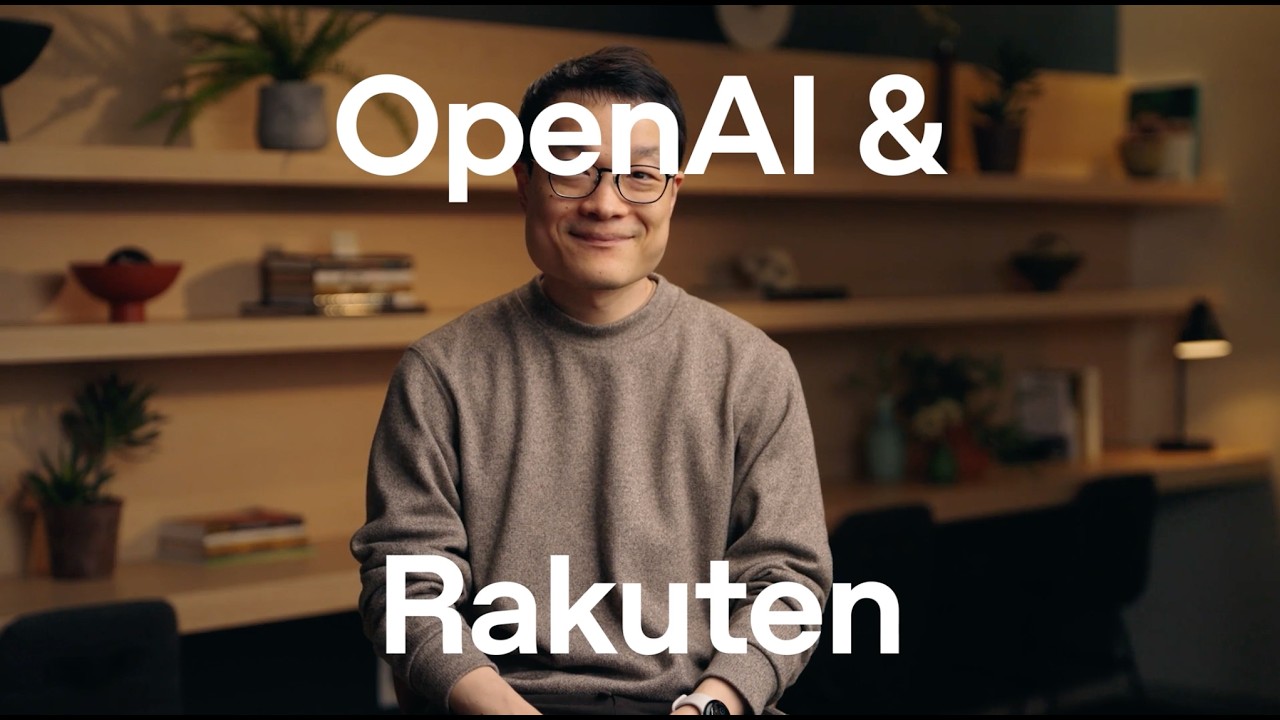
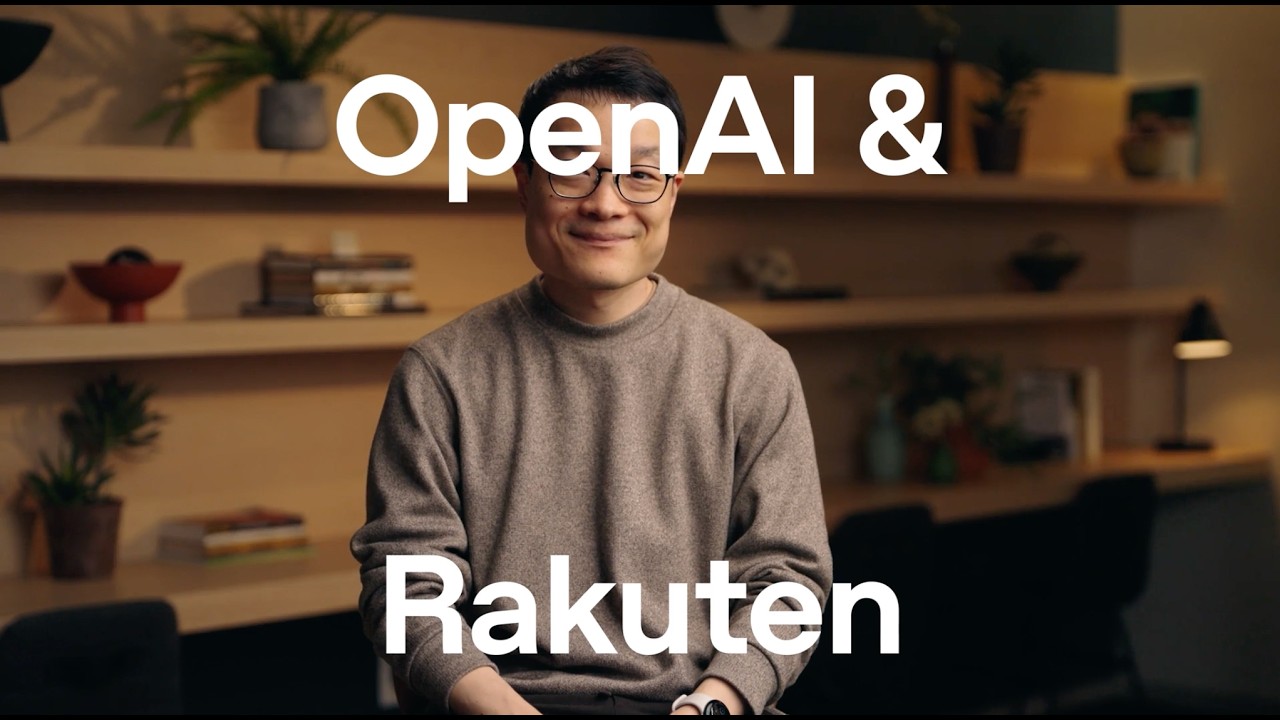
In a demonstration of how cutting-edge AI is reshaping enterprise operations, Yusuke Kaji, General Manager of AI for Business at Rakuten, details the company's strategic adoption of OpenAI's Codex. Rakuten, a global innovation company with diverse interests spanning e-commerce, fintech, and mobile communication, is integrating AI solutions to enhance efficiency and developer productivity. This discussion highlights the practical application of large language models in accelerating complex software development cycles and improving operational resilience.
Yusuke Kaji: AI for Business at Rakuten
Yusuke Kaji leads Rakuten's AI for Business initiatives, a critical role in a company that operates across numerous verticals. Rakuten, known for its expansive e-commerce platform and ventures into financial services and telecommunications, is continually seeking ways to innovate and streamline its operations. Kaji's focus on AI signifies Rakuten's commitment to leveraging advanced technologies to gain a competitive edge and improve user experiences.
The full discussion can be found on OpenAI Youtube's YouTube channel.
Accelerating Development with OpenAI Codex
The core of the discussion revolves around Rakuten's use of OpenAI's Codex, an AI system that translates natural language into code. Kaji explains that before implementing Codex, the process of developing a new product feature, from initial planning to production deployment, could take up to a quarter. This timeline is drastically reduced with the assistance of Codex.
"Codex helps us to do the software development faster; do the coding faster." — Yusuke Kaji
The video showcases a practical example of this acceleration: creating a workflow with a "drag and drop to gallery" feature. The demonstration illustrates how Codex can interpret natural language prompts, generate code snippets, and even suggest next steps in the development process, such as creating a new branch or a pull request. This not only speeds up the coding itself but also streamlines the entire development lifecycle, from conceptualization to code commit.
Quantifiable Impact: Faster Issue Resolution
Rakuten's adoption of Codex has yielded measurable improvements in their operational efficiency. Kaji specifically points to the impact on issue resolution:
Rakuten Fixes Issues Twice as Fast with Codex
"And thanks to Codex, our mean time to recovery reduced by 50%." — Yusuke Kaji
This statistic reveals a significant improvement in their ability to address and resolve problems within their systems. A 50% reduction in mean time to recovery (MTTR) means that Rakuten can identify, diagnose, and fix issues in half the time. This translates to greater system stability, improved user experience, and reduced operational downtime. The statement "Rakuten fixes issues twice as fast with Codex" succinctly captures this achievement.
The Evolving Role of Developers in the AI Era
Looking ahead, Kaji emphasizes that as AI models like Codex become more sophisticated, the role of human developers will evolve. Instead of focusing on the minutiae of coding, developers will increasingly be tasked with higher-level functions such as defining specifications and validating the AI-generated code against company standards.
"Sooner or later, as Codex becomes more and more intelligent, we believe my role, what our role will be, to define the right specification and to validate if that code meets our standard." — Yusuke Kaji
This perspective suggests a future where AI acts as a powerful co-pilot for developers, augmenting their capabilities and allowing them to concentrate on strategic thinking, problem-solving, and innovation. The technology empowers developers by handling repetitive and time-consuming coding tasks, enabling them to focus on the creative and architectural aspects of software engineering.
Kaji concludes by framing this technological advancement within a broader organizational context:
"This technology can actually empower you. That's what we have been doing to create good positive momentum across the company." — Yusuke Kaji
Rakuten's approach underscores a forward-thinking strategy that views AI not just as a tool for efficiency but as a catalyst for empowering its workforce and fostering a culture of continuous improvement and innovation.


