


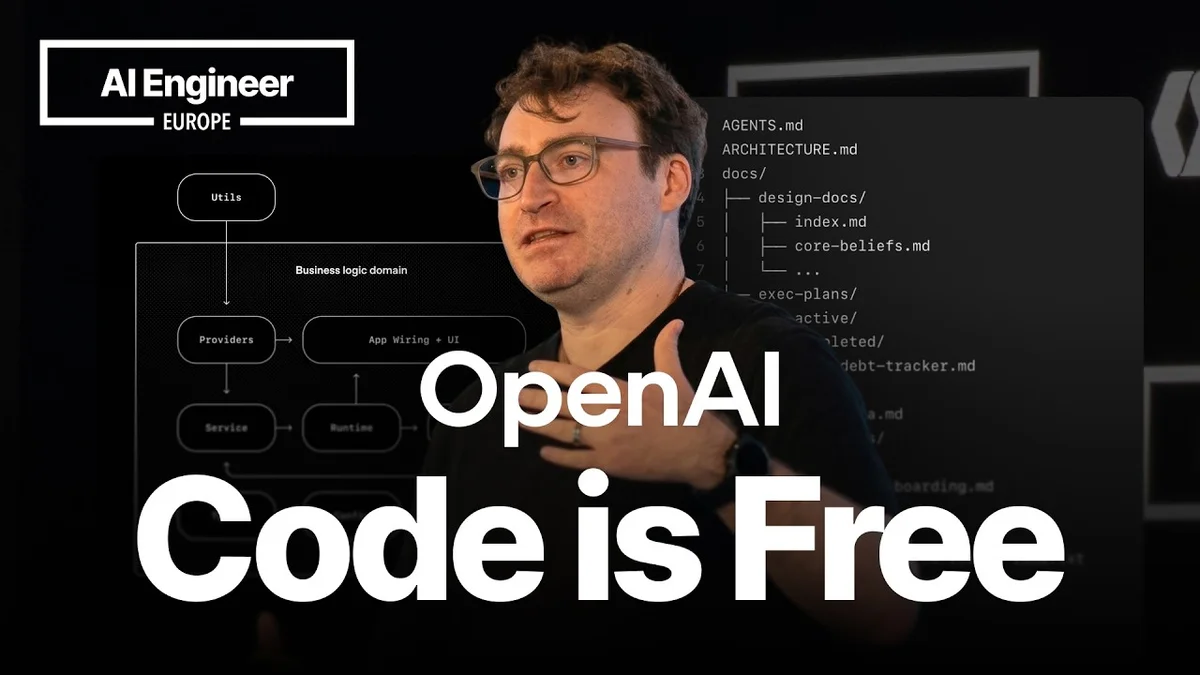
In a pivotal moment for the AI development community, Ryan Lopopolo, a Member of Technical Staff at OpenAI, took the stage at the AI Engineer Europe conference to discuss a paradigm shift in how software is created. Lopopolo, who has been instrumental in building AI agents at OpenAI, shared insights into the evolving role of engineers in an era where AI agents are increasingly capable of handling complex tasks.
Harnessing Engineering: A New Era
Lopopolo began by stating a bold thesis: "The way we build software has changed." He elaborated that in the past six months alone, AI agents have demonstrated a remarkable ability to take over tasks previously thought to be exclusively human domains, advancing at a rapid pace. This evolution means that the core constraints are no longer the models themselves, but rather the human resources and the available context windows.
He highlighted that the modern AI engineer's role has shifted from writing code directly to strategically guiding and unblocking these powerful agents. "Your role is to unblock your team," Lopopolo emphasized, suggesting that engineers are now tasked with the crucial responsibility of ensuring AI agents can perform their functions efficiently and reliably. The key, he explained, is to "productively deploy these resources into our code and into our teams."
The Three Pillars of Change
Lopopolo outlined three core reasons for this transformation, all occurring in late 2024:
- The models are good enough: Advanced AI models have reached a level of capability where they can perform many software engineering tasks autonomously.
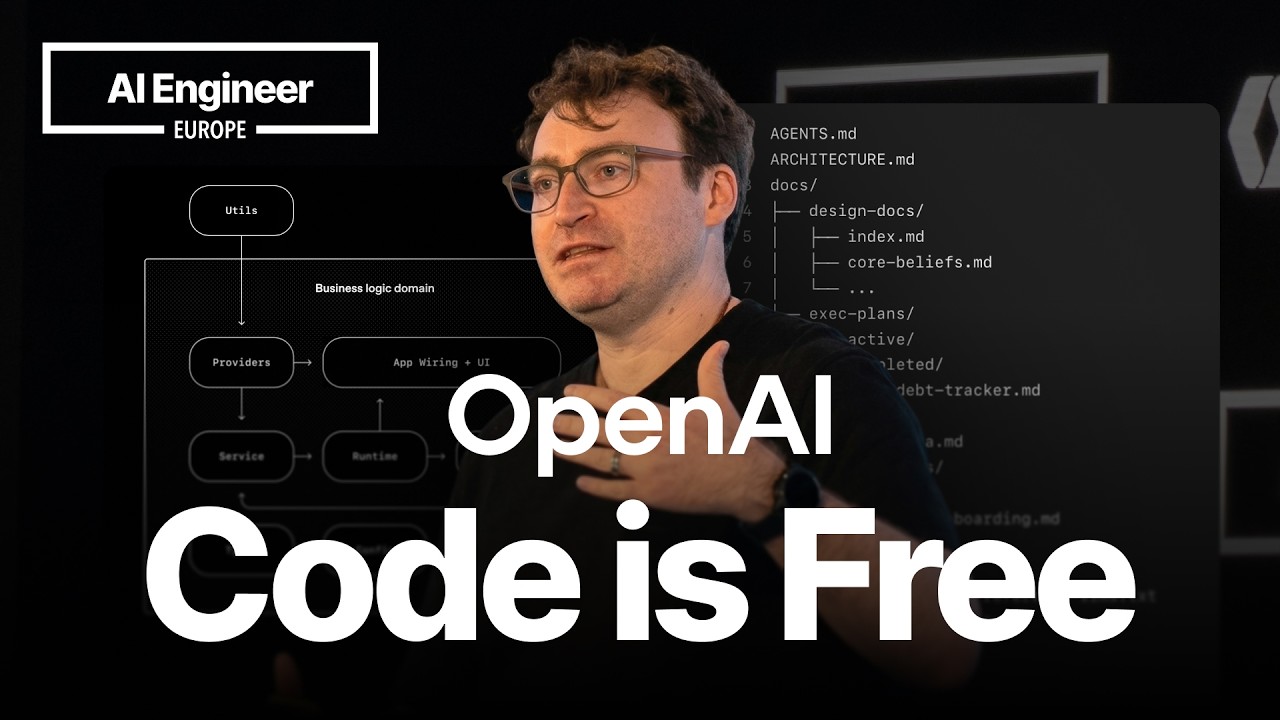
- Code is free: The abundance of code and the ability of AI to generate it has made code itself a less scarce resource.
- Your role is to unblock your team: The critical human contribution now lies in strategic guidance, problem-solving, and ensuring the effective integration and operation of AI agents.
He noted that the emergence of GPT-4.5 Turbo was a significant milestone, enabling AI agents to perform the full scope of software engineering tasks with high reliability and over extended time horizons. This shift means that the scarcity is no longer in the code itself, but in the human elements: time and attention.