

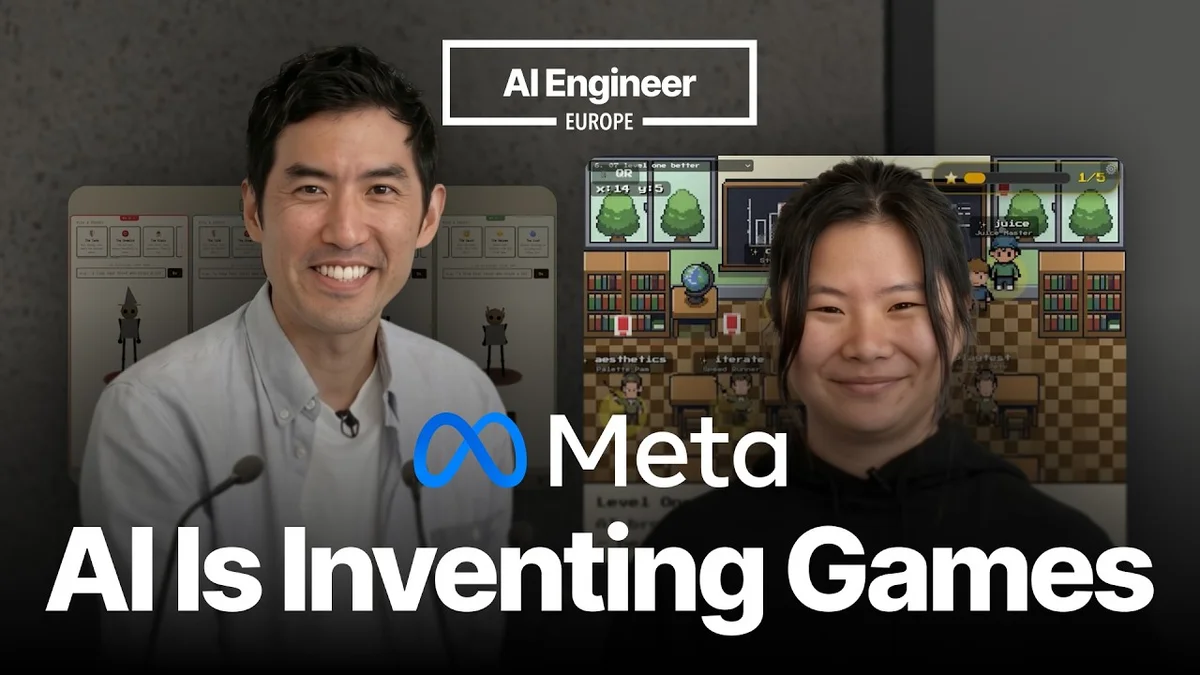
Meta Engineers on AI Game Development

Meta's Danielle An and David Hoe discuss the complexities of AI in game development, emphasizing 'taste' and dynamic gameplay.

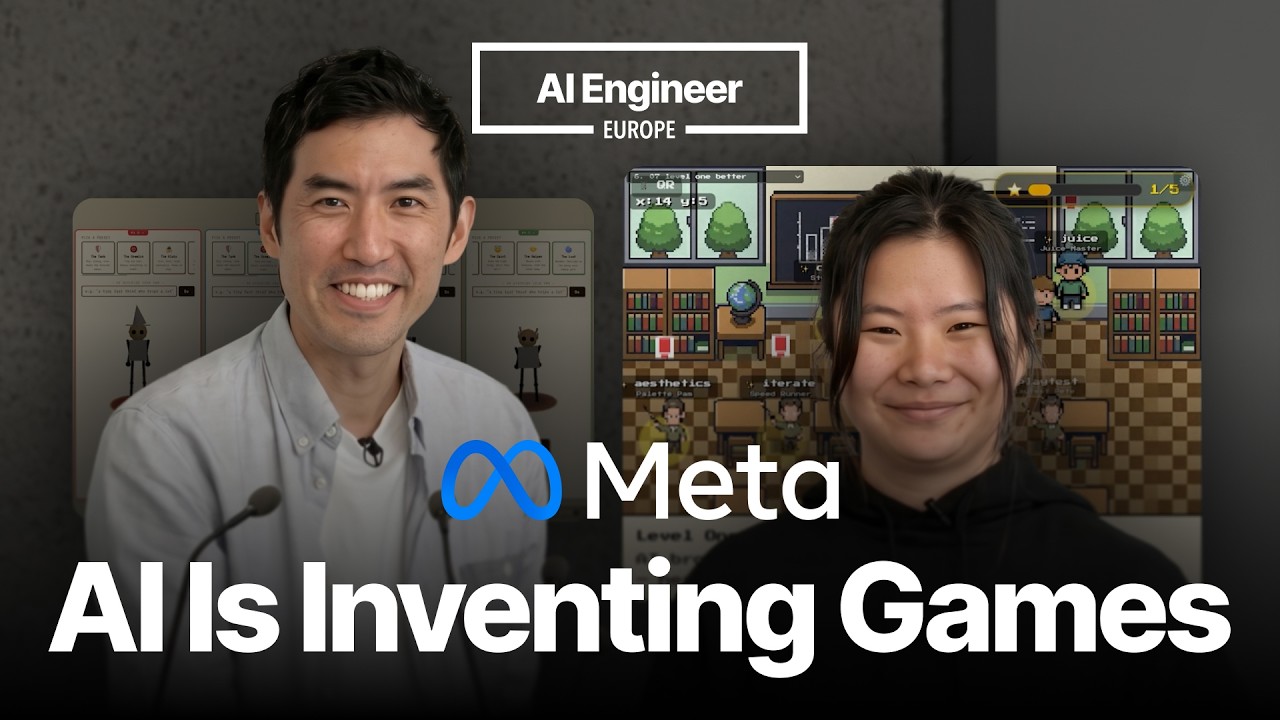
Danielle An and David Hoe from Meta present on AI in game development.
Danielle An and David Hoe of Meta discuss the role of AI in game development.· AI Engineer
Visual TL;DR
Meta Engineers' InsightsCore
Danielle An and David Hoe share key challenges and opportunities
From the article 2 mentionsIn a recent AI Engineer Europe talk, Danielle An and David Hoe from Meta shed light on the evolving landscape of AI in game development, challenging the notion that creating sophisticated games with AI is a simple, prompt-driven endeavor.
AI Game Dev ComplexitiesDriver
AI generates assets rapidly, but cohesive games require more
Beyond Basic GenerationContext
From the articleThe core of their discussion revolved around moving beyond basic AI generation to creating games with depth, replayability, and a unique player experience.
Democratizing CreationEffect
AI making game creation more accessible to developers
From the article 2 mentionsThey shared insights into how AI is not only democratizing game creation but also presenting new frontiers for innovation and personalized player experiences.
Dynamic GameplayEffect
leveraging AI for engaging and personalized player experiences
From the article 2 mentionsA key takeaway from their presentation was the potential of runtime LLMs to create dynamic and personalized gaming experiences.
The 'Taste' DifferentiatorContext
crafting a unique player experience beyond technical generation
From the article 3 mentionsThe engineers stressed that 'taste' is the new differentiator in game development, especially when AI can rapidly generate similar-looking or functioning games.
AI-Driven PlatformsOutcome
future of game development and innovation frontiers
From the articleLooking ahead, An and Hoe discussed the concept of building AI-driven gaming platforms that can scale and adapt.
Contents(4)

In a recent AI Engineer Europe talk, Danielle An and David Hoe from Meta shed light on the evolving landscape of AI in game development, challenging the notion that creating sophisticated games with AI is a simple, prompt-driven endeavor. They shared insights into how AI is not only democratizing game creation but also presenting new frontiers for innovation and personalized player experiences.

Meta Engineers on AI Game Development - AI Engineer
Meta Engineers on AI Game Development, AI Engineer

The Complexities of AI in Game Creation

An and Hoe, both principal engineers at Meta, highlighted that while AI can generate assets and mechanics rapidly, the true challenge lies in crafting a cohesive and engaging game. They noted that the excitement around AI-generated games often stems from the novelty of the technology, but sustained engagement requires more than just a demo. The core of their discussion revolved around moving beyond basic AI generation to creating games with depth, replayability, and a unique player experience.

Leveraging AI for Dynamic Gameplay

A key takeaway from their presentation was the potential of runtime LLMs to create dynamic and personalized gaming experiences. Unlike static game elements, runtime LLMs can adapt to player behavior, adjust difficulty, and remember player interactions, making each playthrough unique. This approach moves away from traditional, linear game development, where each stage is dependent on the previous one, towards a more emergent and adaptive system. They emphasized that AI is not a replacement for human creativity but a powerful tool to augment it, allowing developers to focus on the 'taste' and feel of the game.

The 'Taste' Differentiator

The engineers stressed that 'taste' is the new differentiator in game development, especially when AI can rapidly generate similar-looking or functioning games. They pointed to successful games that have achieved widespread appeal not just through their mechanics but through their unique aesthetic, narrative, and overall player experience. This human-driven element, they argued, is what AI can currently enhance but not replicate. By using AI to handle the more repetitive or technically demanding tasks, developers can dedicate more time to refining these crucial 'taste' elements.

The Future of AI-Driven Game Platforms

Looking ahead, An and Hoe discussed the concept of building AI-driven gaming platforms that can scale and adapt. They envisioned a future where AI not only generates game content but also manages dynamic agentic systems, drives narrative, and creates complex simulations. This vision includes the potential for games that feel truly alive and responsive to players, offering experiences that are both novel and deeply personal. They acknowledged that while the potential is vast, challenges in areas like debugging, content safety, and token economy still need to be addressed.

The presentation concluded with a call to action for developers to explore the capabilities of AI in game creation, encouraging them to experiment with runtime LLMs and generative AI as game mechanics, not just tools. The journey of AI in gaming is still in its early stages, but as An and Hoe demonstrated, the potential for innovation and transformative player experiences is immense.

© 2026 StartupHub.ai. All rights reserved. You may not republish this article in full without a license. Search engines and AI research tools may crawl and summarize for reference. Bulk reproduction or model training requires a license. See our terms.
Daniel Singer

Written by

Daniel Singer

Editor, StartupHub.ai

Daniel Singer is the editor of StartupHub.ai, a technology expert and thought leader on AI and its applications across sectors, from fintech and healthcare to developer tooling and consumer software. He writes and tests the tools covered here thoroughly and regularly, and built StartupHub.ai to give founders, operators and buyers a clearer read on what they are actually being sold.

More from Daniel Singer