


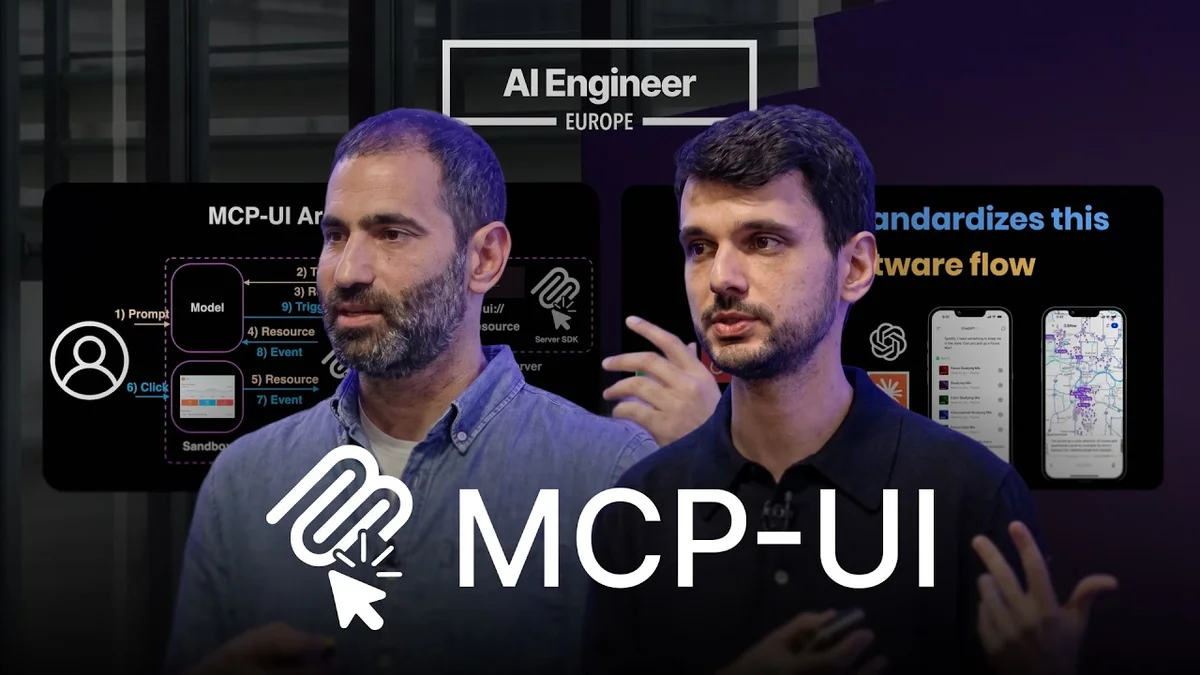
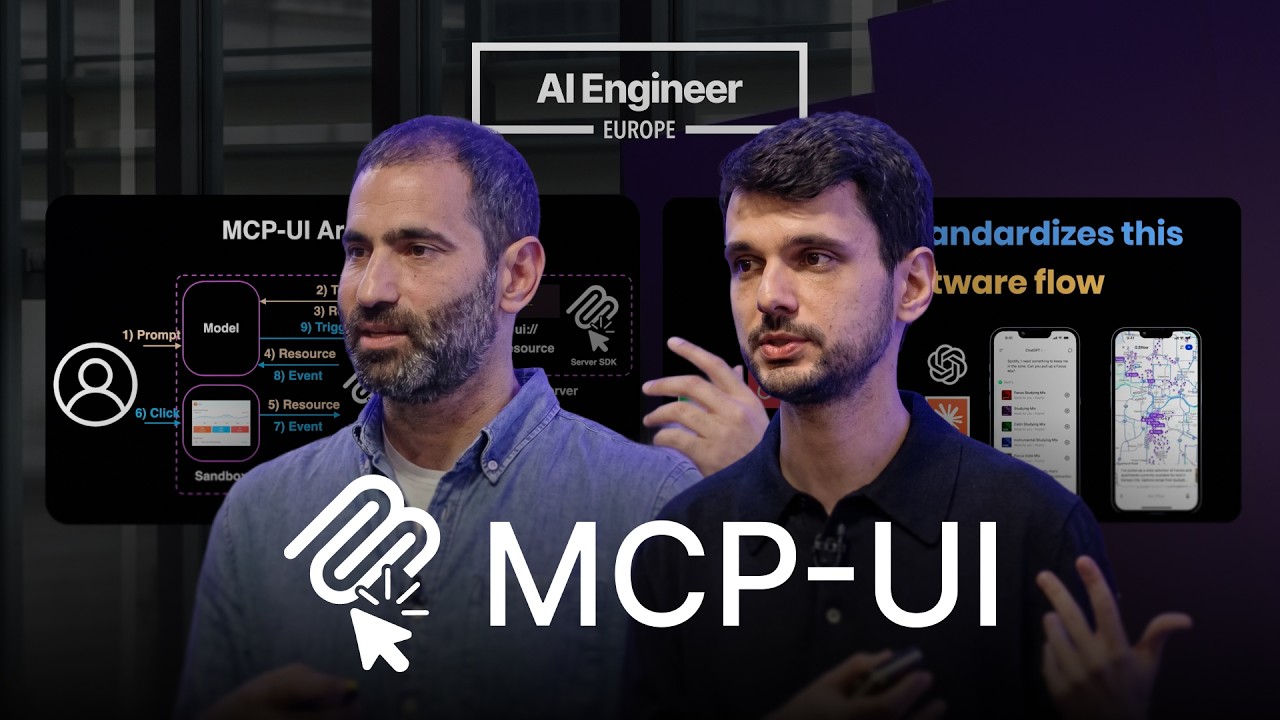
In a significant development for the future of human-AI interaction, Liad Yosef and Ido Salomon of MCP Apps have detailed their vision for MCP Apps, a new standard for building interactive UI components that can be seamlessly integrated into chat interfaces. This innovation promises to redefine how users engage with applications, moving beyond static text to dynamic, interactive experiences within AI conversations.
The MCP Apps Vision: Bridging UI and AI
Yosef and Salomon explained that while current AI interactions often rely on text-based responses, this approach is suboptimal for complex tasks. MCP Apps aim to solve this by enabling applications to send their own UI elements directly to AI agents. This means that instead of receiving a block of text describing a product or a data visualization, users can interact with rich, dynamic components rendered directly within their chat interface.
Key Concepts: UI over MCP and Interoperability
The core of MCP Apps lies in its ability to transmit UI over the MCP protocol, standardizing UI-to-host communication. This allows for a bi-directional flow where an AI agent can request and render specific UI components from an application, and conversely, the UI can send actions and events back to the model. This is achieved through a system of resources and callbacks, ensuring that the host application can securely render and interact with these components.
MCP Apps are designed to be agnostic to the UI generation method, supporting a spectrum from predefined UIs (like those used by Airbnb or Spotify) to more dynamic, declarative UIs (like JSON renderers) and even fully generative UIs as demonstrated by recent advancements in the field. This flexibility ensures that existing applications can leverage the MCP standard without a complete overhaul.
The "New Web" and Future of Application Distribution
The speakers emphasized that MCP Apps are not just a technical protocol but a new way of distributing applications. They envision a future where applications are no longer confined to traditional websites or separate apps but can be seamlessly integrated into AI interfaces. This allows for a more personalized and efficient user experience, where AI agents can leverage specific UI elements from various services to fulfill user requests.