


Joe Lonsdale told CNBC Television he does not see near-term existential risk from AI, but he wants labs held strictly liable if their systems cause harm.
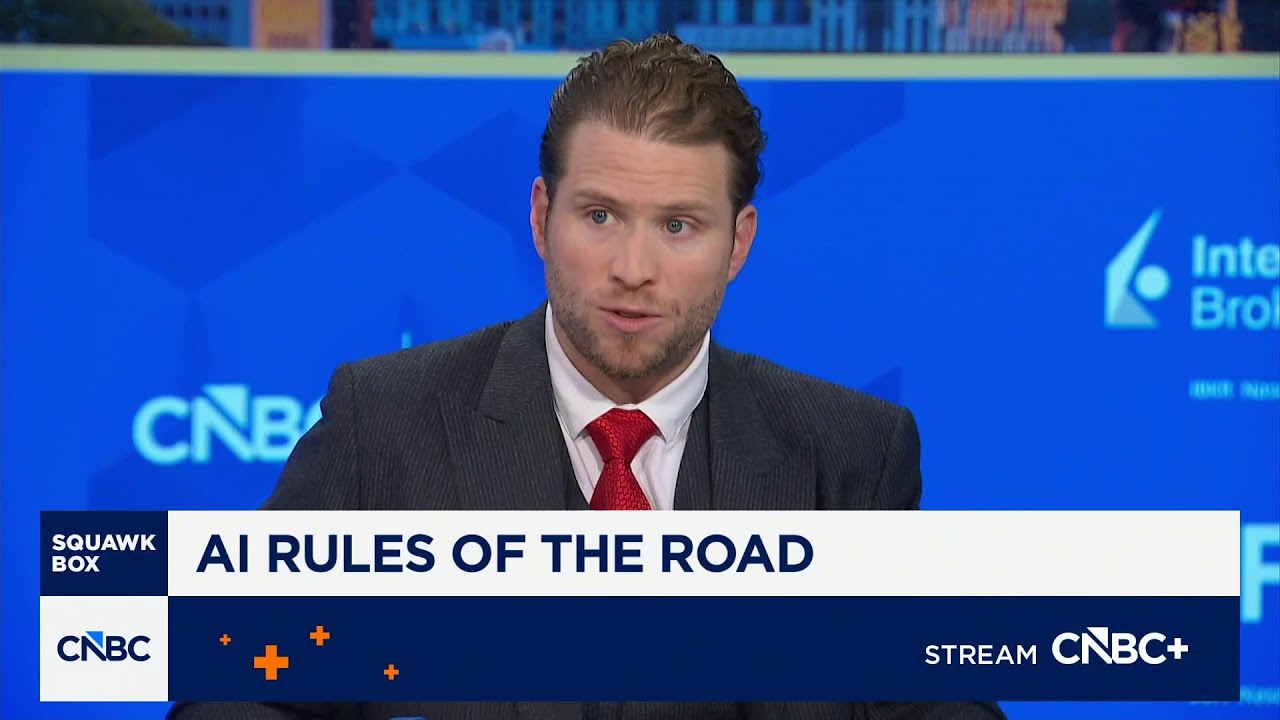
That is his line in the pause debate.
Lonsdale, founding partner of 8VC and co-founder of Palantir, framed the choice as liability not slowdown for its own sake. He said the companies have a responsibility to slow themselves when they see damage, especially around hacking and cyber, and they should pay if they cause it. He is against regulation that can be captured, he said, but he is for liability, and he sided with Palantir co-founder Alex Karp that the exposure is large enough to complicate an OpenAI IPO without some form of backstop. The labs, he argued, are seeking protection from that liability much like Section 230 gave internet platforms, and he thinks they should not get it. They need to spend the time to protect everyone, he said, even if that means stopping to build the safeguards.
He also tried to split two ideas that get conflated in safety debates. Recursive learning is real, he said, and internal work at Anthropic and other labs is already letting teams move five to ten times faster. Agency loss is separate. You do not have to lose control just because models get smarter, he argued, because you can study what models are doing and use models to watch each other. The mechanism he described is oversight by monitoring, interpretability work that tracks internal behavior and cross-model checks that catch misuse. That is distinct from the classic "intelligence explosion" worry where a system recursively improves itself at an exponentially increasing rate too quickly for handlers to control. Lonsdale’s bet is that productivity gains arrive first, and control can be engineered in parallel. The limitation is verification. He conceded it is very hard to know whether labs are actually walling off customer data, and that it is easy for models to accidentally copy processes from training data even when they claim they are not.
The Palantir thread matters here. Lonsdale was asked about Karp’s view that labs are effectively appropriating user IP. He called the governance questions fair, and described Palantir’s pitch as a layer that gives customers full control over who sees what. If labs can learn every workflow that passes through them, he said, they can reproduce it. That is a security and IP problem, not a sci-fi problem, and it maps to his cyber warning. Remote misuse without existential capability, local data exposure that becomes a training shortcut, and no reliable audit trail for what was retained.