The Hidden Capital Crunch Behind Silicon Valley’s AI Boom is the Invest Like The Best video recap covered here with sessions from Session and Abstract Ventures. The discussion centers on a fast-paced and highly competitive Silicon Valley deal environment with rapid markups and non-traditional funding structures.
The piece covers 7 talks in order, starting with the launches and then each session argument.
Session: Current state of San Francisco venture capital
"rounds are happening quicker than ever, follow-on rounds are happening quicker than ever." The Silicon Valley deal environment is fast-paced and highly competitive with rapid markups and non-traditional funding structures. Losing venture capital firms pay 3x to 5x higher valuations in secondary tranches right after primary rounds to enter hot startup deals. Silicon Valley refers to the secondary tranche created right after losing a primary funding round as the cuck tranche.
Startup revenue growth often comes with non-SaaS trade-offs like lower or negative margins, usage-based models, or high customer concentration despite rapid scaling. Data labeling startups post fast top-line growth on 15% to 20% margins because of data acquisition costs. Some startup portfolios show 200% to 700% revenue growth while gross margins moved from negative 15% to positive 35%. Public SaaS companies trade at 13x revenue multiples. Vertical SaaS startups receive 100x revenue multiples under a labor replacement thesis. Venture funds in 2021 routinely valued startups with $8 million in SaaS revenue at $1 billion valuations. The speaker observed a significant surge over the past 6 to 8 weeks in VC term sheets renegotiated after initial offer.
Session: LP liquidity and venture fund deployment dynamics
Mega funds are deploying capital at triple their expected pace. "every single one of the mega firms has dramatically underestimated how much capital they need to actually get that level of ownership in those companies." Venture capital funds typically target an 18 to 24 month window to deploy initial investment checks. Mega venture funds raised 2 to 3 times over the past 18 to 24 months because deployment ran faster. Some limited partners carry 35% to 50% venture capital exposure. That exposure is heavily concentrated in three to four companies including SpaceX, Anthropic, OpenAI, and Databricks.
One venture fund raised $2.5 billion in July and planned to return to the fundraising market by January. Another venture firm that raised $3 billion nine months ago returned to limited partners seeking $5 billion for its next fund. Venture capitalists sign term sheets while delaying wire transfers by 8 to 12 weeks until new fund closes or capital call facilities are set up.
Session: Capital structures and compute funding innovations
Anthropic raised $140 billion, spent $10 billion of cash to reach current revenue scale, and maintained an 85% gross margin. Startups increasingly seek non-equity capital structures and direct compute allocations to fund massive infrastructure spending requirements. Certain venture capital firms supply startups with raw compute allocations instead of cash equity investments. "if you bring us compute instead of cash, like you you guaranteed your allocation this round because we're going to take this money and spend it on compute regardless."
General Catalyst operates a Customer Value Fund designed to non-dilutively finance startup growth once predictable revenue conversion is proven. Silicon Valley founders traditionally resist venture debt products. Venture capitalists prefer clean equity without complex covenants.
Session: Compute constraints and neo lab financing dynamics
Access to large-scale GPU compute is bottlenecked and smaller startups scramble for allocations while capital constraints may limit neo lab expansion. Major Neo Cloud providers generally decline compute supply contracts smaller than $200 million in scale. Between 80 and 90 neo labs have raised funding rounds between $1 billion and $5 billion. "they were going to spend the entire billion next year on on compute for one training run"
One neo lab sought a $1 billion second round for a single training run next year. That plan called for spending the full amount on compute and requires an additional $5 billion in funding. Neo lab funding limits will depend more on raising debt at 5x to 10x raised equity than on equity availability.
Session: Seed stage valuations and proactive investing strategy
$1 trillion terminal market caps have inflated entry valuations and proactive investments in non-obvious ideas drive venture capital alpha. Venture investors in 2016 evaluated early-stage companies against a best-case $10 billion terminal outcome. SpaceX, Anthropic, and OpenAI are three private companies now evaluated under trillion-dollar outcome expectations. Venture investors who concentrated capital into 100x revenue multiple SaaS deals in 2021 fell into the bottom 75% of funds for that vintage.
Brain-computer interface startup Conduit was seeded 9 months ago and recently closed an oversubscribed round with 13 term sheets after collecting 30,000 hours of human training data. Chip startup Etched secured a $10 billion valuation blessing from Sequoia Capital after facing skepticism regarding incumbent hardware competition. Startup valuation spreads run as wide as 4x between lowest and highest venture capital term sheet offers.
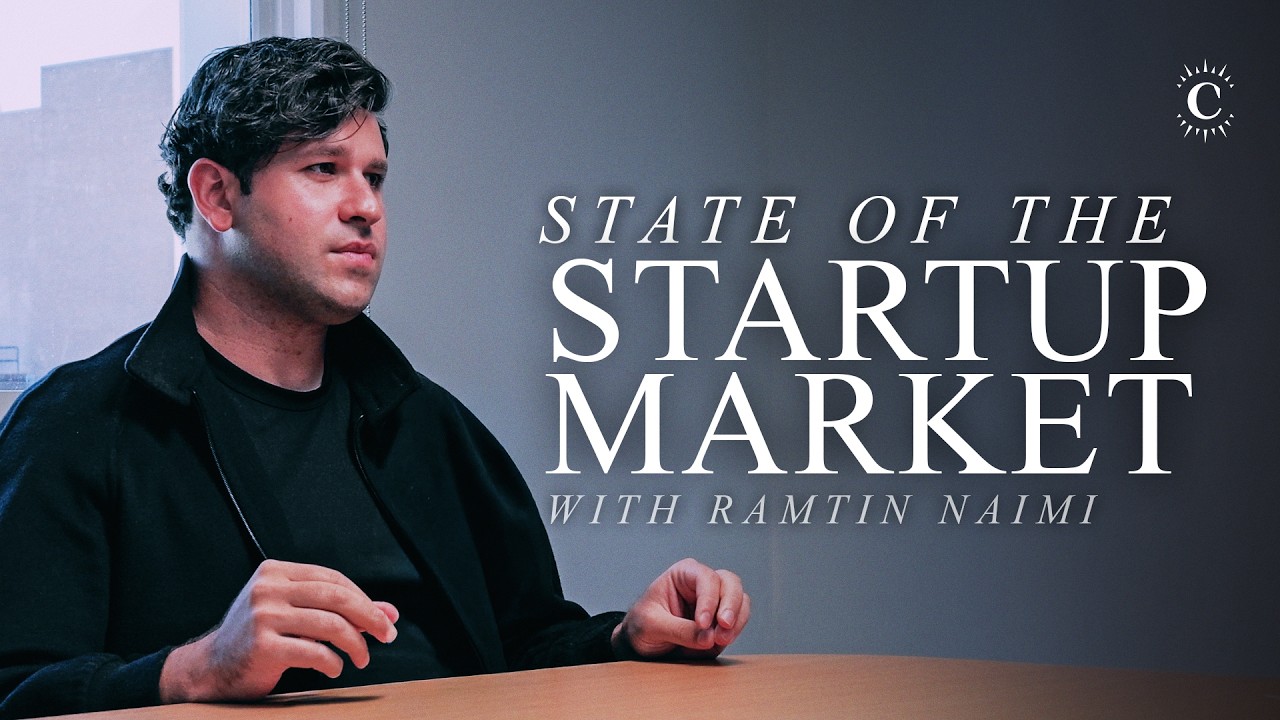
Ramtin Naimi, Abstract Ventures: Late-stage investing consensus and data startup business models
Ramtin Naimi leads Abstract Ventures and put around 15% of the 2023 vintage fund into the formation round of xAI. Abstract Ventures participated as a major investor in the Series B financing round of Polymarket. Abstract Ventures has led Series B financing rounds in companies such as Socket, Doctronic, and Dust. "if everybody believes that's an easy way to make money, it's probably not a great way to make money."
Concentrating capital in obvious late-stage winners has become a consensus strategy that may underperform. Stripe reached a $100 billion valuation in 2021 and has since grown to $179 billion, delivering an 11% to 12% IRR over 5 years. Data provider startups split into two camps with one expecting decades of persistent data sales and the other selling data short-term to self-finance proprietary robotics research. Silicon Valley density of individual angel investors writing $100,000 to $1 million checks keeps it the best place to start a company. That density is at least 100 times greater than other ecosystems. Abstract Ventures raised $100 million for its first fund in 2018 and recently raised an $800 million fund. Limited partners said in 2018 that a $100 million seed fund was too large for a first fund. Limited partners commended discipline for staying small on the latest $800 million vintage.
Abstract Ventures: Current venture opportunity and bellwether companies
Physical Intelligence is identified as a potential multi-hundred billion or trillion-dollar company. The current venture opportunity set ranks as a 10 out of 10 while market frothiness stands at a 6.5 to 7 because rapid company growth warrants high valuations. The speaker assesses enthusiasm for the current investment opportunity set at 10 out of 10 relative to nearly 10 years in venture capital. "the rate at which these companies are growing and getting adoption and product market fit is kind of unprecedented and that would warrant frothiness."
The speaker rates market frothiness in 2021 as a 10 out of 10 and current market frothiness as a 6.5 to 7. NewLimit, Chai Discovery, and Isomorphic Labs are identified as key next-generation AI bio companies. Applied Compute is highlighted as a leading pioneer in allowing users to own their data and knowledge intelligence.