


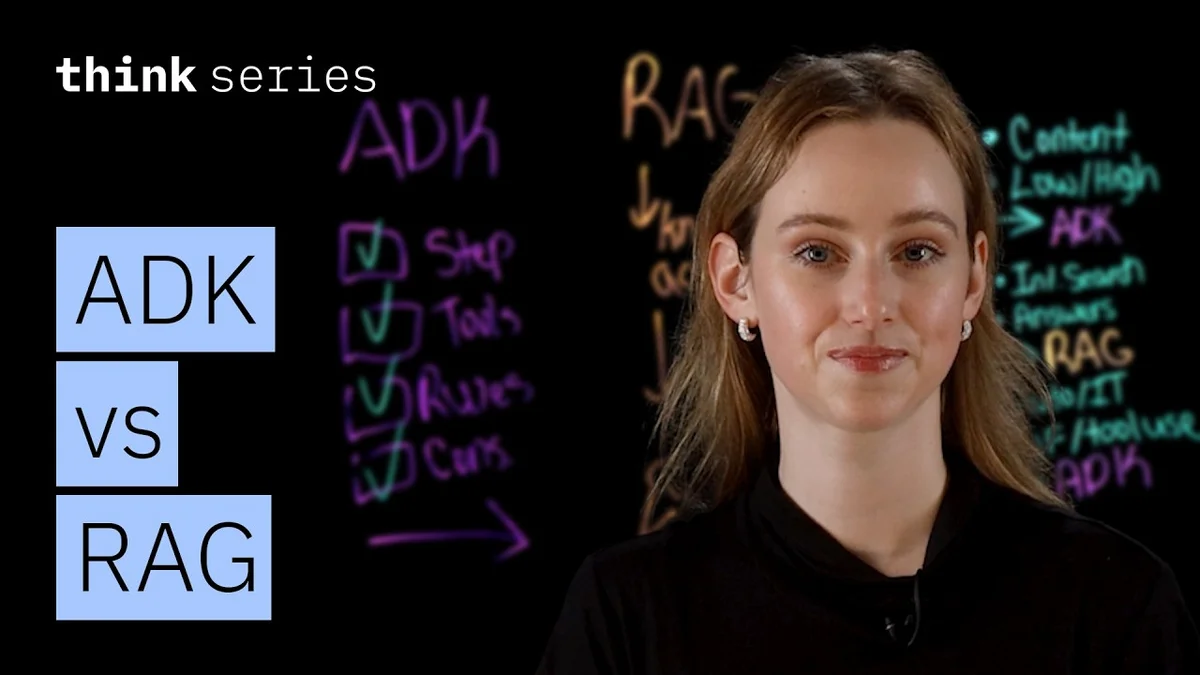
In a concise explanation, IBM Demand Strategist Katie McDonald breaks down the fundamental differences between two key AI agent architectures: Agent Development Kits (ADK) and Retrieval Augmented Generation (RAG). McDonald, whose role at IBM focuses on strategic demand generation for AI solutions, offers a clear framework for understanding when to employ each approach, and when a hybrid model might be most effective.
Understanding the Architectures
McDonald begins by drawing a relatable analogy to hardware stores. One aisle is stocked with tools for performing tasks, and another with reference guides and information. This metaphor serves to illustrate the core functions of ADK and RAG.
ADK (Agent Development Kit): McDonald defines ADK as being focused on action and reasoning. AI agents utilizing an ADK are designed to perform multi-step tasks, follow instructions, and make decisions. This approach is suitable when the AI needs to execute processes, manage workflows, or provide assistance in areas like IT or HR. Examples include automating tasks, drafting content, or supporting with task coordination.
The full discussion can be found on IBM's YouTube channel.
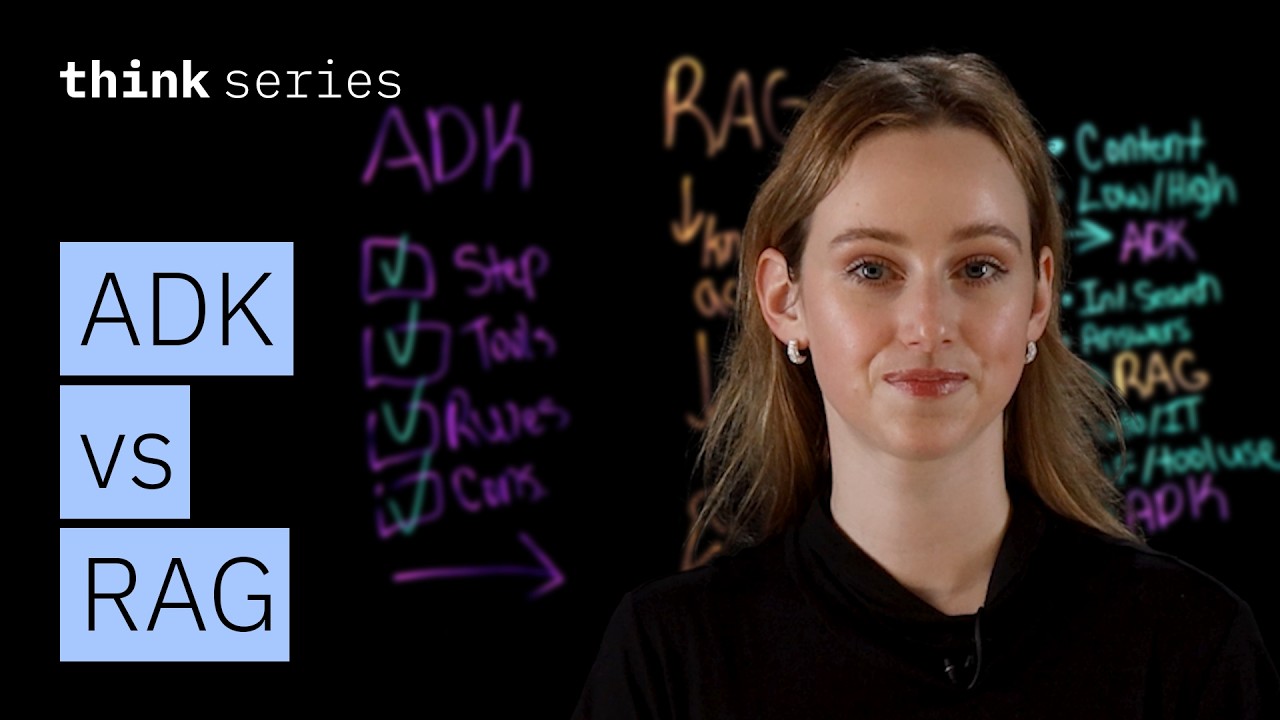
RAG (Retrieval Augmented Generation): In contrast, RAG is centered on knowledge and accuracy. RAG-based AI systems are built to retrieve information from external data sources and present it accurately. This is ideal for situations where the AI needs to answer questions based on specific documents, such as PDFs, policies, technical documentation, or knowledge bases. RAG is particularly useful when the AI needs to access and synthesize information that is not inherently part of its training data.