
Jemima Abu told AI Engineer that AI agents build accessible products faster and cheaper than inaccessible ones.
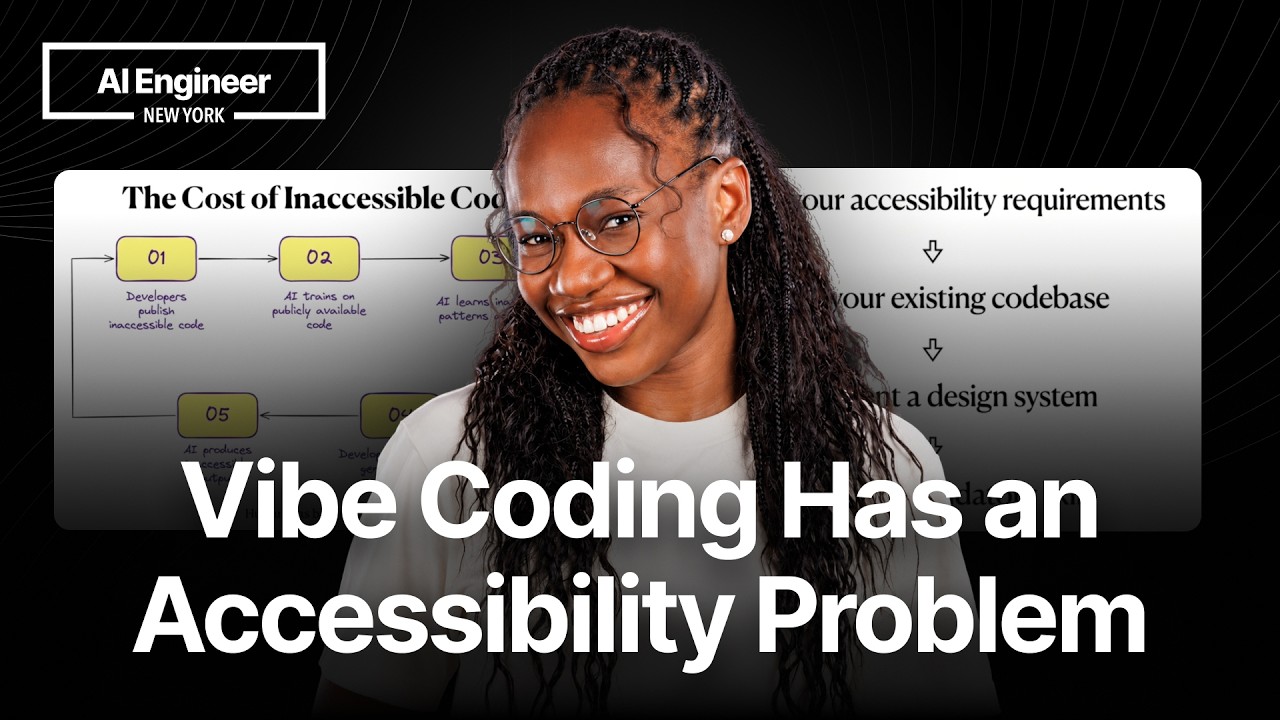
She said she ran the same Figma to code prompt twice on her work codebase at CAIS, once without guidance and once with a lightweight accessibility skill she wrote, and the skilled run cost 58 percent less and took a third of the time.
I want to believe that, but one run is not evidence.
Abu admitted the test was a one off not run in a constrained environment and cannot serve as empirical data, which means there is no control, no model name, no token count and no independent replication.
Her underlying argument still lands, because agents left alone absorb human bias and spit verbose custom code for modals and accordions instead of using native semantic HTML, which forces costly rework and regressive testing when ARIA labels get shoved in at the end.
That rework is the real tax, as Abu noted 96 percent of the top million homepages have accessibility issues according to WebAIM, and in the United States public products that exclude disabled users risk lawsuits under the Americans with Disabilities Act.
The timing matters because vibe coding as a term was only introduced by Andrej Karpathy in February 2025 according to vibe-coding.fr, yet Google Play now supports private vibe coded apps for its 3 billion users according to TechCrunch, so the volume of AI generated interfaces is about to spike without guardrails.
If you are a founder asking whether to add an accessibility skill now, do it before you ship anything because baking it in costs less than rebuilding it later.




