

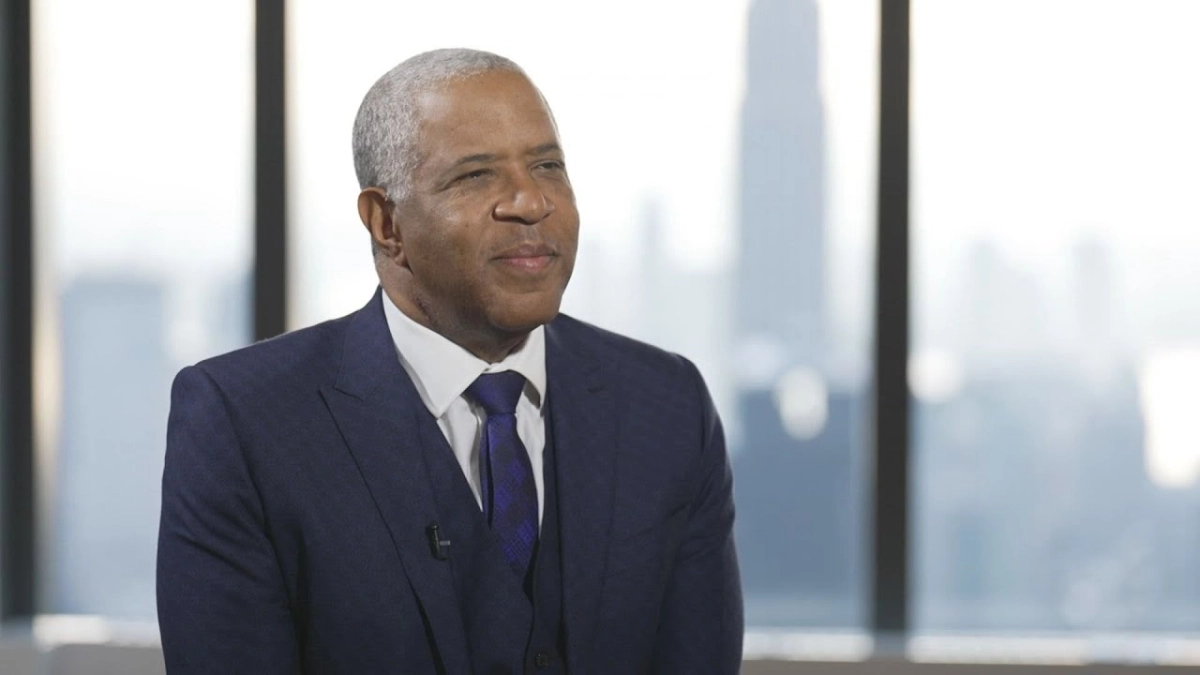
"AI will enable enterprise software to eat services." This concise statement captures the core thesis presented by Robert Smith, Founder, Chairman, and CEO of Vista Equity Partners, during his interview with CNBC Wealth Editor Robert Frank on Inside Alts. Smith’s analysis centers on the next phase of the artificial intelligence boom: the shift from foundational models and infrastructure to practical, workflow-integrated AI agents that promise to redefine enterprise software and generate immense economic value for investors positioned correctly.

The conversation provided a sharp perspective on the current investment climate, which Smith noted has been challenging for private equity due to limited distributions and realizations, particularly as public markets have focused capital almost exclusively on the "Magnificent Seven" and other hyperscalers driving the initial AI infrastructure buildout. However, Smith suggests this public market dynamic has created a rare buying opportunity in the enterprise software sector, especially for firms equipped to integrate generative AI (GenAI) capabilities into their products.
Smith mapped the AI journey across three distinct phases. The first phase focused on hardware vendors, exemplified by the capital flowing into companies like Nvidia. The second phase involves the hyperscalers, the cloud providers building out the necessary infrastructure. The third, and ultimately the most lucrative, phase belongs to the application providers who successfully diffuse AI into the existing workflows of businesses. He emphasized that historically, application providers capture the lion’s share of the economic rent once the underlying technology has matured and been widely adopted.
Ninety-nine plus percent of these companies are private application software type companies. This reality mandates that investors seeking exposure to the true productivity gains of AI must navigate the private markets effectively.
The central concept driving Vista’s strategy is the creation of "agentic" software. This means moving beyond simple AI tools to developing autonomous agents capable of performing complex tasks within enterprise workflows at high frequency and precision. Smith pointed out that while consumer AI might tolerate 93% accuracy, "That does not work in banking. It does not work in insurance." Enterprise applications demand near-perfect precision, which requires deep domain expertise combined with tailored AI capabilities. Vista is already seeing substantial productivity gains, up to 30 to 50 percent in areas like writing new code, by integrating GenAI into development pipelines. Moreover, GenAI enables dramatic reductions in customer acquisition costs by automating pre-sales and even some sales functions.