The artificial intelligence landscape is witnessing a profound shift, moving beyond the linguistic prowess of Large Language Models to embrace the intricate, multidimensional realm of spatial intelligence. This pivotal transition formed the core of a recent Latent Space podcast interview with Dr. Fei-Fei Li and Justin Johnson, the visionary co-founders of World Labs, creators of the generative world model, Marble. Hosted by Alessio Fanelli and Swyx, the conversation unpacked the journey from ImageNet to the current quest for machines that can truly perceive, understand, and interact with our 3D world.
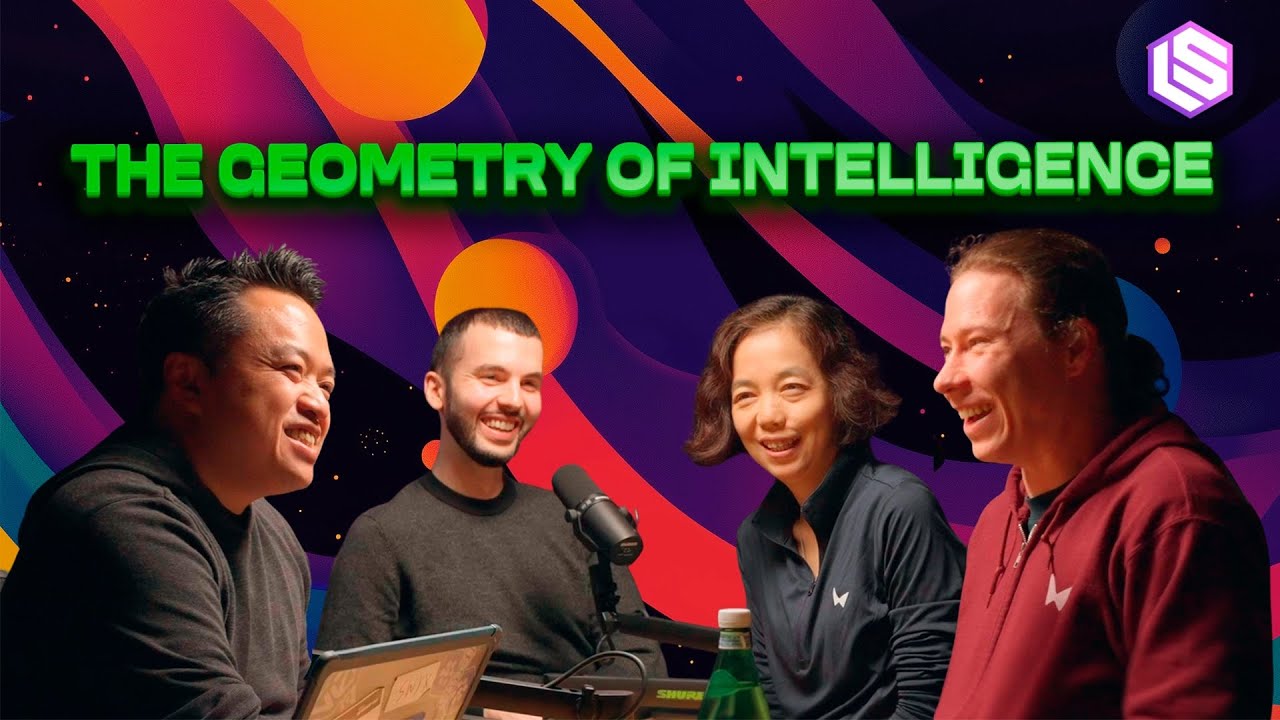
Fei-Fei Li, a luminary in computer vision, articulated the fundamental difference between linguistic and spatial intelligence. While language provides a powerful, high-level abstraction, it remains a "lossy, low-bandwidth channel" for describing the rich, continuous 3D/4D world humans inhabit. Our innate ability to grasp a mug, navigate a room, or infer complex structures like DNA exemplifies spatial intelligence, a distinct form of understanding that underpins our physical interaction with reality. This intuition, honed over years of research at Stanford and beyond, drives World Labs' mission to build AI that comprehends the world as we do, not merely through words but through worlds.
Justin Johnson elaborated on Marble, World Labs' inaugural product, as a tangible step towards this grand vision. Described as a generative model of 3D worlds, Marble allows creators to transform text, images, or other spatial inputs into editable, persistent 3D environments. Utilizing Gaussian splats for efficient, high-fidelity rendering, Marble enables precise camera control, interactive scene editing, and runs across diverse platforms, from phones to VR headsets. It is a tool designed not just for future potential but for immediate utility, finding applications in diverse fields such as gaming, film previsualization, virtual production, architectural design, and the generation of synthetic worlds for robotics simulation.
The discussion also highlighted the unprecedented scaling of computational power as a critical enabler for this next wave of AI. Justin Johnson noted, "The whole history of deep learning is in some sense the history of scaling up compute." He underscored the staggering progress from AlexNet to today, where performance per GPU has increased a thousand-fold, and models are trained across hundreds or thousands of GPUs. This massive compute capacity, he argues, is now ripe for "soaking up" by more data-intensive modalities like visual and spatial data, rather than language alone.
The conversation ventured into the evolving dynamics of AI research, particularly the interplay between academia and industry. Fei-Fei Li expressed concerns not about the commercial pressure itself, but about the "imbalanced resourcing of academia." She emphasized the critical need for public sector investment, citing her work on the National AI Research Resource (NAIR) bill, which aims to establish national AI compute clouds and data repositories. This open science approach, she believes, is crucial for fostering experimentation and blue-sky thinking that might not immediately yield commercial returns. As Justin Johnson added, academia should be a space for "trying wacky ideas and new ideas and crazy ideas, most of which won't work," a crucial counterpoint to the more product-driven focus of industry.
Related Reading
- Spatial Intelligence: The Next Frontier Beyond LLMs
- Bridging the Enterprise AI Gap: Fine-Tuning LLMs on Google Cloud
Marble, in its current iteration, represents a foundational product, offering a glimpse into the potential of spatial intelligence. It allows users to manipulate worlds at a granular level, understanding that precise camera control and interactive editing are paramount for creative and practical applications. The underlying architecture, built on Gaussian splats, permits real-time rendering and manipulation, making it accessible on a wide array of devices. This blend of cutting-edge research and practical product development is World Labs' deliberate strategy: deliver immediate value while laying the groundwork for more ambitious, robust world models.
The challenge of imbuing AI with genuine causal reasoning, beyond mere pattern fitting, remains a central theme. While current models can predict planetary orbits with impressive accuracy, they do not necessarily "understand" the underlying physics like F=ma. World Labs aims to address this by exploring methods such as attaching physical properties to splats and distilling physics engines into neural networks, pushing towards models that can reason about the world rather than simply mimic its observed patterns. This pursuit of deeper understanding, coupled with the ability to generate and interact with 3D worlds, positions spatial intelligence as a critical pathway toward truly intelligent and embodied AI systems.