

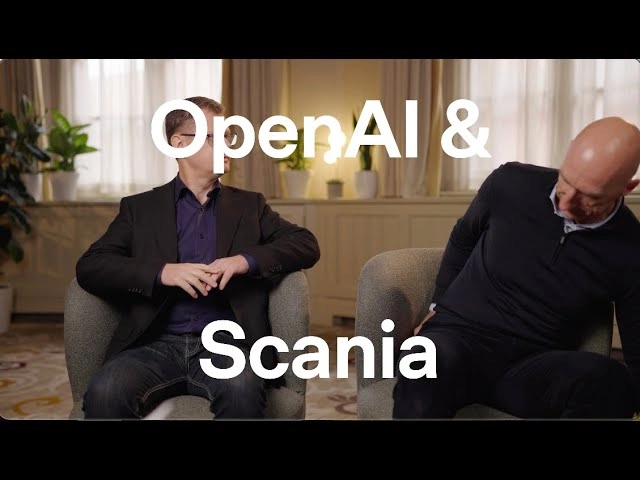
The rapid, bottom-up integration of generative AI within a global industrial giant like Scania offers a compelling blueprint for enterprise transformation. Scania, a renowned builder of trucks, buses, and transport systems, is leveraging OpenAI's ChatGPT to accelerate work across its global workforce, shifting its identity from a mere vehicle maker to a leader in sustainable transport ecosystems. This strategic pivot, powered by a thoughtful AI adoption model, provides critical lessons for founders, VCs, and AI professionals navigating the complexities of large-scale technology integration.

In a recent discussion produced by OpenAI, Jan Guhres, Senior Manager Business Enabling Services, and Jan Andries Oldenkamp, CIO of Scania, detailed their pragmatic yet ambitious approach to deploying advanced AI. Their conversation illuminated the strategic choices and surprising outcomes of embedding large language models into the core operations of a deeply engineering-led organization. They spoke candidly about the internal demand, the methodology of rollout, and the tangible benefits observed.
A cornerstone of Scania's strategy is a deliberate decentralization of AI adoption. Rather than a top-down mandate, the company fostered an environment of accessible experimentation. Jan Andries Oldenkamp highlighted this, stating, "We put quite a lot of licenses available in the organization, and we stimulate experimentation as much as possible." This approach empowers individual teams to discover and apply AI solutions directly to their specific challenges, fostering organic innovation. This bottom-up empowerment is crucial for an engineering-led culture, where problem-solving often originates at the project level, allowing for practical, use-case driven development rather than theoretical mandates.
Crucially, Scania's initial pilot program emphasized collective learning and shared ownership. Jan Guhres explained their unique onboarding requirement: "When we did the introduction, then everyone was only allowed to join if they joined as the whole team." This was a deliberate move to prevent isolated "smart guy" scenarios where expertise becomes siloed, ensuring that the knowledge and capabilities built around ChatGPT became part of the team's shared "DNA" rather than an individual's personal toolkit. This ensures continuity and broader organizational capability development, a critical factor for sustainable AI integration within a large, distributed workforce. The collective approach mitigates the risk of single points of failure and promotes a robust internal support network for new users.
Such rapid uptake and demonstrable benefits challenge conventional enterprise technology adoption cycles.